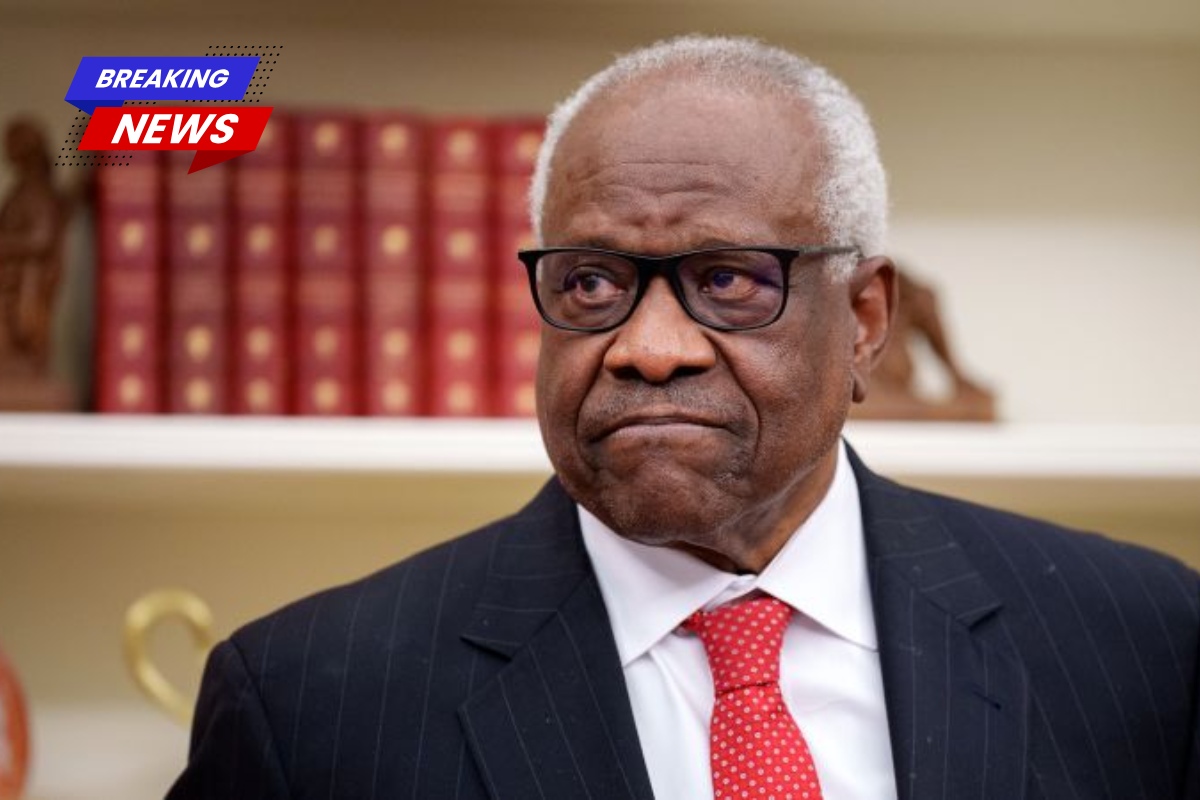
Juandalynn Givan launched a strong public criticism of Clarence Thomas following a major Supreme Court decision involving congressional redistricting.
In a fiery video posted Monday, Givan accused Thomas of betraying the Black community after the Supreme Court struck down a court-ordered congressional map that had helped create an additional Democratic-leaning district in Alabama during the 2024 elections.
Supreme Court Ruling Sparks Political Reaction
The ruling could allow new congressional maps that may eliminate two Democratic-held seats in Alabama. The decision could potentially affect the districts represented by Terri Sewell and Shomari Figures.
The court’s decision overturned a 2023 lower court ruling that had required Alabama to create another district where Black voters would have greater influence in electing candidates of their choice.
Givan Calls Out Clarence Thomas
During her emotional response on Facebook, Givan strongly criticized Thomas for siding with conservative justices on the issue of congressional maps and minority representation.
She accused Thomas of helping reverse progress made by Black voters and used several controversial remarks while expressing her frustration.
“You have sided with the Republican Party,” Givan said in the video. She also described Thomas as someone who had turned Black Americans “back into the hands of the master.”
Her comments quickly drew attention online due to the harsh language directed at the longtime Supreme Court justice.
Clarence Thomas’ Position on Redistricting
Thomas has consistently opposed the use of race-based congressional districting, arguing that racial apportionment can violate constitutional principles. Over the years, he has repeatedly criticized court decisions that require states to draw districts based primarily on race.
As the justice responsible for handling emergency matters from Alabama’s federal courts, Thomas played a key role in the latest ruling.
Supporters of the decision argue that congressional maps should be race-neutral, while critics believe the ruling weakens protections for minority voting rights.
Concerns Over Minority Representation
Givan and other critics fear the new ruling could reduce Black voter influence in Alabama elections and potentially reshape congressional representation in the state.
She warned that the ruling may lead to new elections or changes to district boundaries ahead of future primaries.
Voting rights groups have also expressed concern that the decision could impact minority representation not only in Alabama but in other states facing similar redistricting battles.
Debate Over Voting Rights Continues
The Supreme Court’s decision has intensified national debates over voting rights, race, and political representation.
Supporters of race-conscious districting argue that such maps are necessary to ensure fair representation for minority communities. Opponents believe district boundaries should not be drawn based on race.
As legal and political battles over congressional maps continue across the country, the Alabama case is expected to remain a major topic ahead of upcoming elections.