
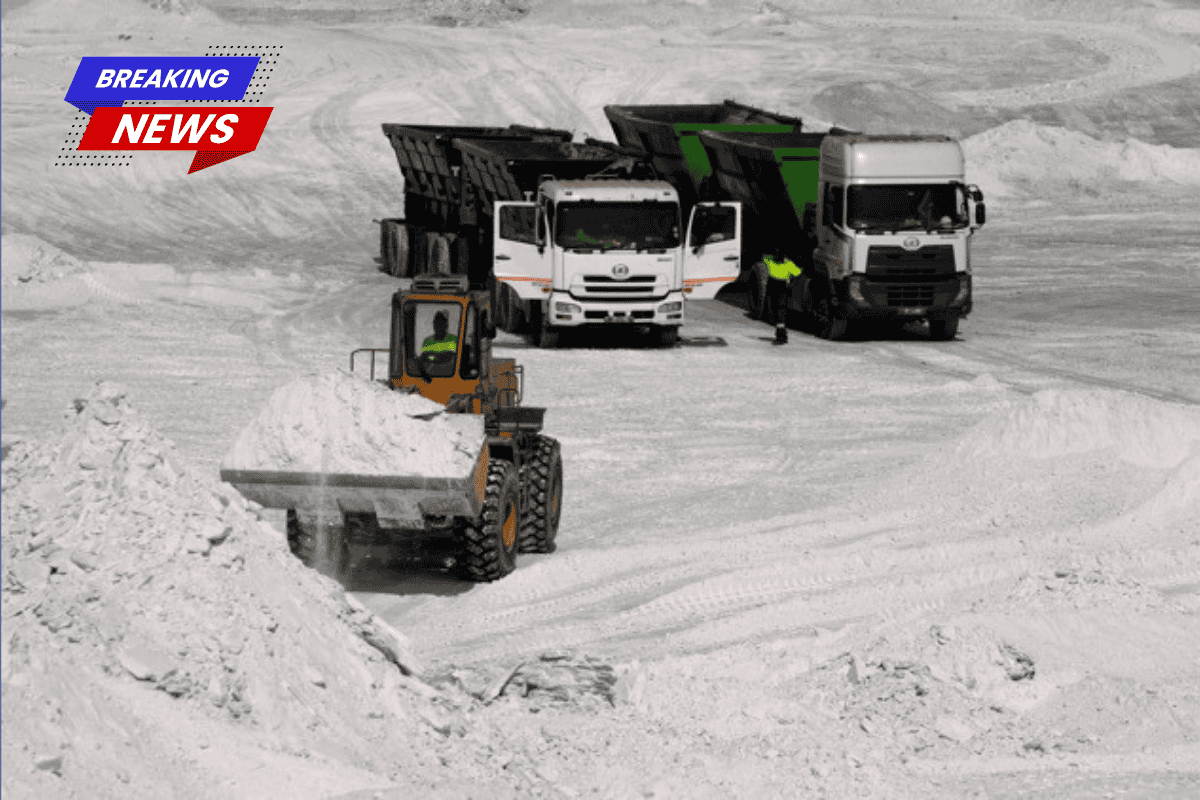
A major project in South Africa is gaining global attention as the United States looks for new ways to secure critical minerals needed for modern technology. The initiative focuses on extracting rare earth elements from mining waste—an approach that could reshape how these valuable resources are sourced.
What Is the Phalaborwa Rare Earths Project
At the centre of this effort is the Phalaborwa Rare Earths Project, located at an old chemical processing site.
Instead of traditional mining, the project plans to extract rare earth elements from two massive dunes made of industrial waste. These dunes contain around 35 million tons of phosphogypsum, a byproduct of earlier mining activity.
The project is being developed by Rainbow Rare Earths with support from U.S. partners.
Why Rare Earth Elements Matter
Rare earth elements are essential for many modern technologies, including:
- Smartphones and electronic devices
- Electric vehicles
- Wind turbines
- Robotics and defence systems
Some key elements expected from the project include:
- Neodymium
- Praseodymium
- Dysprosium
- Terbium
These are especially important for making high-performance magnets used in advanced equipment.
U.S. Investment and Strategic Goals
The project has received a $50 million investment from the International Development Finance Corporation.
This move is part of a broader strategy led by Donald Trump to reduce reliance on China, which currently dominates the global rare earth supply.
The U.S. government has also announced plans to invest nearly $12 billion to build its own mineral reserves.
Project Timeline and Plans
The Phalaborwa project is expected to:
- Begin construction around 2027
- Start extraction by 2028
- Operate for about 16 years
It will use a unique above-ground extraction method, which could be cheaper and more environmentally friendly than traditional mining.
Why This Project Is Unique
Unlike typical mining operations, this project focuses on reusing waste material. This offers several advantages:
- Lower production costs
- Reduced environmental impact
- Use of up to 90% renewable energy
Experts say this could make it competitive with Chinese producers.
Global Competition for Minerals
Countries around the world are racing to secure critical minerals.
China currently leads in mining and processing, especially in Africa. The U.S. is now increasing investments to catch up and reduce dependence.
Other related efforts include:
- Mineral projects in Mozambique
- Infrastructure development like the Lobito Corridor
- Deals in regions like Ukraine and Greenland
Challenges and Uncertainty
While the project shows promise, experts say its full potential is still unclear.
Key concerns include:
- Whether extraction methods will work efficiently
- Long-term production capacity
- Market competition
Still, the project is seen as an important step toward diversifying supply.






