
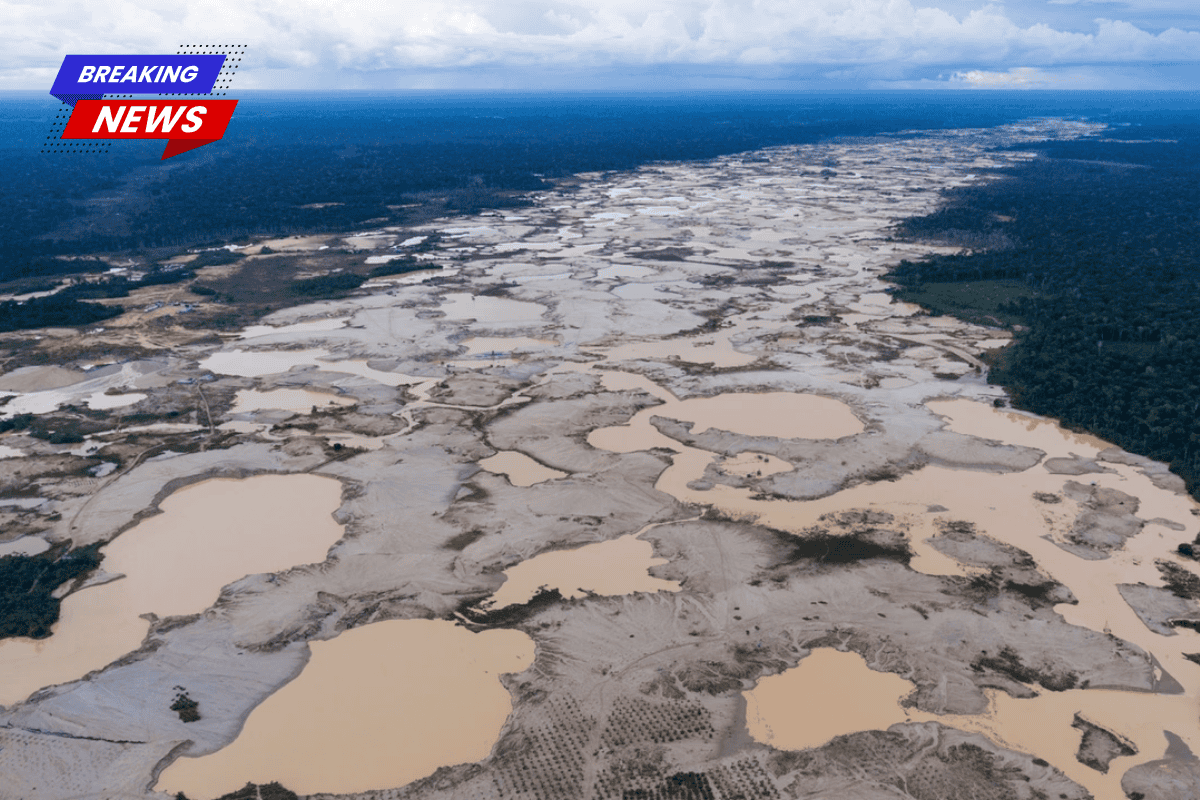
Voters in Peru are heading to the polls to elect a new president and Congress, but one of the country’s most serious challenges — illegal mining — has received little attention during the campaign. Experts warn this oversight comes despite the activity’s growing impact on the environment, public health, and Indigenous communities.
A Growing but Overlooked Crisis
Illegal mining has become Peru’s largest illicit economy, generating billions of dollars annually and rivaling even drug trafficking.
Environmental lawyer César Ipenza said many political parties either underestimate the scale of the problem or are indirectly tied to it.
Despite its size and impact, a majority of political platforms fail to address illegal mining in any meaningful way.
Limited Political Proposals
Some candidates, including Jorge Nieto and Alfonso López Chau, have proposed measures such as improving gold traceability and protecting environmental defenders.
However, these proposals are seen as fragmented and lacking a comprehensive national strategy.
Other prominent figures, including Keiko Fujimori, Rafael López Aliaga, and César Acuña, have focused more on economic growth and security, without directly addressing illegal mining.
Some candidates have not included the issue in their plans at all.
Weak Policies and Enforcement
Experts say government efforts to control illegal mining have been largely ineffective.
Temporary programs meant to formalize small-scale miners have been repeatedly extended, allowing illegal operations to continue. At the same time, legal changes have weakened the ability of prosecutors to target organized crime networks linked to mining.
Julia Urrunaga of the Environmental Investigation Agency noted that organized protests by miners suggest involvement from powerful groups benefiting from the activity.
Environmental and Health Impact
Illegal mining is expanding deeper into the Amazon, driven by rising gold prices.
Mariano Castro, a former vice minister of environment, warned that mercury used in gold extraction is contaminating rivers and entering the food chain through fish — a staple in many Amazonian communities.
This exposure poses serious health risks, including long-term neurological damage.
Threat to Indigenous Communities
Indigenous groups are among the most affected by the spread of illegal mining.
Tabea Casique, a leader within Peru’s largest Indigenous organization, said the activity threatens not only the environment but also traditional ways of life.
Experts warn that continued expansion could bring increased violence, criminal networks, and deeper environmental damage.
A System with Major Gaps
One of the biggest challenges is the lack of traceability in Peru’s gold supply chain.
Authorities often lack coordination, and illegally mined gold can enter legal markets through processing plants. According to experts, there is no unified system to track production or identify illegal activity effectively.
What Comes Next
As Peru prepares for a new government, analysts say addressing illegal mining will require stronger coordination between agencies, better enforcement, and political will.
Without decisive action, experts warn the problem will continue to grow, making it harder to control and increasing the long-term damage to the country’s environment and communities.






