President Donald Trump announced on Saturday that a deal with Iran on the ongoing war, including reopening the Strait of Hormuz, has been “largely negotiated” following calls with Israel and other regional allies.
Trump shared the news on social media, saying that the final aspects and details are still being discussed and would be announced shortly, without giving specifics.
Regional Discussions and MOU
Trump spoke with leaders from Saudi Arabia, the United Arab Emirates, Qatar, Pakistan, Turkey, Egypt, Jordan, Bahrain, and separately with Israel.
He described the agreement as a “Memorandum of Understanding pertaining to PEACE”, which still requires final approval from the United States, Iran, and other participating countries. The announcement capped a week in which the U.S. weighed new attacks on Iran that could have broken the fragile ceasefire.
There was no mention of Iran’s nuclear program or highly enriched uranium, which Tehran has said it wishes to discuss later. Trump added that his conversation with Israeli Prime Minister Benjamin Netanyahu went “very well,” despite pressure from Israel to take military action.
Growing Optimism Amid Caution
Earlier on Saturday, a regional official familiar with Pakistan-led mediation efforts said the U.S. and Iran were close to a deal to end the war. The official, speaking on condition of anonymity, cautioned that “last-minute disputes” could still derail the process.
According to the official, the deal would include an official declaration ending the war, two months of negotiations on Iran’s nuclear program, reopening the Strait of Hormuz, and ending the U.S. blockade of Iran’s ports.
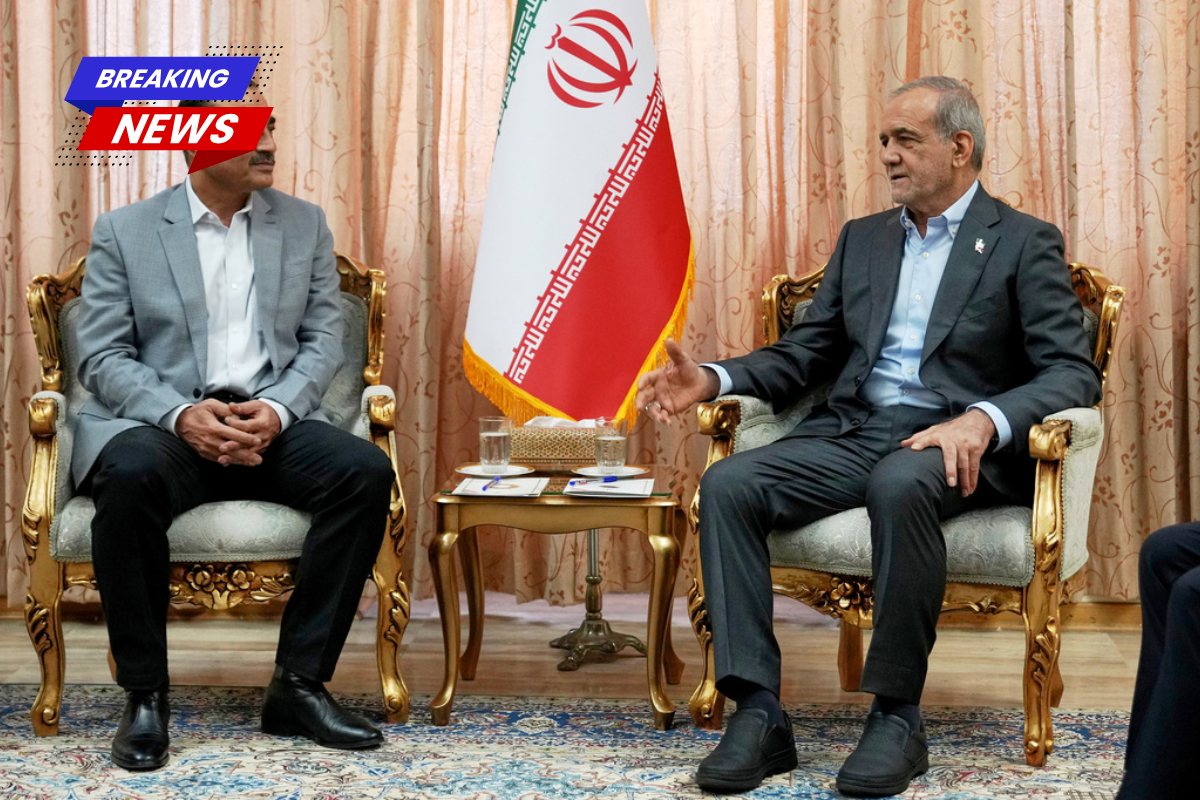
Iran has indicated that differences are narrowing, following meetings in Tehran with Pakistani army chief Asim Munir. Pakistan’s Prime Minister Shehbaz Sharif praised Trump’s role in advancing peace, saying the country would continue to support the process and hoped to host the next round of talks soon.
Background of the Conflict
Twelve weeks have passed since the U.S. and Israel attacked Iran on February 28, killing top Iranian officials, including the supreme leader, and disrupting nuclear talks for the second time in under a year.
Iran retaliated by firing at Israel and neighboring countries hosting U.S. forces, raising tensions in the Gulf. A ceasefire has held since April 7, but Iran’s partial closure of the Strait of Hormuz has remained a major global concern due to its impact on oil and gas shipments.
Iran Describes Framework Agreement
Iranian state media quoted Foreign Ministry spokesperson Esmail Baghaei describing the draft deal as a “framework agreement”. Baghaei said the focus is on ending the war and addressing essential issues, with details to be discussed over 30 to 60 days before a final agreement.
Nuclear issues are not part of the current talks. The agreement includes lifting some sanctions on Tehran, while Iran reaffirmed support for its regional allies, including Hezbollah in Lebanon.
Military Position and Negotiations
Trump had previously held off on military strikes against Iran, citing “serious negotiations” and requests from Middle East allies.
Iran’s parliament speaker, Mohammad Bagher Qalibaf, stated that Iran has rebuilt its military capabilities and warned that any renewed attacks would have even more severe consequences. Senior officials from Pakistan and Qatar have been involved in supporting mediation efforts.
Despite months of conflict, Iran continues to maintain its nuclear enrichment program and missile capabilities. The country’s new supreme leader, the son of the previous one, remains largely unseen but is closely aligned with the Revolutionary Guard. Contrary to predictions from Trump and Netanyahu, the Iranian people have not revolted following nationwide protests earlier this year.