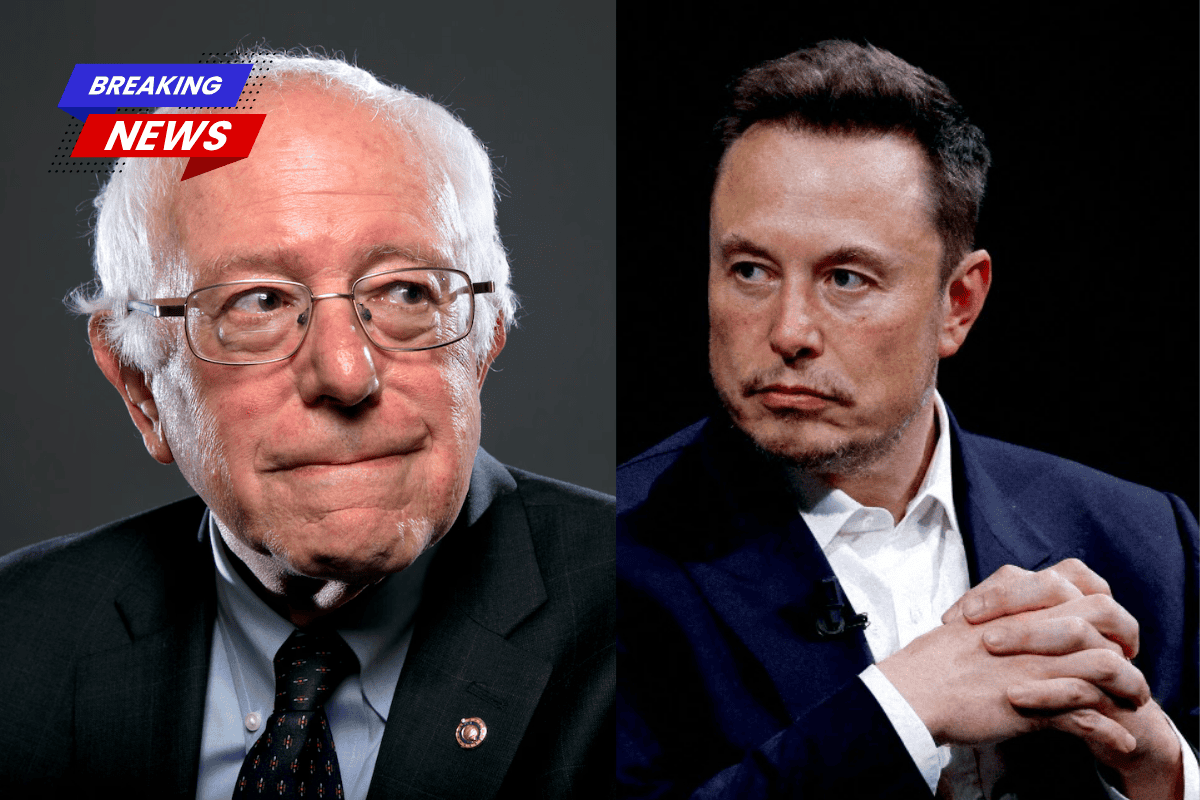
Elon Musk, the richest person in the world, and Senator Bernie Sanders (I-Vt.), one of the most prominent progressive voices in the U.S., are leading very different arguments on how to approach the taxation of billionaires. Despite their drastically opposing political ideologies, both men are using similar math to argue their points on how much billionaires should be taxed—and how that money should be used.
While Musk argues that taxing billionaires won’t even make a dent in the U.S. national debt, Sanders believes that taxing the ultra-wealthy could fund critical social programs and provide immediate relief for millions of Americans.
Elon Musk’s Perspective: Billionaire Tax Won’t Solve the Debt Crisis
Musk, known for his outspoken views on taxes and government spending, has made it clear that taxing the wealthiest individuals in the U.S. will not be sufficient to solve the growing national debt, which is approaching $39 trillion.
In 2023, Musk wrote on X (formerly Twitter) that even if every billionaire in America were taxed at 100%, it would “barely make a dent in the national debt.” He believes that ultimately, the government will need to tax everyone to manage the country’s massive fiscal obligations.
Musk’s framing of the issue focuses on the sheer size of the U.S. debt, which he argues cannot be addressed through billionaire taxes alone. The national debt, according to Musk, is a result of decades of excessive government spending that outpaces revenue, and no single tax or group of taxes will fix the problem.
Bernie Sanders’ Proposal: Taxing Billionaires to Fund Social Services
On the other side of the debate, Bernie Sanders is advocating for a tax on the wealthiest Americans to address wealth inequality and fund essential social services. Sanders, along with Rep. Ro Khanna (D-Calif.), introduced the “Make Billionaires Pay Their Fair Share Act,” which proposes a 5% annual wealth tax on individuals with a net worth of $1 billion or more. According to Sanders, this tax would generate $4.4 trillion over its first decade.
While Sanders agrees that taxing billionaires won’t resolve the national debt, he is not concerned with using the revenue to pay down the debt. Instead, he believes that the funds should be used to address pressing issues in the U.S. economy, including income inequality, healthcare cuts, and public education.
Specifically, Sanders estimates that the first year of revenue from the billionaire tax would provide a $3,000 check to nearly three-quarters of U.S. households with incomes of $150,000 or less, or approximately 74% of the population.
Beyond direct payments to American families, Sanders also sees the tax as a way to reverse cuts to Medicaid and the Affordable Care Act, raise the minimum salary for public school teachers to $60,000, and cap childcare costs for working families at 7% of household income.
The Math: Billionaire Tax vs. National Debt
Musk’s Perspective: A Drop in the Ocean
Musk’s argument is that, even if the wealthiest Americans were taxed at 100%, it would barely touch the enormous national debt. According to his logic, the $8.2 trillion combined net worth of the 938 billionaires in the U.S. would not make a significant dent in the current $39 trillion national debt. In other words, Musk believes the national debt crisis is too large to be solved by taxing the ultra-wealthy alone.
Sanders’ View: Redistribution, Not Debt Reduction
Sanders acknowledges that the billionaire tax will not solve the national debt, but he believes it can address more immediate issues, such as income inequality and the affordability crisis. He views the billionaire tax as a redistribution mechanism—putting money back in the hands of the American people and funding vital social services.
The $4.4 trillion in revenue over a decade, according to Sanders, would go a long way in addressing the economic challenges faced by working families and reducing the wealth gap in the U.S.
The U.S. Debt Crisis: The Real Drivers
The U.S. national debt has reached unprecedented levels, with nearly $1 trillion paid each year just to service the debt. This figure has nearly tripled over the past five years and now surpasses government spending on Medicare. Projections from the Committee for a Responsible Federal Budget suggest that interest payments will exceed $1.5 trillion by 2032.
The primary drivers of this debt are not just the wealth of billionaires but decades of excessive government spending, military expenditures, and economic crises, such as the wars in Afghanistan and Iraq, the 2008 Great Recession, and the COVID-19 pandemic. Musk warns that America is on a path to financial ruin unless spending is curbed, but he argues that no single tax can undo the structural problems driving the national debt.
Sanders’ Counterargument: Affordability vs. Debt
Sanders counters that the affordability crisis in the U.S. and the national debt crisis are two separate issues. He argues that addressing one does not require ignoring the other.
A $3,000 check for middle-class families may not solve the national debt, but for millions of Americans struggling with inflation, it could provide critical relief. Sanders sees the billionaire tax as a way to address immediate needs while also raising revenue to fund social services that benefit the broader population.