
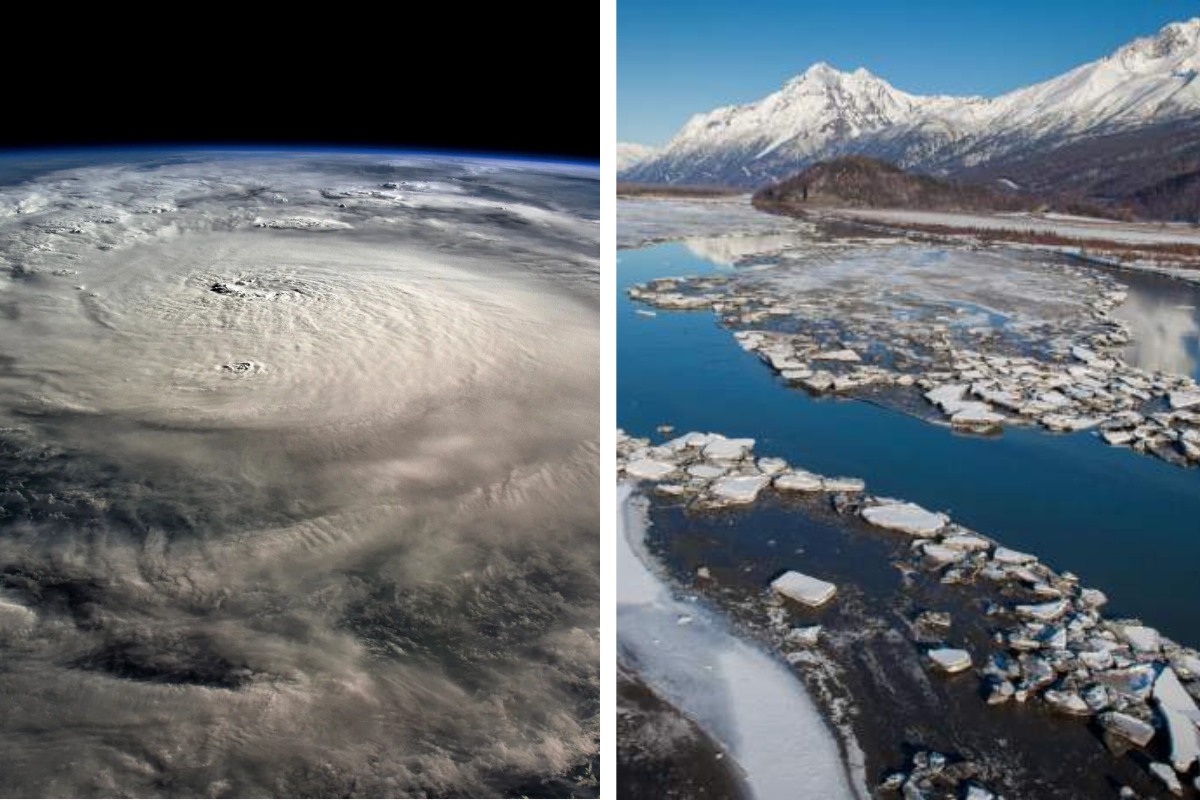
Alaska does not experience hurricanes in the traditional sense because hurricanes are tropical storms that require warm ocean waters to form, and Alaska’s seas are too cold.
While some people might hold fundraisers for hurricane victims in New Orleans, the tail end of a completely different type of Bering Sea storm rattles Alaska’s windows instead. However, this does not mean Alaska is free from dangerous extreme weather.
Alaska Has Its Own Devastating Storm Season
Alaska experiences its own storm season that runs from about October 1 to April 1, which is completely different from the Atlantic hurricane season that runs June 1 to November 30.
During this period, Alaskans experience approximately 11 to 14 hurricane-force wind storms per year, with winds moving at or faster than 74 miles per hour. These storms are far, far bigger than hurricanes, with some systems taking up a quarter of the Bering Sea compared to hurricanes which are tiny.
Why the 2026 Season Is Hurricane
NOAA predicts a stormy, prolonged winter storm season for Alaska starting in late 2025, with La Niña expected to bring colder air, stronger storms, and heavier snow through February. This winter storm season is the most relevant weather pattern for Alaskans, not tropical hurricanes. Some regions, especially the Interior and Southcentral, could see flakes as early as September, while persistent storms will continue into the heart of winter.
Geographic Areas Most at Risk
The storms that affect Alaska are concentrated on the West Coast and Aleutian Islands, where extreme weather hammers the state’s exposed coastlines each fall and winter. Nome and other towns on Alaska’s West Coast have taken the brunt of fall storms that churn up the Bering Sea before the protective cap of sea ice forms.
Western coastal communities such as Nome and Bethel could see frequent blizzards, while Southeast Alaska faces a greater risk of icy mix and flooding rains. The Aleutian Islands are particularly prone to extreme weather because they aren’t far from Siberia and can tap into extremely cold air.
How Alaska Storms Compare to Hurricanes
Storms affecting Alaska are similar to hurricanes in that they cause storm surges and spin counterclockwise, but they usually aren’t wound as tight as hurricanes. A big low-pressure system can affect most of western Alaska, drawing moisture from all over the Bering Sea.
When Hurricane Wilma held the lowest pressure ever recorded in the Atlantic Basin, hurricane-force winds only extended 60 miles from the center, but during an extreme Alaska storm, strong winds can hit Bethel and Nome simultaneously, 300 miles apart. In a good Alaska winter storm, air pressure may register about 28 inches of mercury, while Hurricane Gilbert’s pressure descended to only a little over 26.
Historical Storm Events That Shaped Alaska
The storm of record that meteorologists use as a reference was the 1974 storm, which hit when sea ice was well entrenched and helped mitigate impacts to Norton Sound. In October 2004 and September 2005, large storms brought high winds and storm surges into villages and towns on the West Coast.
One of the strongest storms to hit western Alaska in almost 40 years tore through several coastal communities in 2011, with winds as high as 89 mph recorded, tearing up roofs and leaving many residents without power. The unofficial wind gauge at a boat repair shop in Nome recorded a gust of 83 miles per hour during a September storm on the Seward Peninsula.
Climate Change Is Making Storms More Dangerous
With sea ice developing progressively later each season, meteorologists worry that extreme storms like the 2011 event will become a more regular occurrence in Alaska. The receding sea ice removes the protective buffer that previously helped lay the seas down and mitigate storm impacts to vulnerable coastal areas. Villages on Norton Sound sit right at the water’s edge, making them increasingly vulnerable as ice forms later each year.
Preparedness for Alaska’s Extreme Weather
Alaskans should prepare for winter conditions settling in faster than usual this year, with La Niña amplifying the storm track across the Gulf of Alaska and pulling Arctic air masses farther south. The Farmers’ Almanac predicts a relentless cycle for much of the state, summarizing the season as “Chill, Snow, Repeat”. Rural coastal communities face the greatest risk of flooding from storm surges and high winds.
Key Takeaway Prepare for Bering Sea Storms, Not Hurricanes
While Alaska never experiences tropical hurricanes, residents must prepare for 11-14 hurricane-force wind storms annually during the October-April storm season, with coastal communities facing the greatest danger. The 2025-2026 winter season promises to be particularly active with La Niña bringing stronger, more prolonged storms.
SOURCES:
- https://www.gi.alaska.edu/alaska-science-forum/no-hurricanes-alaska
- https://www.cruisecritic.com/news/noaa-predicts-below-normal-2026-hurricane-season






