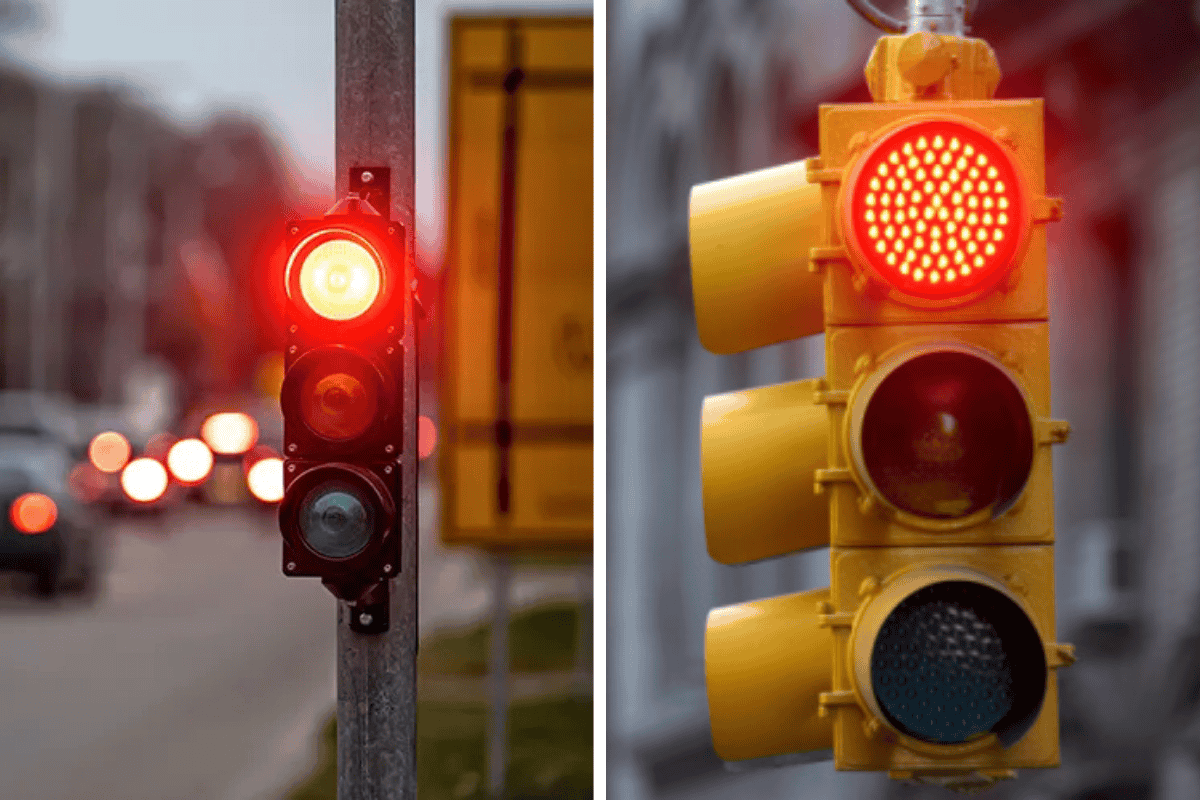
Hawaii’s right turn on red rule remains unchanged in 2025, governed by Hawaii Revised Statutes § 291C-32, allowing turns after a complete stop unless prohibited by signs.
Drivers must yield to pedestrians and oncoming traffic, with counties able to ban the maneuver at specific intersections via posted notices. No statewide overhaul occurred despite safety campaigns targeting red-light running, emphasizing caution amid high pedestrian volumes.
Core Statewide Rule
Under HRS § 291C-32(b), vehicles stopped at a steady red light may turn right after yielding right-of-way to pedestrians in crosswalks and vehicles lawfully proceeding. This applies to both circular reds and red arrows—unlike many states, Hawaii treats red arrows equivalently for right turns absent signage. Complete stop required at the line; proceeding unsafely risks citations for failure to yield (§ 291C-71) or reckless driving.
Signage and Local Bans
Counties (Honolulu, Hawaii, Maui, Kauai) enact ordinances prohibiting right-on-red at high-risk spots, effective only with “No Right Turn on Red” or “No Turn on Red” signs erected. Common in urban Waikiki, busy H-1 interchanges, or school zones; rural Big Island intersections often permissive. Ignore signs at peril: $200+ fines, 4 points on license.
Yielding Requirements
Priority: Pedestrians first—wait until fully clear of your path, even mid-crosswalk. Oncoming left-turners or straight traffic next; bicycles count as vehicles. Night/low-vis: Extra caution; Honolulu DTS stresses headlights off until clear to avoid blinding.
Pedestrian and Cyclist Priorities
Hawaii’s WalkWise program highlights intersections as hotspots; yield extends to haoles crossing parallel or across your turn arc. E-bikes/scooters demand same deference; failure causes 20%+ right-on-red crashes statewide (2015-2020 data).
Enforcement and Penalties
HPD/County PD issue tickets via visual confirmation or future cams (debated, not active 2026). First offense: $200 fine, 4 points; habitual offender status after 12+ points (suspension). Defenses: obstructed sign view, mechanical failure; dash cam evidence aids dismissals.
Special Scenarios
- One-way to one-way: Left-on-red permitted after stop/yield, sign-prohibited possible.
- Rain/slick roads: Hydroplaning post-turn? Reckless if excessive speed.
- Trucks/buses: Wider turns demand clearance; commercial fines double ($400+).
- Motorcycles: Signal turns; lane splitting irrelevant for RTOR.
2025 Updates Clarified
No legislative changes via HB/SB sessions; persistent myths on red arrows debunked via Reddit/HPD clarifications. Emphasis on education post-1,879 signal-related crashes (2015-2020); no automated enforcement statewide. HDOT pushes “complete stop” signage to cut confusion.
Best Practices
Creep to line only after stop; scan mirrors/crosswalks twice. Tourists: Renters note rules in manuals. Locals: Report faded signs to 311. Apps like Waze flag bans; defensive courses shave points.
Interstate Comparisons
Hawaii aligns with 48 states permitting RTOR (Alaska/Vermont no); stricter than CA’s default bans. Visitors from abroad: Reverse of UK left-on-red norms.
SOURCES:
- https://law.justia.com/codes/hawaii/title-17/chapter-291c/section-291c-32/
- https://bigcountry975.net/hawaii-traffic-rule-2025-update-understanding-the-right-turn-on-red-rule/