
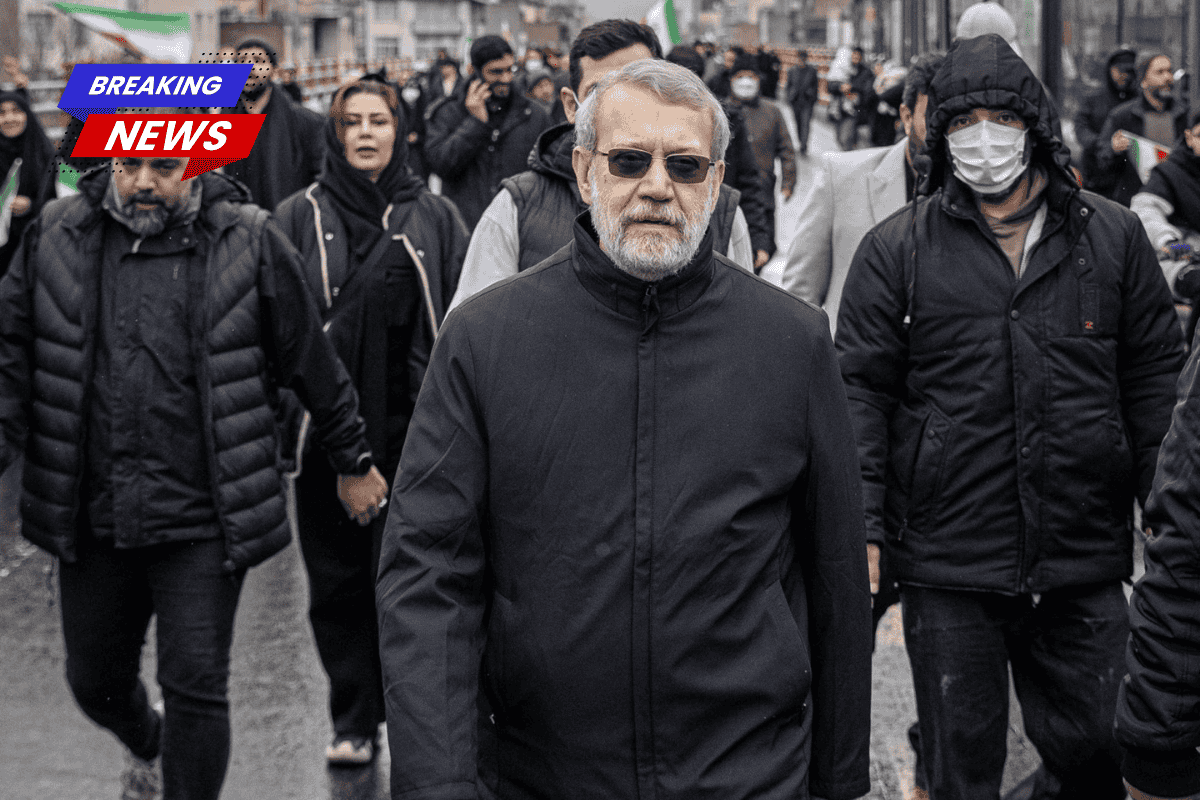
Iran’s top national security official, Ali Larijani, recently made a shocking claim, alleging that members of Epstein’s network are planning a false flag attack similar to the 9/11 attacks to blame Tehran.
Larijani implied that these individuals might be linked to Trump administration officials, referencing their presence in various files. He further stated that Iran fundamentally opposes such terrorist schemes and has no conflict with the American people.
The allegation comes as tensions between Iran, the United States, and Israel continue to escalate amid the ongoing war. Larijani emphasized that Iran’s primary focus is defending itself from foreign aggression led by the U.S. and Israel. “We are defending our country against an aggression launched by the U.S. and Israel. Iran stands tall in doing so in order to teach the aggressors a lesson,” Larijani wrote on social media.
Trump: No Deal Until Iran Abandons Nuclear Ambitions
Former U.S. President Donald Trump also weighed in, stating that he is not yet ready to negotiate a peace deal with Iran, citing that the terms are not “good enough” for the U.S. He explained that any potential deal with Iran must involve a commitment from Tehran to abandon its nuclear ambitions.
Trump further reiterated the importance of keeping the Strait of Hormuz open, a crucial waterway through which about 20% of the world’s energy passes.
“The only power they have, and it’s a power that can be closed off relatively quickly, is the power of dropping a mine or shooting a relatively short-range missile,” Trump said. “But when we get finished with the shoreline, they’re not going to have that power either,” he added, referencing the U.S. strike on Kharg Island—an important oil export hub for Iran.
U.S. Precision Strikes and Strategic Goals
The U.S. Central Command confirmed that it recently carried out precision strikes on 90 Iranian military targets while making sure to spare Iran’s oil infrastructure. Trump explained that the U.S. deliberately avoided targeting the energy lines, acknowledging that rebuilding them would take years. “I didn’t do anything having to do with the energy lines, because having to rebuild that would take years,” Trump commented.
This military action comes as the U.S. seeks to undermine Iran’s military capabilities without disrupting the country’s energy supply.
Iran’s Warning: Retaliation for Attacks on Oil Infrastructure
In response, Iran’s Revolutionary Guard warned that any attack on its oil and gas infrastructure would be met with retaliation, claiming that they have the right to defend their sovereignty. The threat was specifically directed at the UAE, which Iran alleges has been complicit in U.S. missile launches.
Escalating Tensions and Regional Impacts
The ongoing conflict has led to significant disruptions, particularly in the Strait of Hormuz, a vital shipping lane. The U.S. and Israel have faced increasing pressure from Iran’s missile and drone attacks, and regional military dynamics continue to evolve.
Experts believe that while the U.S. stockpiles of missile interceptors remain strong, Israel is facing challenges with its ballistic missile defense system, with significant implications for the ongoing war.






