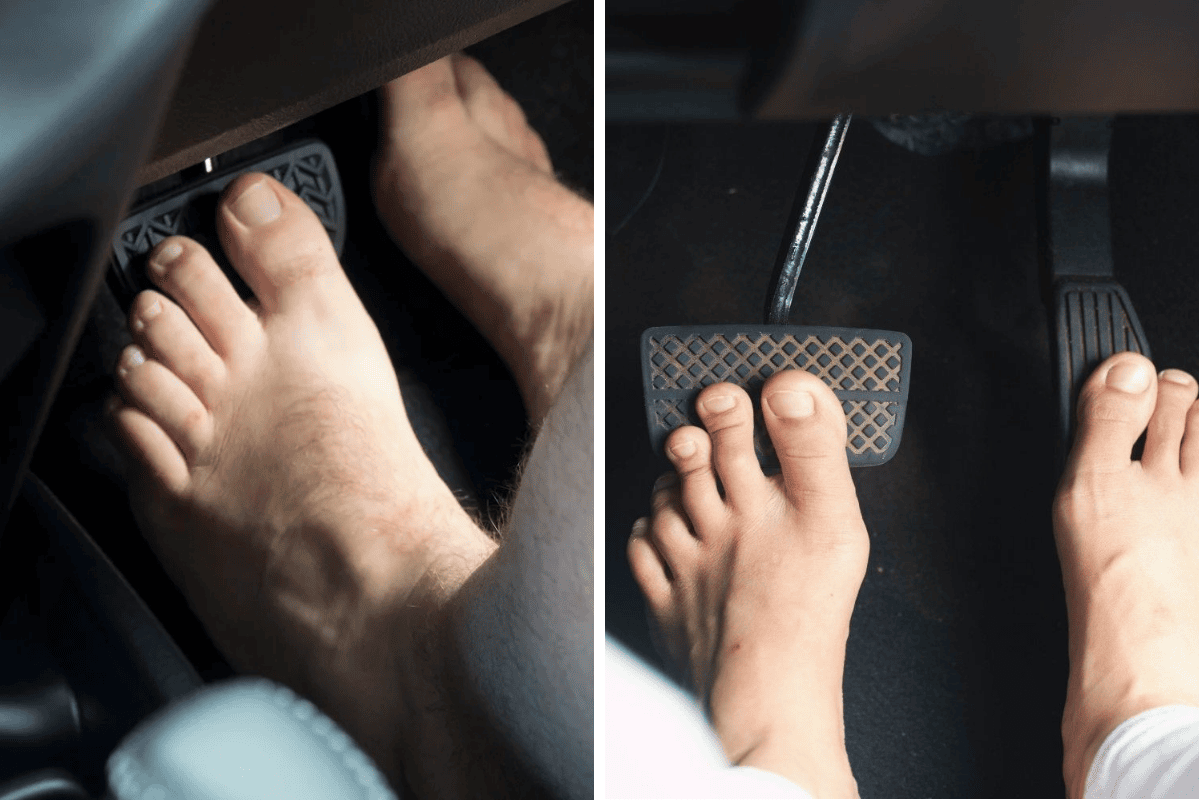
Driving barefoot in Iowa is not illegal under state law, as no statute mandates footwear for vehicle operation. However, Iowa authorities deem it unsafe and warn it could contribute to liability in accidents, emphasizing full control of the vehicle at all times.
Iowa’s Legal Stance
Iowa Code § 321.285 requires drivers to operate vehicles in a safe manner but makes no mention of shoes or barefoot restrictions. Similarly, § 321.236 stresses a general duty of care without specifying footwear.
The Iowa Department of Transportation and driver manuals prioritize safe pedal control over attire. No specific ticket exists for driving shoeless; enforcement focuses on reckless driving (§ 321.277) or failure to maintain control (§ 321.280) if an incident occurs.
This aligns with all 50 states permitting barefoot driving legally, though many like Iowa officially discourage it.
Safety Concerns
Bare feet increase risks: they can slip off pedals, especially if sweaty or wet, reducing braking/acceleration force. In crashes, bare feet heighten injury odds from glass or debris.
State driver education materials highlight these hazards, noting distractions like stubbing toes or adjusting position. AAA experts confirm uneven pressure on pedals from bare feet.
Potential Liabilities
While no direct fine applies, barefoot driving may serve as evidence of negligence in accidents. Courts could cite it under contributory fault, affecting fault percentages or insurance payouts.
Insurance providers rarely deny claims solely for no shoes but scrutinize if it impaired control. Reckless driving fines start at $65-$625 plus points on your license.
| Scenario | Legal Outcome |
|---|---|
| Pulled over barefoot, no issue | No ticket; officer may warn |
| Accident with proof of control | No added liability from feet |
| Slip cited as accident cause | Possible reckless charge, higher insurance |
| Repeat unsafe driving | License suspension risk |
Comparisons to Other States
Iowa mirrors permissive states like California, Ohio, and Arizona—no bans, but “unsafe” labels apply. Exceptions: Alabama bans barefoot motorcycling; some Tennessee counties restrict locally.
Stricter perceptions stem from outdated myths or driving school advice, not codified law.
Practical Advice
Opt for closed-toe shoes or secure sandals for grip. Keep spares in your car for emergencies. If stopped, affirm vehicle control—footwear alone won’t trigger citations absent violations.
For hot Iowa summers or beach trips, convenience tempts, but safety trumps: wet sand amplifies slip risks.
Insurance and Enforcement Insights
Claims adjusters view barefoot driving neutrally unless proven causal. Iowa DOT road safety consultants stress personal responsibility over mandates.
Officers in Des Moines or Quad Cities rarely target footwear; focus remains on speed, weaving, or impairment.
Historical Context
Barefoot myths trace to 1950s-60s safety campaigns amid rising accidents. No Iowa law ever banned it; modern codes evolved to performance-based rules.
As of April 2026, no changes noted—verify via Iowa DOT for updates.
Conclusion for Drivers
Freedom exists to drive barefoot in Iowa, but wisdom favors shoes for control and liability shields. Prioritize safety to avoid indirect penalties in real-world scenarios.
SOURCES:
- https://isitillegalto.com/drive-barefoot/iowa/
- https://www.superlawyers.com/resources/traffic-violations/driving-barefoot-is-it-legal/