
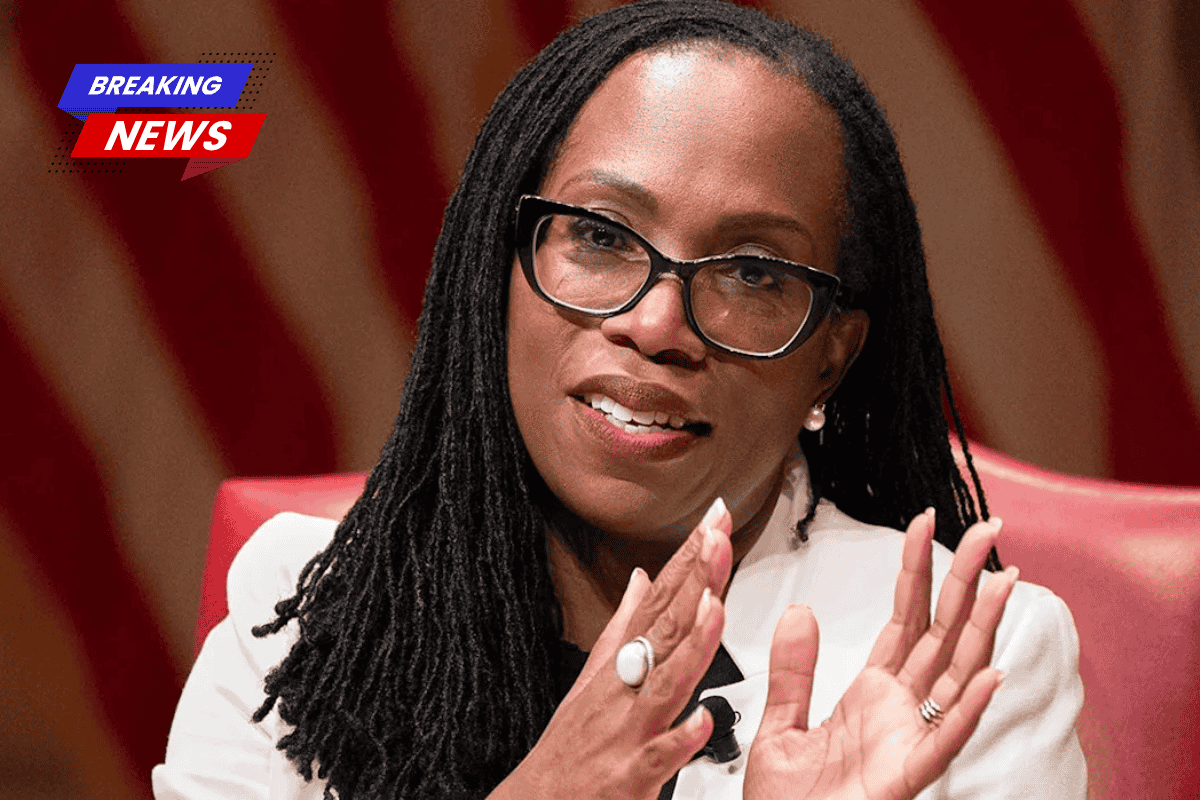
A recent comment by Ketanji Brown Jackson during Supreme Court hearings has triggered strong reactions, especially from conservative leaders and commentators in the United States.
What Did Justice Jackson Say?
During oral arguments, Justice Jackson used an example to explain the idea of “jurisdiction” and “allegiance.” She said that if she travels to Japan and commits a crime like stealing a wallet, Japanese authorities have the right to arrest and punish her.
Her main point was simple:
Even as a visitor, a person must follow the laws of the country they are in. This creates a legal relationship between the person and that country.
She then questioned whether this kind of relationship could also apply to people living temporarily or illegally in the United States, in the context of citizenship laws.
Why Is This Important?
The discussion is linked to a major legal issue: birthright citizenship in the United States.
This comes after Donald Trump introduced a 2025 executive order. The order suggests that children born in the U.S. should not automatically get citizenship if their parents are:
- in the country illegally, or
- temporary residents
The debate focuses on a line from the 14th Amendment, which says anyone born in the U.S. and “subject to the jurisdiction thereof” is a citizen.
What Are Critics Saying?
Many conservative figures strongly disagreed with Justice Jackson’s analogy.
- Ted Cruz said the definition of “allegiance” was incorrect
- Ron DeSantis dismissed the argument outright
- Commentators like Clay Travis and Dana Loesch criticized her reasoning
Their main argument is:
Being under a country’s laws (jurisdiction) is NOT the same as loyalty or allegiance.
They say:
- Tourists must follow laws, but they are not citizens
- Criminals are also subject to laws, but that does not make them part of the nation
Some critics also pointed out that countries like Japan have stricter citizenship rules based on parentage, not birthplace.
What Do Supporters Think?
Supporters of Jackson’s argument believe she was exploring a legal idea, not making a final claim. Supreme Court justices often ask hypothetical questions during hearings to test different interpretations.
Her question tries to understand whether legal responsibility to a country can be linked to citizenship rights.






