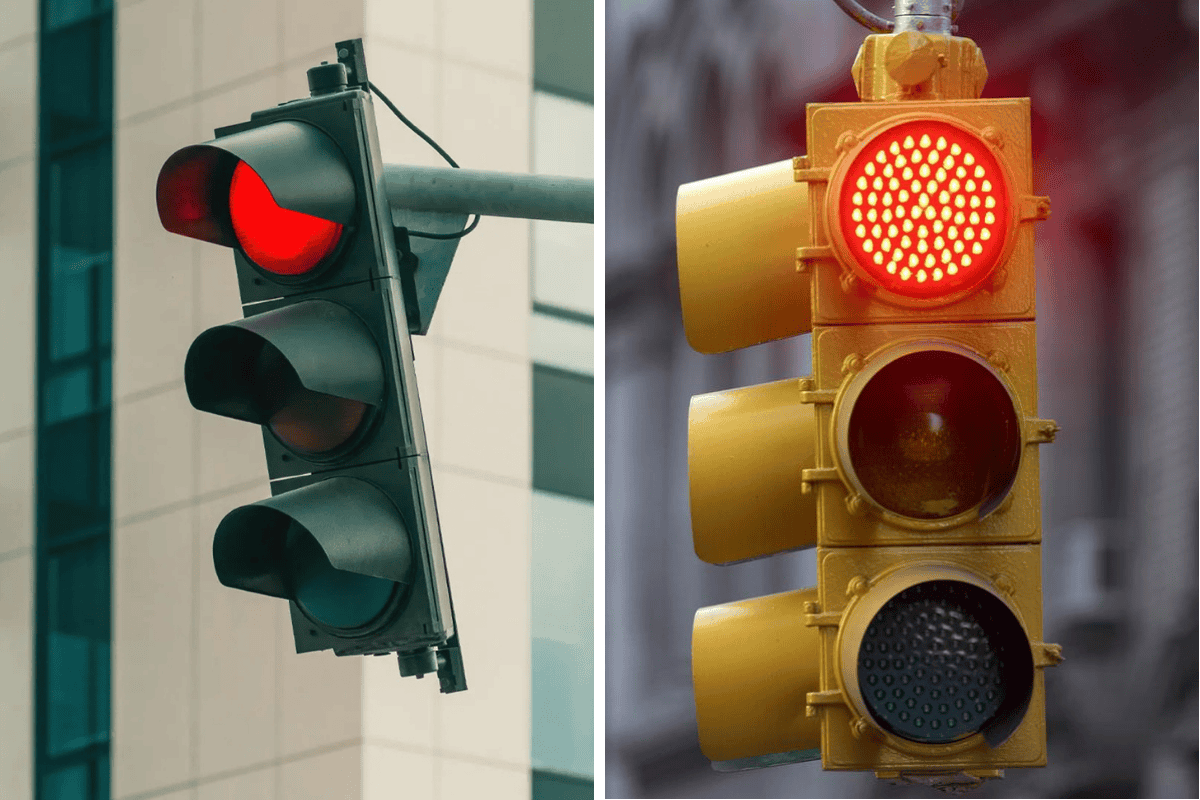
Kansas maintains a standard right-turn-on-red rule in 2026 with no statewide changes, allowing drivers to turn right after a full stop unless prohibited by signs. Kansas Statute § 8-1508 explicitly permits this maneuver while requiring caution and yielding to pedestrians and oncoming traffic.
Core Rule Explained
Under K.S.A. 8-1508(c)(2), vehicles facing a steady red light may enter the intersection cautiously for a right turn after stopping. Drivers must yield to any vehicle, pedestrian in a crosswalk, or traffic with right-of-way—no assumption of clearance.
The rule applies unless a “No Turn on Red” sign is posted, which overrides permission. Signals must be obeyed per the uniform traffic legend in § 8-1508.
Left turns on red are allowed only from one-way streets onto another one-way street proceeding left, per subsection (c)(3).
2026 Updates and Stability
No legislative changes to right-turn-on-red occurred in the 2025-2026 Kansas session. The Kansas Legislature’s 2025-26 statutes confirm § 8-1508 remains unchanged from prior years, prioritizing safety via signage over blanket bans.
Neighboring Kansas City, Missouri (not Kansas), enacted school-zone prohibitions in late 2025 following a child’s death, but this does not affect Kansas proper. Kansas drivers should watch for local signs in high-pedestrian areas like Lawrence or Topeka.
Procedure Step-by-Step
- Come to a complete stop behind the limit line or crosswalk.
- Verify no prohibiting sign.
- Check for pedestrians, cyclists, and cross traffic.
- Proceed slowly if clear, activating turn signal 100 feet prior per § 8-1548.
- Yield continuously during the turn.
Failure to signal properly risks a $35-200 fine under turning movement rules.
Safety Considerations
Right-on-red reduces fuel use and idling emissions but heightens pedestrian risks—40% of such fatalities involve right-turning vehicles nationwide. Kansas DOT emphasizes eye contact with walkers and double-checks for children/dashers.
In reduced visibility (rain, night), treat as higher hazard. Cameras at intersections enforce via tickets averaging $100 plus court fees.
Penalties for Violations
| Violation | Fine Range | Points |
|---|---|---|
| Running red/illegal right-on-red | $100-500 | 4 |
| Failure to yield pedestrian | $75-300 | 2-4 |
| No turn signal | $35-200 | 1 |
| Reckless turn causing accident | $200-1,000+ | 4-6 |
Repeat offenses add license suspension risks under § 8-2110. Insurance hikes follow 3+ points.
Local Variations
Kansas cities cannot ban right-on-red statewide without signs; preemption limits broad ordinances. Wichita and Overland Park post bans at dangerous intersections (e.g., near schools, hospitals). Always scan for regulatory signs.
High-injury corridors may see more prohibitions per Vision Zero initiatives, but no 2026 mandates.
Comparisons to Neighbors
| State | Right-on-Red Policy |
|---|---|
| Kansas | Allowed unless signed |
| Missouri | Allowed; some KC school bans |
| Oklahoma | Allowed unless signed |
| Nebraska | Allowed; stricter yields |
All follow 1974 federal energy push for RTOR, saving 500k gallons gas daily nationwide.
Practical Driver Tips
- Creep forward only after stopping; full stops evade camera tickets.
- Use mirrors and neck-turn for blind spots.
- In trucks/SUVs, high hoods obscure pedestrians—lean if needed.
- Winter ice: Extra caution; hydroplaning turns common.
- Apps like Waze flag no-turn signs real-time.
For CDL holders, log as basic control skill; violations count against commercial status.
Enforcement and Technology
Kansas Highway Patrol uses LIDAR/photo enforcement at 500+ intersections. 2026 sees expanded AI cameras detecting yield failures, with 20% violation uptick noted in urban audits.
DOT public campaigns stress “Stop-Yield-Go” via billboards and apps. No hands-free law ties in—phones distract 25% of RTOR errors.
Historical Evolution
Adopted post-1973 oil crisis, RTOR cut stops 35%. Kansas codified in 1974 updates to Uniform Act. Pedestrian advocacy prompted sign-based flexibility over bans.
As of April 2026, stability holds amid national debates on default bans.
SOURCES:
- https://www.kslegislature.gov/li/b2025_26/statute/008_000_0000_chapter/008_015_0000_article/008_015_0008_section/008_015_0008_k/
- https://law.justia.com/codes/kansas/chapter-8/article-15/section-8-1508/