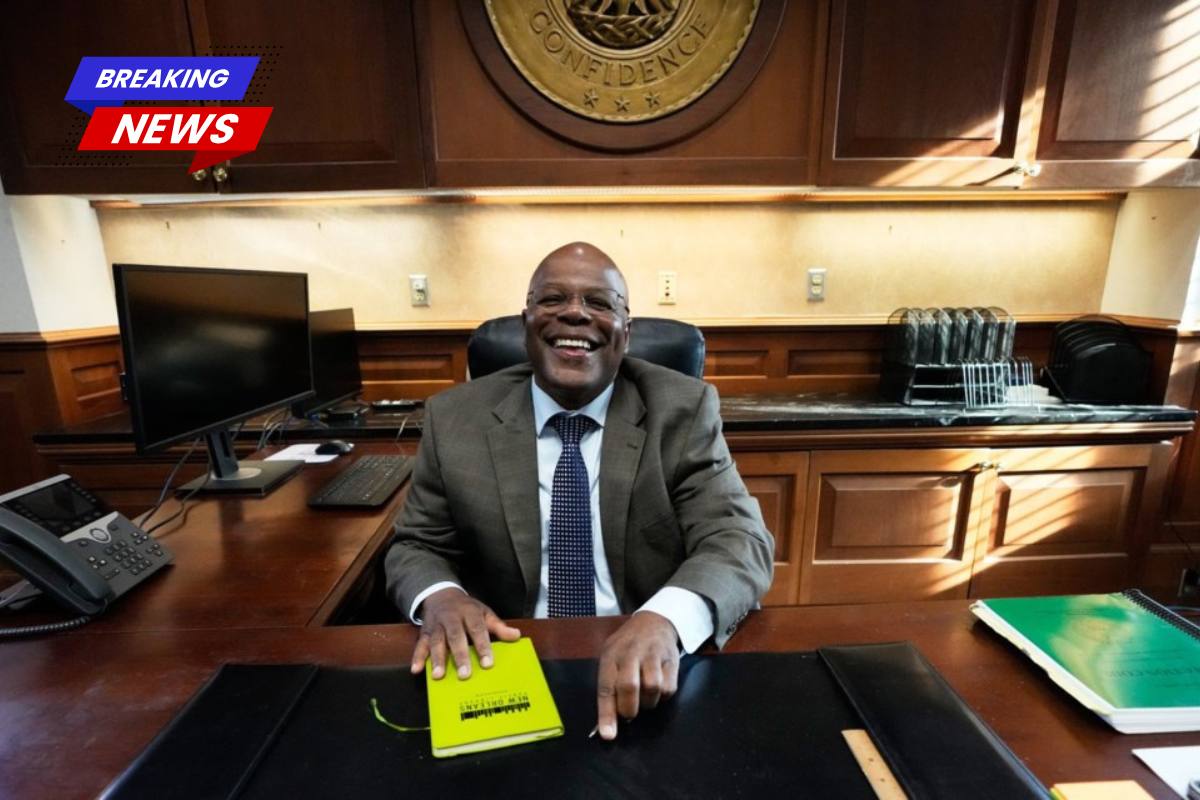
Calvin Duncan, a Louisiana man who spent decades wrongfully imprisoned, briefly assumed the role of Orleans Parish criminal court clerk on Monday, only to have his position frozen later that morning by a higher court’s intervention.
Background of the Case
Duncan, who was elected to serve as criminal court clerk with 68% of the vote, saw his new role challenged by a recent state law passed under the guidance of Republican Gov. Jeff Landry. Just days before Duncan’s term was set to begin, the GOP-controlled state legislature passed a law eliminating the clerk position, transferring the responsibilities to another official.
However, U.S. District Judge John deGravelles intervened on Sunday, issuing a restraining order. He ruled that eliminating the clerk’s office violated Duncan’s constitutional rights to due process, as it replaced an elected office with a political appointee. DeGravelles emphasized that the state still has the authority to abolish agencies but that it could not bypass due process in doing so.
Court’s Intervention and Legal Battle
In response to the judge’s decision, Louisiana appealed, calling the ruling “threatening chaos.” The 5th U.S. Circuit Court of Appeals granted a stay, pausing the lower court’s order. Duncan, seated in the clerk’s office, defiantly told the Associated Press, “I am the clerk of the criminal district court, that will never change.”
However, after the stay was granted, Duncan complied with the court’s decision and ceased acting as the clerk. His spokesperson, Emily Ratner, confirmed that Duncan continues to adhere to the law and is following the evolving legal process.
Civil Rights and Political Implications
The controversy surrounding Duncan’s position has sparked concerns about voter disenfranchisement, particularly in New Orleans, a predominantly Black city. Duncan’s supporters argue that the attempt to eliminate the office undermines the will of the voters and the legitimacy of the democratic process.
Civil rights groups, including the American Civil Liberties Union (ACLU) of Louisiana, have joined the fight, asserting that Duncan’s term, which began at midnight, cannot be cut short by the state.
Alanah Odoms, director of the ACLU of Louisiana, remarked that the state’s delay in handling the matter could not legally diminish Duncan’s elected term. She vowed to continue fighting for Duncan’s right to serve, possibly taking the case to the U.S. Supreme Court.
Legislative and Financial Implications
The law that eliminated the criminal court clerk’s position was signed by Gov. Landry on Thursday. It tasked the civil clerk of court with overseeing both the civil and criminal court responsibilities. Chelsea Richard Napoleon, the civil clerk, stated that she was monitoring the case and intended to fulfill her duties according to Louisiana law.
Proponents of the legislation argue that consolidating the two clerk positions would improve government efficiency, with some noting that the state would save an estimated $27,300 annually. However, the full long-term financial impact is unclear. Critics of the measure, including New Orleans officials, say they were not consulted and oppose the changes.
Duncan’s Journey and Legal Career
Duncan’s journey to this moment is a remarkable one. After spending years wrongfully convicted of murder, his conviction was vacated in 2021. Duncan, who taught himself law during his imprisonment, went on to become a licensed attorney.
He ran for the clerk’s position, promising to improve access to court records and reform the office, using his personal experience fighting for justice as a key part of his campaign.
Despite the legal challenges, Duncan expressed optimism about the future. He reflected on his journey, saying, “It’s something I’ve been working toward a very long time. This is a testament that God is still in control.”