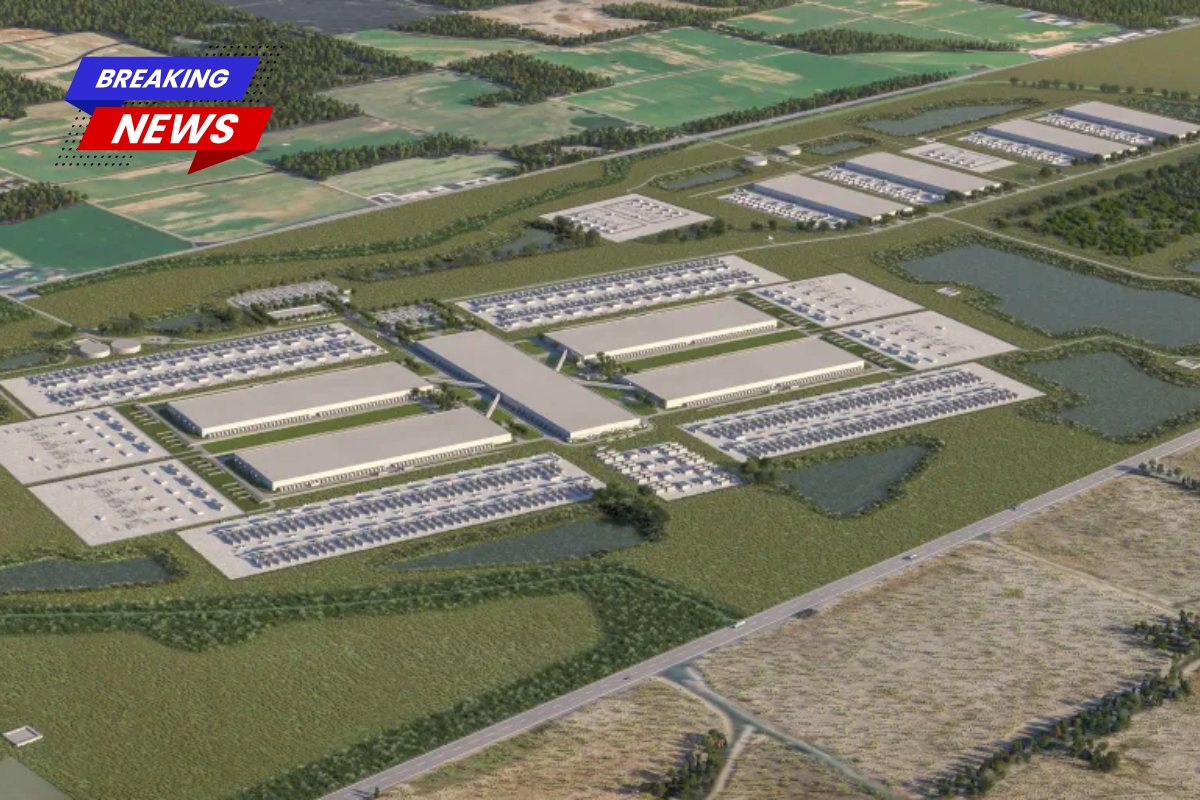
Louisiana’s decision to offer massive tax incentives for Meta’s new Hyperion data center has sparked a major debate over public spending, corporate subsidies, and the future of artificial intelligence infrastructure in the United States.
The project, planned for rural Richland Parish, is valued at around $10 billion and is expected to become one of Meta’s largest AI-focused data centers. However, critics argue the state may be giving away far more than it receives in return.
According to reports, the agreement could provide Meta with nearly $3.3 billion in tax breaks over the next 20 years. The deal has drawn national attention because the value of the incentives is larger than several major state public service budgets, including law enforcement funding.
Louisiana Offers Massive Tax Breaks to Meta
The state’s incentive package reportedly exempts Meta from paying state and local sales taxes on AI and data center equipment for two decades. Since Meta plans to spend an estimated $35 billion on graphics processing units (GPUs) and other AI infrastructure, the savings quickly become enormous under Louisiana’s tax structure.
Officials reportedly adjusted existing broadband-related legislation to make the project possible. What originally focused on expanding internet access in rural communities has now been transformed into a broader incentive program aimed at attracting large technology infrastructure investments.
Supporters of the project argue that landing a major Meta facility could bring long-term economic development, increase investment in rural Louisiana, and place the state at the center of the rapidly growing AI industry.
Growing National Competition for Data Centers
Louisiana is not alone in offering huge incentives to technology companies. Across the country, states are competing aggressively to attract AI and cloud computing infrastructure projects.
Virginia reportedly provides around $1.9 billion annually in data center incentives, while Georgia offers more than $2.6 billion each year. Texas has also rapidly increased its tax breaks for the industry, with incentives reportedly growing from around $150 million to over $1 billion annually within a single year.
The expansion of artificial intelligence and cloud computing has created huge demand for large-scale data centers. Tech companies are searching for locations with available land, energy resources, and favorable tax policies.
Because of this competition, state governments are increasingly willing to rewrite laws and create special financial packages to secure these high-profile projects.
Critics Question the Cost of the Deal
While supporters focus on economic growth, critics believe the cost to taxpayers may outweigh the benefits. Some policy experts argue that highly profitable technology companies do not require large public subsidies in order to expand operations.
Kasia Tarczynska of Good Jobs First reportedly described the Louisiana incentives as wasteful and suggested the final value of the tax breaks could become even larger than current estimates.
One of the biggest concerns involves the number of permanent jobs expected from the project. Reports suggest Meta plans to create around 500 long-term positions by 2035. Critics argue that when compared to the estimated $3.3 billion in incentives, the subsidy amount per job becomes extremely high.
Opponents also point out that public services such as schools, police departments, roads, and healthcare systems continue facing budget pressure while major corporations receive billions in tax relief.
Community Opposition to Data Centers Increasing
Resistance to large data center developments is growing in many parts of the country. Communities often raise concerns about environmental impact, energy usage, water consumption, noise, and strain on local infrastructure.
Reports indicate that dozens of data center projects across the United States have already faced opposition or delays in 2025. Public opinion surveys also suggest many Americans are uncomfortable with large industrial-scale technology facilities being built near residential communities.
Some state lawmakers are now reconsidering whether aggressive incentive programs are sustainable. Legislators in multiple states have reportedly proposed reducing or fully repealing certain data center tax break programs.
The debate reflects a larger national question about how governments should balance economic development with public spending priorities.
AI Expansion Continues Despite Debate
Even with growing criticism, the artificial intelligence industry continues expanding rapidly. Companies such as Meta, Google, Microsoft, and Amazon are investing billions of dollars into AI infrastructure as competition intensifies.
Large AI systems require enormous computing power, which depends on massive data centers filled with advanced processors and networking equipment. As demand for AI technology grows, states are expected to continue competing for these projects because of the economic influence and prestige they can bring.
For Louisiana, the Hyperion project could transform Richland Parish into an important technology hub. At the same time, the deal has become a symbol of the growing national debate over corporate subsidies and whether taxpayers receive enough value in return.