
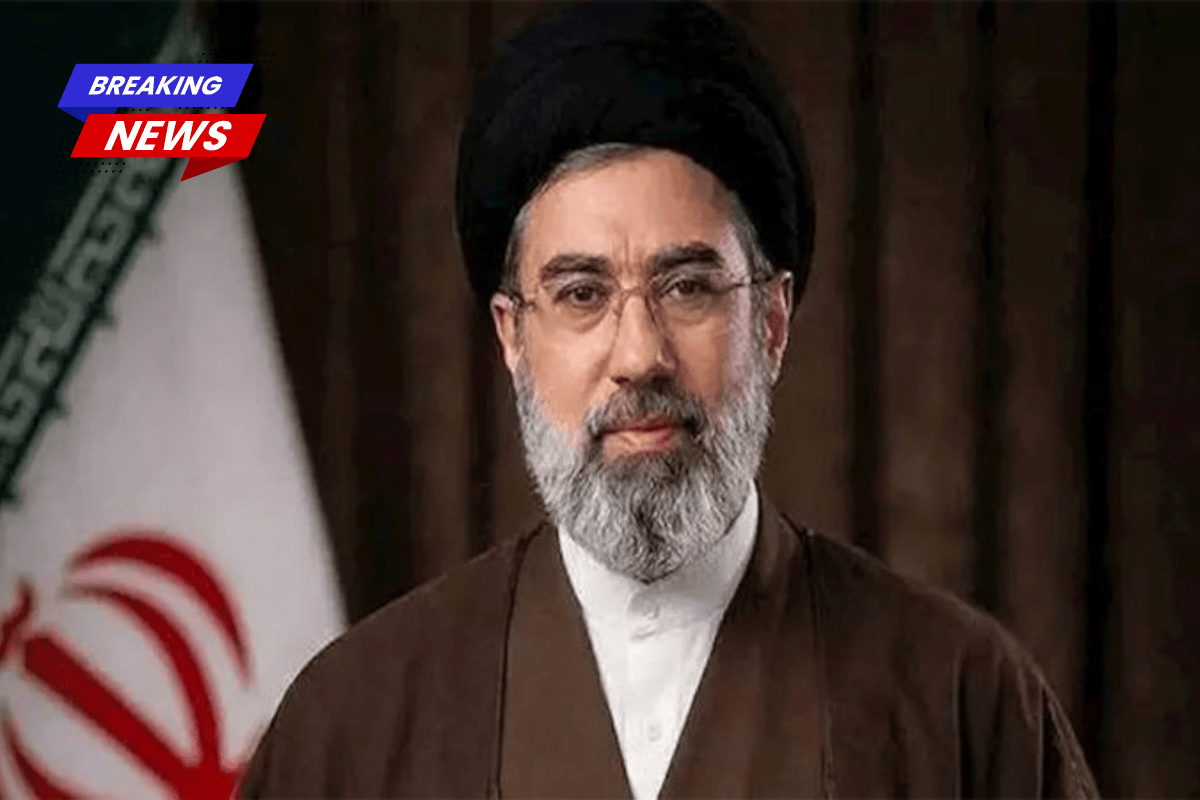
Reports about Iran’s new supreme leader, Mojtaba Khamenei, have created a lot of attention and confusion. According to a report by The Sun, he has been appointed to the country’s top post even though he is said to be in a coma after suffering serious injuries in alleged U.S. and Israeli strikes.
The report claims he lost a leg and also suffered major stomach and liver damage. At the same time, the outlet itself admitted that these claims could not be independently verified because of Iran’s current internet blackout. This makes the situation highly unclear, but it has still sparked major discussion about Iran’s leadership, regional tensions, and the possibility of a wider conflict.
Claims about Mojtaba Khamenei’s medical condition
The report says Mojtaba Khamenei is receiving treatment in Sina University Hospital in Tehran. It also claims that a special section of the hospital has been fully sealed off and is being protected by security officers. According to the same report, he is under the care of Mohammad Reza Zafarghandi, who is described as Iran’s Health Minister and a leading trauma surgeon.
The most serious claim is that Khamenei is in a coma and has suffered life-changing injuries, including the loss of a leg. It is also said that he has severe stomach and liver damage. These details, if true, suggest that his condition is extremely critical. However, since the information has not been independently confirmed, it should be treated carefully.
One interesting point mentioned in the report is that Iranian state television has reportedly referred to him as a “wounded war veteran.” This phrase has added more fuel to the discussion, as many people see it as a sign that he may indeed have been injured in a major attack.
Questions over his appointment as supreme leader
The biggest issue in this story is the claim that Mojtaba Khamenei has already been appointed as Iran’s new supreme leader. If that is true, it would be a major political development not only for Iran but also for the wider Middle East.
What has raised even more questions is that his first message as supreme leader was reportedly released in writing, not through video or audio. In normal situations, a newly appointed leader would usually appear in public or at least address the nation directly. A written message instead of a live appearance has made many observers wonder whether his health condition is too serious for him to speak publicly.
Because of the internet blackout and the lack of clear official confirmation, many parts of this story remain uncertain. Still, the report has become important because it touches both on Iran’s political leadership and the possibility of further military escalation.
The message attributed to him
According to the report, a written statement was released through networks linked to the Iranian regime on Thursday. The message was presented as Mojtaba Khamenei’s first communication after becoming supreme leader.
In that document, he allegedly said Iran would continue strong action against the United States and its allies in the region. The letter claimed that Iran would try to keep the Strait of Hormuz closed, which is one of the world’s most important oil shipping routes. Any move to block that route could have a major effect on global trade and energy prices.
The statement also reportedly said Iran would continue attacking U.S. military bases in the region. It added that Tehran would demand compensation from the United States for the alleged attacks. If Washington refused to pay, the letter claimed Iran would destroy assets equal to the value of what it believes it is owed.
These statements, if genuine, show an aggressive and confrontational tone. They also suggest that the situation could become more dangerous if tensions continue to rise.
Warning to Gulf countries and regional impact
The report says the letter also included a warning to Gulf countries. It urged them to make their position clear regarding what the message called “the aggressors of our dear homeland and the killers of our people.”
A key part of the statement focused on military bases used by the United States in neighbouring countries. The letter claimed that Iran had targeted those bases without acting aggressively toward the countries themselves. At the same time, it warned that such actions would continue.
The message also advised Gulf states to close American bases as quickly as possible. It argued that the U.S. promise of bringing peace and security to the region was false. This is an important point because it shows that Iran may be trying to pressure neighbouring countries into distancing themselves from Washington.
If this line continues, it could increase pressure across the Gulf region and make diplomatic relations even more difficult.
Why this report needs caution
This story has received attention because of its dramatic claims, but it is important to approach it with care. The report itself admits that the details are impossible to fully verify under the current internet blackout in Iran. That means readers should not treat every claim as confirmed fact.
There are a few reasons why caution matters here:
- The report depends on unnamed sources inside Tehran.
- Independent verification is reportedly not possible at the moment.
- The message attributed to Khamenei was written, not delivered in person.
- State media language can sometimes be open to different interpretations.
In sensitive international matters like this, early reports can be incomplete, misleading, or politically motivated. That does not mean the claims are false, but it does mean they should be read carefully until stronger evidence emerges.
What this could mean for Iran and the region
If Mojtaba Khamenei has truly become Iran’s new supreme leader while being seriously injured, it would mark a highly unusual and unstable political moment. A leader taking charge under such conditions could create uncertainty inside Iran’s power structure. It may also affect how military and diplomatic decisions are made in the coming days.
The reported message shows a hardline position against the United States and signals more pressure on Gulf countries. It also raises concerns about the Strait of Hormuz, which is critical for global oil supply. Even the suggestion of keeping that route closed can increase fear in international markets and create anxiety across the region.
At the same time, because the report is not independently verified, the full truth is still not clear. What is certain is that the story reflects the deep tension surrounding Iran, its leadership, and its conflict with outside powers.
Until reliable confirmation comes from stronger sources, this report should be seen as a major but unverified development. For now, it highlights just how tense and uncertain the situation has become in the Middle East.






