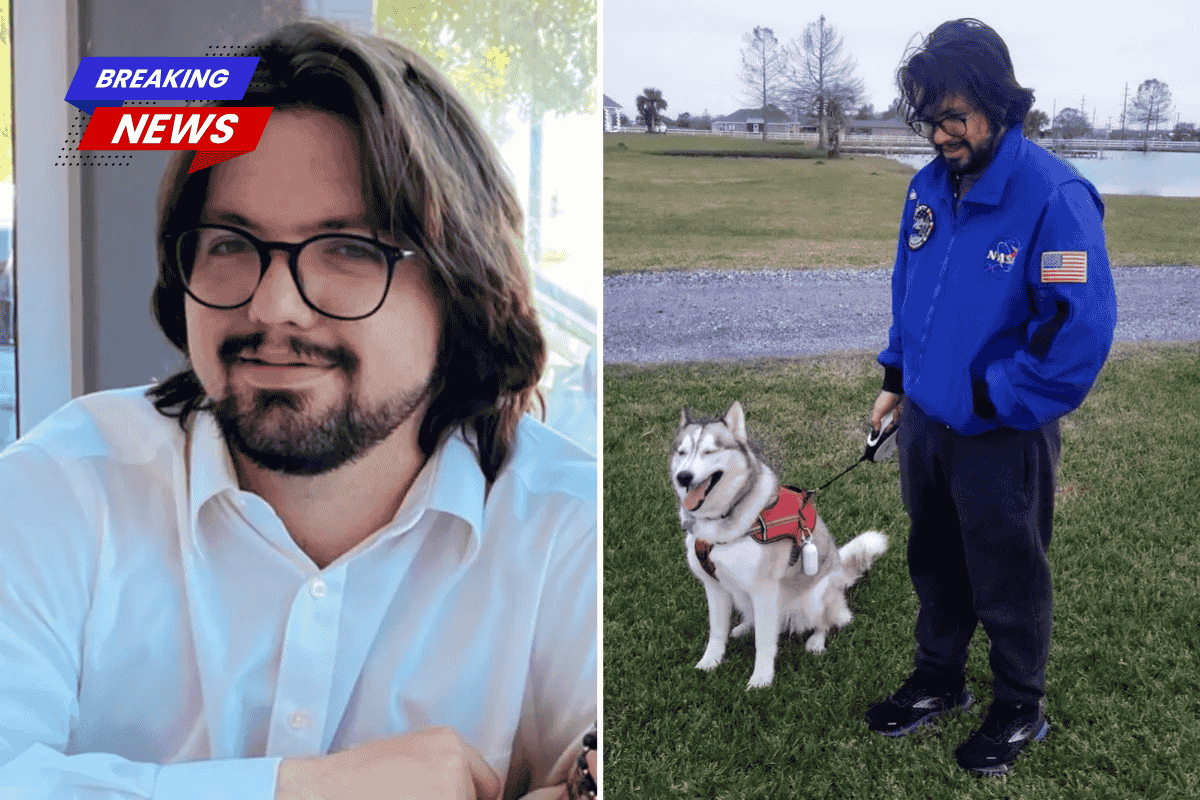
The mysterious death of NASA scientist Joshua LeBlanc in Huntsville, Alabama, has raised alarm and speculation, especially considering his high-profile work in nuclear propulsion technology and his sudden, uncharacteristic disappearance.
What Happened to Joshua LeBlanc?
On July 22, 2025, 29-year-old Joshua LeBlanc died in a fiery crash while driving his Tesla in Huntsville. The vehicle, found burned beyond recognition, had collided with a guardrail and then several trees before bursting into flames. The crash occurred around 2:45 p.m., but the story behind the incident started earlier that day.
Earlier in the morning, LeBlanc had been reported missing by his family after failing to show up for work at NASA. This was unusual for LeBlanc, who worked as an aerospace technologies electrical engineer specializing in nuclear propulsion systems. At 4:32 a.m. on the same day, his family had reported him missing, noting that his phone and wallet had been left behind at his home.
Tesla’s Sentry Mode and Investigation
Using data from Tesla’s Sentry Mode, which tracks the vehicle’s surroundings and activity, police tracked LeBlanc’s movements. The data revealed that his vehicle had been parked at the Huntsville airport for several hours on the morning of his death. His family reported that this detour was out of character for LeBlanc, and he had not communicated with them during the morning hours.
LeBlanc’s body was later found inside the burned vehicle, and authorities identified him three days after the crash by using forensic analysis. The circumstances surrounding the crash, combined with his missing status and lack of communication, initially led his family to suspect foul play, including the possibility of abduction.
LeBlanc’s Work at NASA
LeBlanc had been a key figure in NASA’s nuclear propulsion research, specifically working on projects designed to enable faster space travel. He worked on NASA’s Space Nuclear Propulsion (SNP) Instrumentation and Control Maturation program, aimed at developing technology for crewed missions to Mars and outer solar system exploration.
Later, LeBlanc became a team lead for NASA’s Demonstration Rocket for Agile Cislunar Operation (DRACO), a cutting-edge project involving nuclear thermal propulsion technology.
A Growing Pattern of Mysterious Deaths
LeBlanc’s death is part of a disturbing trend that has emerged over the past few years. Since 2022, at least 12 people, many of them scientists and experts in nuclear research and space technology, have died or gone missing under suspicious circumstances.
Some of the notable names include:
- Monica Reza, 60
- Melissa Casias, 53
- Anthony Chavez, 79
- Steven Garcia, 48
- Retired Air Force Maj. Gen. William Neil McCasland, 68
In addition, several others, including Michael David Hicks, Frank Maiwald, and others tied to NASA’s Jet Propulsion Laboratory, have also passed or disappeared.
Though there is no official connection between these deaths and disappearances, the number of incidents has caught the attention of federal authorities and raised questions about a possible pattern.
Federal Investigation and Concerns
The White House has taken notice of the situation. President Trump commented last week, expressing concerns about the mysterious events. “I hope it’s random, but we’re going to know in the next week and a half,” he said after a meeting on the subject.
The FBI has confirmed that it is leading the investigation into these missing and deceased scientists. In collaboration with the Department of Energy, the Department of War, and local law enforcement, the FBI is working to uncover any potential connections or motives behind the deaths and disappearances.
In a statement to Fox News Digital, the FBI emphasized its commitment to investigating these cases, noting that the agency is working diligently with various partners to find answers.