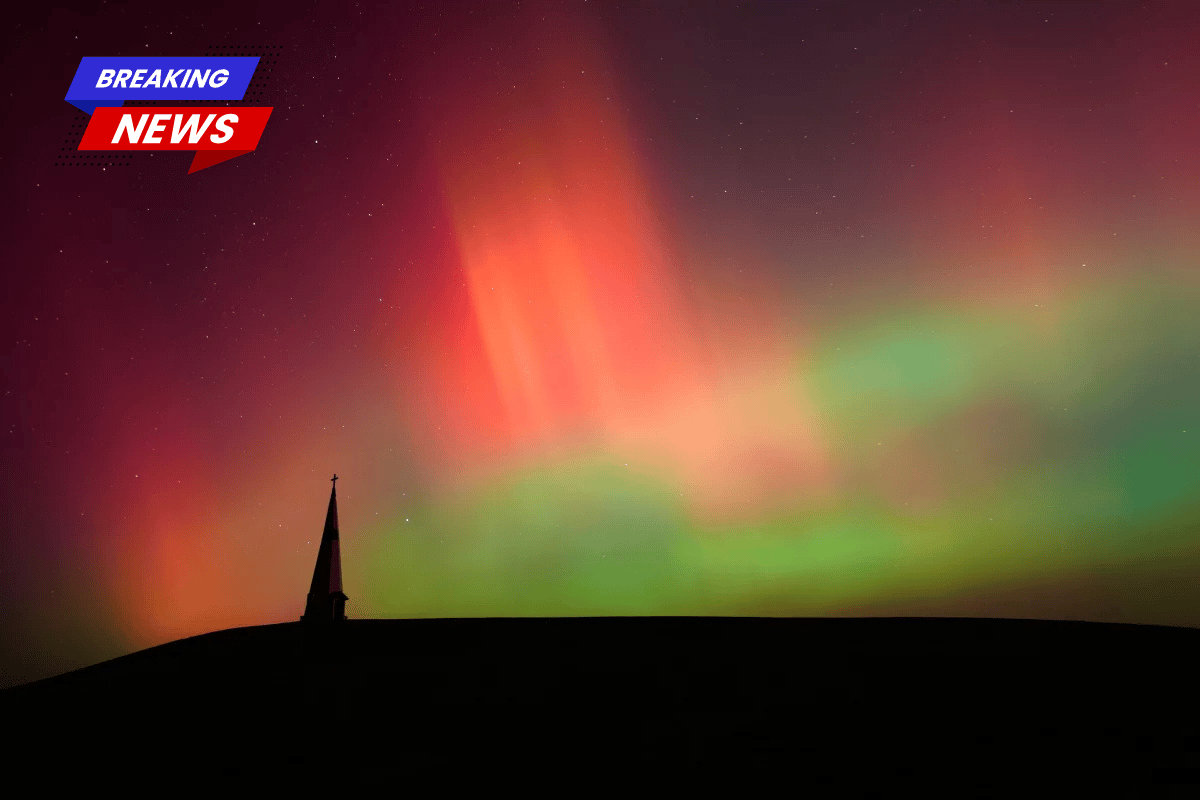
Stargazers across North America are in for a spectacular treat this weekend as the Northern Lights, or aurora borealis, are set to light up the night sky with brilliant shades of green, purple, and pink.
Aurora Borealis to Dazzle North American Skies
The natural light show occurs when energetic particles from space collide with Earth’s atmosphere, creating streaks of color near the planet’s magnetic poles.
- Best viewing areas: Northern United States and much of Canada
- Distance visibility: Up to 1000 km away from the aurora’s center
- Best viewing times: Just after sunset or just before sunrise, as auroras are not visible during the day
According to the National Oceanic and Atmospheric Administration (NOAA), this weekend’s geomagnetic storm will peak Saturday night, offering the most vibrant display for onlookers.
How Auroras Form
NASA explains that auroras are a form of space weather. High-energy particles from the sun are funneled by Earth’s magnetic field toward the poles. When these particles collide with atoms of gases like oxygen and nitrogen in the atmosphere, they release energy as light, creating the colorful displays in the sky.
The specific colors depend on the gas and altitude of the collisions:
- Green: Oxygen at lower altitudes
- Purple/Pink: Nitrogen and oxygen at higher altitudes
Aurora Viewing Tips
- Head northward for the best views, where the aurora will appear directly overhead.
- Stay away from city lights to reduce light pollution.
- Dress warmly if observing from outdoor locations in northern latitudes.
Auroras Are Rare for Many
While auroras are common near the poles—in countries like Russia, Norway, Sweden, Greenland, and Alaska—they are a rare sight for most of the continental U.S. and southern Canada. NOAA notes that March and November are typically peak months for auroras in North America, though scientists are still studying why this is the case.
“For many people, the aurora is a beautiful nighttime phenomenon that is worth traveling to arctic regions just to observe,” NOAA said. “It is the only way for most people to actually experience space weather.”