
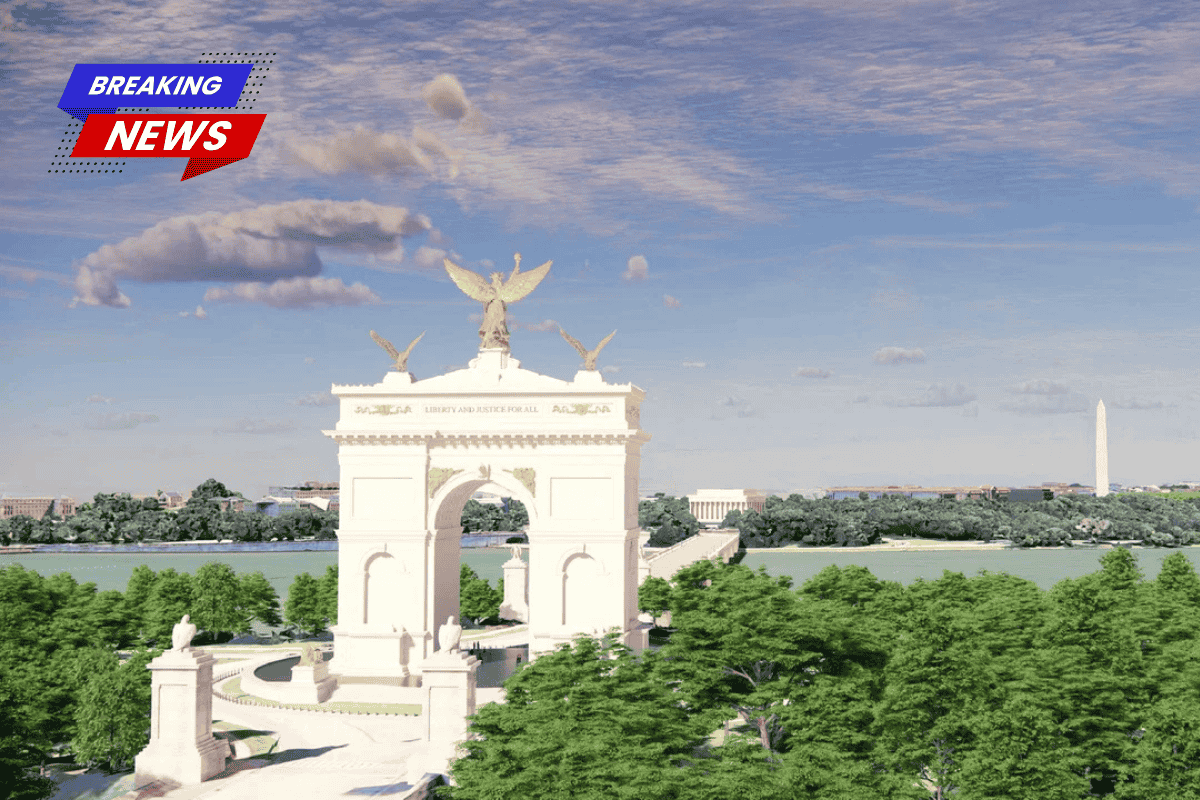
A bold proposal to build a massive triumphal arch in Washington, D.C., has sparked strong reactions, with many preservation groups and members of the public opposing the plan. Despite this, the project is still moving forward through early approval stages.
Trump’s Grand Arch Proposal
Donald Trump is pushing for the construction of a large triumphal arch in the nation’s capital. The design is inspired by the famous Arc de Triomphe in France but is planned to be even bigger.
The proposed structure would be around 250 feet tall, making it larger than major landmarks like the White House, the Lincoln Memorial, and the U.S. Capitol.
Design and Location Details
The arch would include a large pedestal and a 60-foot statue of Lady Liberty on top. It is planned to be placed near Arlington National Cemetery, specifically in a traffic circle between the cemetery entrance and the Lincoln Memorial.
Officials say the design aims to add a strong visual statement to the city’s skyline. However, critics argue that the scale is too large and does not match the surrounding historic area.
Strong Public and Expert Opposition
During the review process, nearly 1,000 public comments were submitted, and reports suggest that all of them were against the project. Preservation groups and experts have raised concerns about:
- The size of the structure being too large for the area
- Disruption of important historical views and sightlines
- The impact on the symbolic connection between national landmarks
Organisations like the DC Preservation League have said the arch could harm the visual and historical importance of the area.
Committee Moves Project Forward
The Commission of Fine Arts reviewed the proposal and, despite criticism, voted to continue the approval process.
The commission, which advises on design plans for monuments and federal buildings, includes members who support the project. Some officials believe the arch would be a meaningful addition to the city’s landscape.
Challenges Ahead for the Project
Even though the project is moving forward, it still faces several major hurdles. These include:
- Legal challenges from veterans’ groups
- Environmental and historical reviews under federal laws
- Approval from agencies like the Federal Aviation Administration due to its height and proximity to airport flight paths
These steps could delay or even stop the project if concerns are not addressed.






