
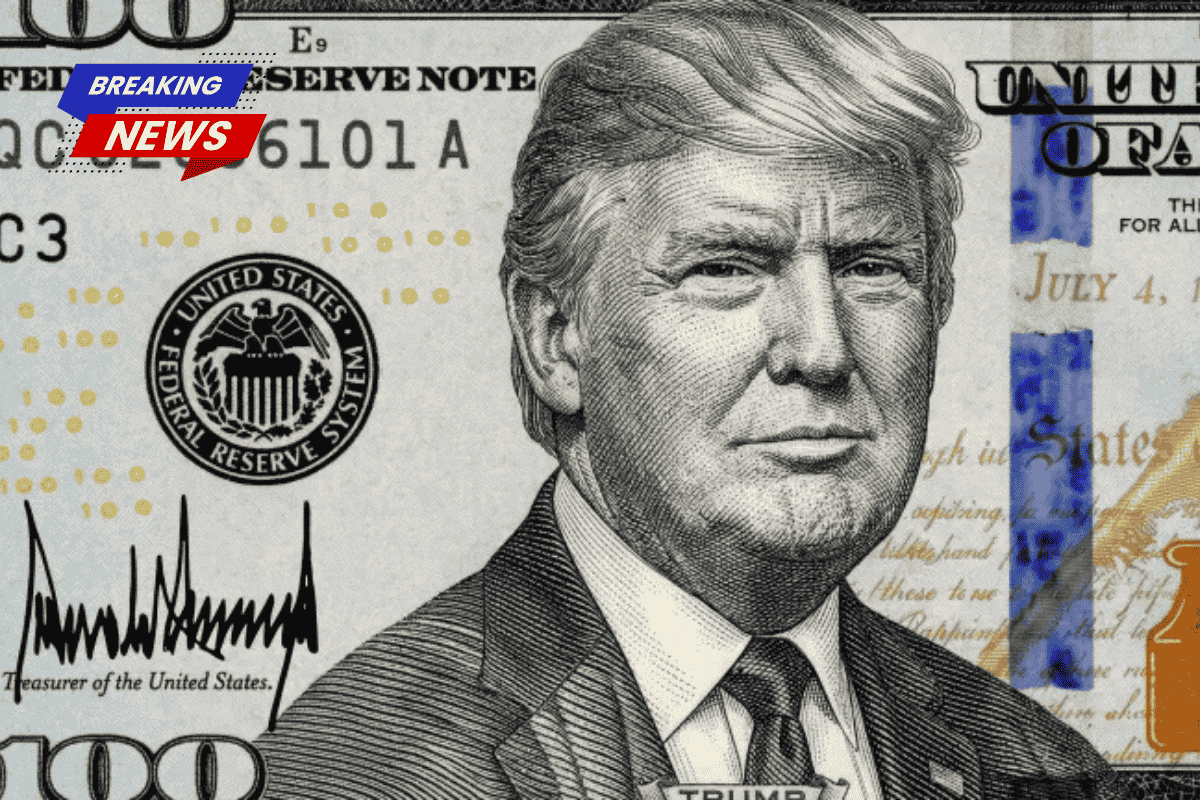
For the first time in U.S. history, a sitting president’s signature is set to appear on paper currency. The move involves Donald Trump, whose signature will be printed on new $100 bills along with Treasury Secretary Scott Bessent. These notes are expected to begin printing in June, marking the 250th anniversary of American independence.
A Historic Change in U.S. Currency
This change is significant because, until now, U.S. currency has never carried the signature of a sitting president. Traditionally, paper money includes the signatures of the Treasurer of the United States and the Secretary of the Treasury.
The overall design of the $100 bill will remain the same, including the image of Benjamin Franklin. The only change will be the replacement of the Treasurer’s signature with that of the president.
A Tradition Going Back to the Civil War
The practice of adding signatures to U.S. currency began during the Civil War in 1861. At that time, paper money had to be signed by hand by officials like the Treasurer and the Register of the Treasury.
By the late 1860s, these signatures were printed directly onto currency plates. Since 1914, Federal Reserve Notes have followed a standard format, showing the signatures of the Treasurer and the Treasury Secretary.
This tradition has continued for more than 160 years, making the current change a major break from the past.
End of a Long-Standing Practice
Every U.S. bill since 1861 has carried the Treasurer’s signature. Lynn Malerba, who is also the first Native American woman to hold the role, will be the last Treasurer to appear on U.S. currency.
The current Treasurer, Brandon Beach, will not have his signature printed on any bills, marking a clear shift in how currency is designed.
Why This Change Is Allowed
U.S. law does not allow living people to appear as portraits on coins. However, paper currency follows different rules. The U.S. Treasury has broader authority over its design, which makes this signature change legally possible.
This means that while a president’s face cannot be added to coins during their lifetime, their signature can appear on paper notes.
Part of a Larger Trend
This move is seen as part of a wider effort by the administration to place Trump’s name on various national symbols. His name has already been linked to federal buildings, programs, and even a commemorative gold coin.
Supporters say this reflects national pride and achievement, while critics may see it as a symbolic shift in tradition.
What Happens to Existing Currency
Current $100 bills that carry the signatures of Janet Yellen and Lynn Malerba will still remain valid. These notes will continue to circulate for years alongside the new version.
It may take a few weeks after printing for the new bills to reach banks and enter regular use.
Interest From Collectors
Currency collectors, also known as numismatists, are expected to show strong interest in this new series. Since it marks a historic first, these notes could quickly become collectible items.






