
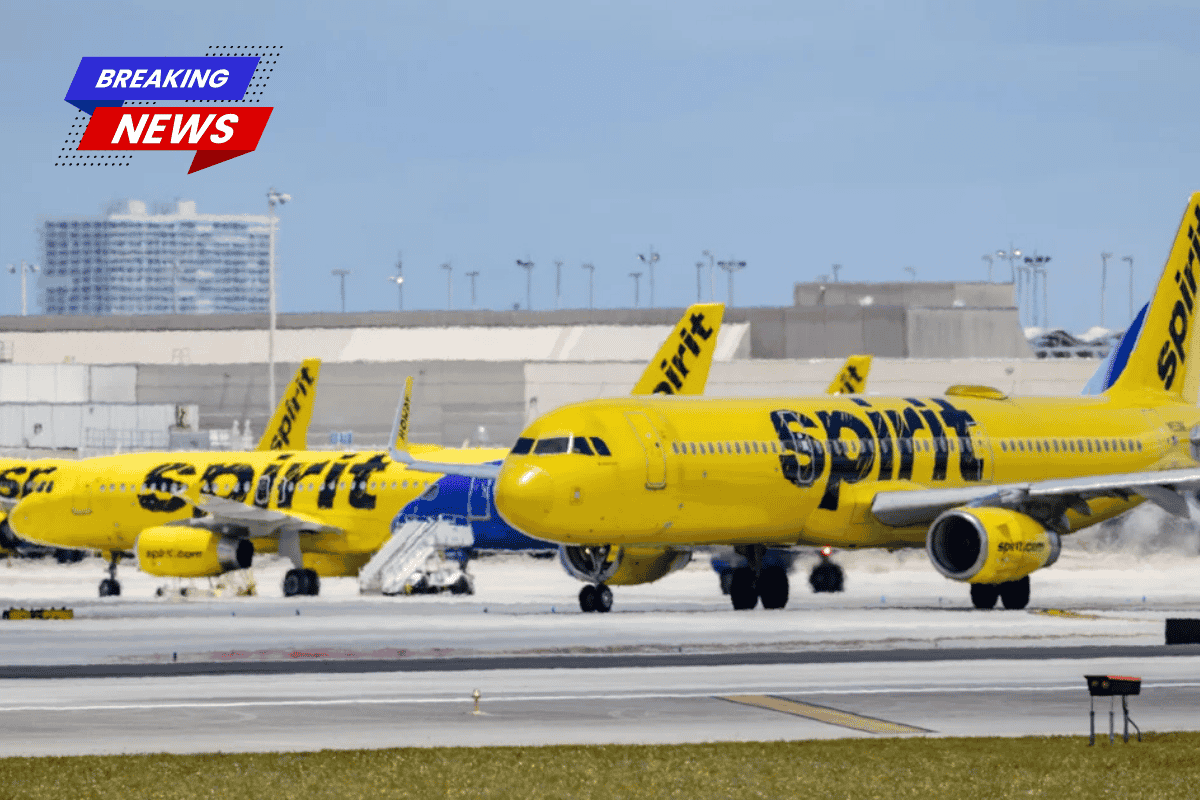
Spirit Airlines announced early Saturday morning that it is ceasing all operations after failing to secure a much-needed $500 million federal bailout. The Florida-based airline officially started an “orderly wind-down” of its services, effective immediately, leaving thousands of passengers stranded and prompting industry-wide reactions.
The End of Spirit Airlines
Spirit Airlines had faced significant financial challenges, including two previous bankruptcy filings. Despite restructuring agreements with bondholders earlier in the year, rising fuel prices linked to the Iran war pushed the airline over the edge.
Spirit could not recover without government assistance, and the administration’s proposed bailout, which would have given the U.S. government a 90% stake in the airline, ultimately fell through.
Impact on Passengers and Employees
All Spirit flights have been cancelled, and passengers have been advised not to go to the airport. For those who booked flights with credit or debit cards, Spirit will automatically process refunds.
The Department of Transportation confirmed that the airline has set up a refund reserve fund to ensure customers get their money back, with specific instructions for those who booked through third parties like travel agents.
Spirit’s closure will also have a significant impact on employees. The airline had already cut jobs and routes in recent years, reducing its workforce to approximately 7,500 employees.
The Department of Transportation said airlines like United, Southwest, JetBlue, and Delta would offer reduced fares to Spirit passengers, and American Airlines is reviewing options to take over Spirit’s routes.
Spirit’s History and Collapse
Founded in 1983 and originally known as Charter One, Spirit Airlines grew from a small charter operation to a budget airline offering low-cost flights across the U.S., Caribbean, and Latin America.
The airline, known for its bright yellow planes and “no-frills” model, faced increasing challenges, including surging fuel costs and the financial impact of the COVID-19 pandemic.
Spirit had already filed for bankruptcy twice—first in November 2024 and again in August 2025—as it struggled with mounting debt and losses exceeding $2.5 billion since 2020.
Despite the challenges, Spirit had managed to retain a loyal customer base and a significant market share, especially for budget-conscious travelers. But rising fuel prices, caused by the Iran war, exacerbated the situation, making it impossible for the airline to remain viable without government assistance.
Government and Industry Reactions
The Trump administration’s failure to agree to a bailout for Spirit Airlines has drawn mixed reactions. While President Trump expressed openness to a deal, he ultimately stated, “If we can do it, we’ll do it, but only if it’s a good deal.” As the situation unfolded, the White House confirmed that the administration would not make a last-ditch effort to save Spirit.
Meanwhile, other major airlines have stepped in to support stranded Spirit passengers. United Airlines launched a webpage offering capped fares for affected Spirit customers, while American Airlines plans to add capacity on Spirit’s high-demand routes.
Additionally, several airlines announced their intention to help Spirit’s displaced workers, offering job placement assistance and integration into their workforce.
A Major Blow to the Airline Industry
The closure of Spirit Airlines highlights the broader challenges facing the aviation industry, with rising energy prices and inflationary pressures impacting carriers globally. Deutsche Bank forecasts that U.S. airlines will face an additional $24 billion in fuel costs this year, though some of these costs will be offset by higher fares.
With Spirit Airlines gone, travelers and employees will feel the immediate impact, while the aviation industry must adapt to the loss of one of its largest budget carriers.






