The U.S. Senate has rejected a resolution introduced by Democrats that aimed to limit President Donald Trump’s authority to carry out additional military strikes against Iran without congressional approval. The proposal sparked intense debate in Washington as lawmakers discussed the balance of power between Congress and the president during wartime.
The vote came as tensions continue to rise following recent military actions by the United States and Israel against Iran.
Senate Votes Down War Powers Resolution
The Senate voted 53–47 against the war powers resolution that sought to restrict President Donald Trump from launching further military operations against Iran without approval from Congress.
The proposal was backed by 24 Democratic senators, two independents, and Republican Senator Rand Paul of Kentucky.
However, it failed to gain enough support. Senator John Fetterman of Pennsylvania was the only Democrat who voted alongside Republicans to oppose the resolution.
If the resolution had passed, it would have required the president to obtain approval from Congress before ordering additional military strikes on Iran.
Even if approved by the Senate, the measure would still have needed Trump’s signature or a two-thirds vote in both the House and Senate to override a likely presidential veto.
Conflict With Iran Sparks Political Debate
The resolution came after the United States and Israel launched military attacks on Iran last week.
The conflict has already resulted in significant losses. Reports indicate that six U.S. soldiers have died during the operations, and U.S. forces have reportedly killed Iran’s Supreme Leader Ayatollah Ali Khamenei.
Supporters of the resolution argued that Congress should have a stronger role in approving military actions.
The bill aimed to force the removal of U.S. forces from hostilities involving Iran unless Congress formally authorized those operations.
To pass in the Senate, the resolution required only 51 votes. However, it ultimately fell short.
House of Representatives Preparing Similar Vote
The debate over presidential war powers is expected to continue.
The House of Representatives is scheduled to vote on a similar resolution aimed at limiting the president’s authority to conduct military operations without congressional approval.
House Speaker Mike Johnson strongly opposed the proposal.
He said restricting the president’s ability to act as commander-in-chief during an ongoing conflict could be dangerous.
Johnson told reporters that removing the president’s authority to continue military operations would be a “frightening prospect” and expressed confidence that the measure would also fail in the House.
Democrats Warn Against Escalating War
Several Democratic lawmakers argued that expanding military operations could lead to a prolonged and costly war.
Senator Tim Kaine of Virginia, who introduced the resolution, urged his colleagues to reconsider further military escalation.
During a Senate speech, Kaine said he hoped lawmakers would recognize that this was not the right moment to expand the conflict.
This was the second time in the past year that Kaine forced a vote on a war powers resolution related to Iran.
He previously pushed for a vote in June after the United States bombed Iranian nuclear facilities.
Since June, lawmakers have introduced seven other war powers resolutions concerning Iran, but none have successfully passed.
Republican Lawmakers Support Military Action
Most Republican senators voiced strong support for the ongoing military operations.
Senator Lindsey Graham of South Carolina said the president should be allowed to continue the campaign against Iran.
He stated that lawmakers should support Trump and allow him to finish the military mission.
Senate Majority Leader John Thune also said he believed the president currently has the authority needed to carry out the operations underway in Iran.
However, Thune expressed hope that the conflict would not last for an extended period.
Debate Over the War Powers Act
Some lawmakers argued that the administration is operating within the limits of the 1973 War Powers Resolution.
Senator Josh Hawley explained that the law allows the president to conduct military operations for up to 60 days without congressional authorization.
According to Hawley, the requirement for congressional approval becomes more important if ground troops are deployed.
He noted that no U.S. ground forces have been sent into Iran so far.
Because of that, he believes the administration is still complying with the War Powers Act.
Concerns About Long-Term Military Campaign
Despite the administration’s assurances, some lawmakers remain worried that the conflict could turn into a long-term military campaign.
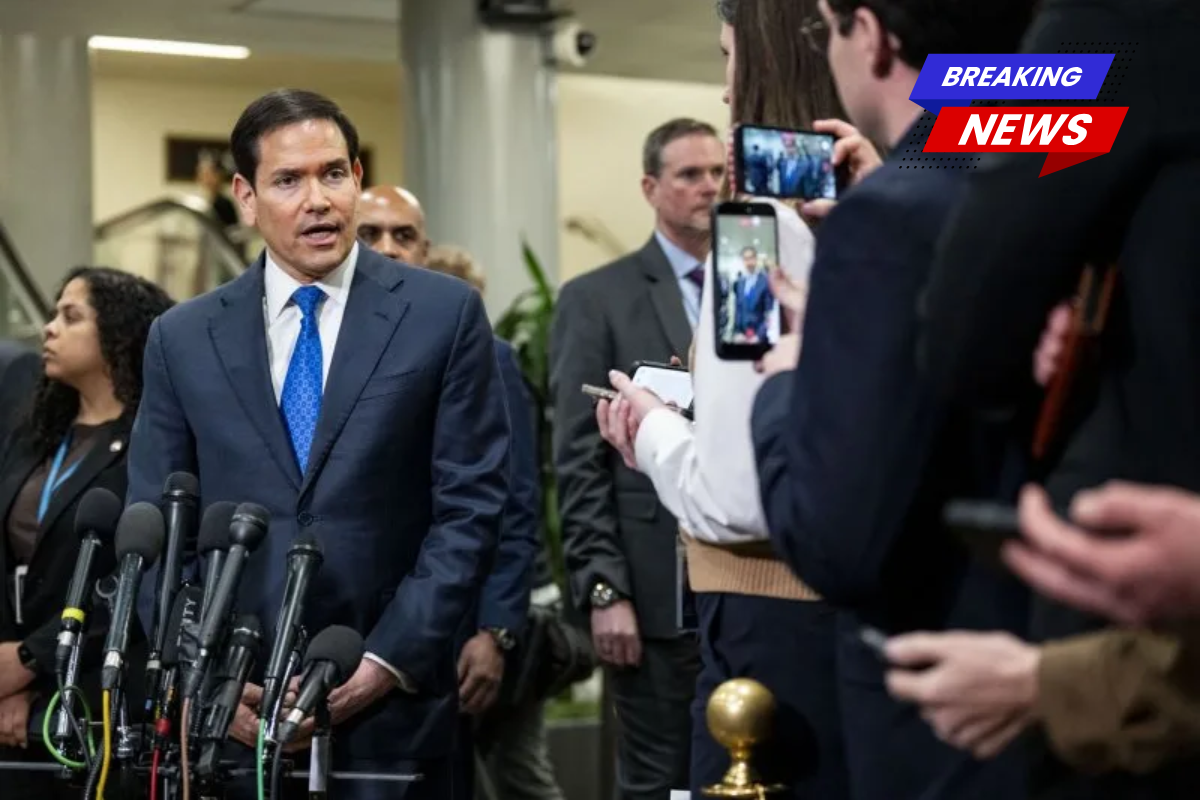
Senator Chris Murphy of Connecticut said briefings from Defense Secretary Pete Hegseth and Secretary of State Marco Rubio suggested the operation could continue for a long time.
Murphy also criticized the administration, accusing officials of not planning to seek congressional approval even if the conflict escalates further.
He warned that Congress must remain involved in decisions about war and military actions.