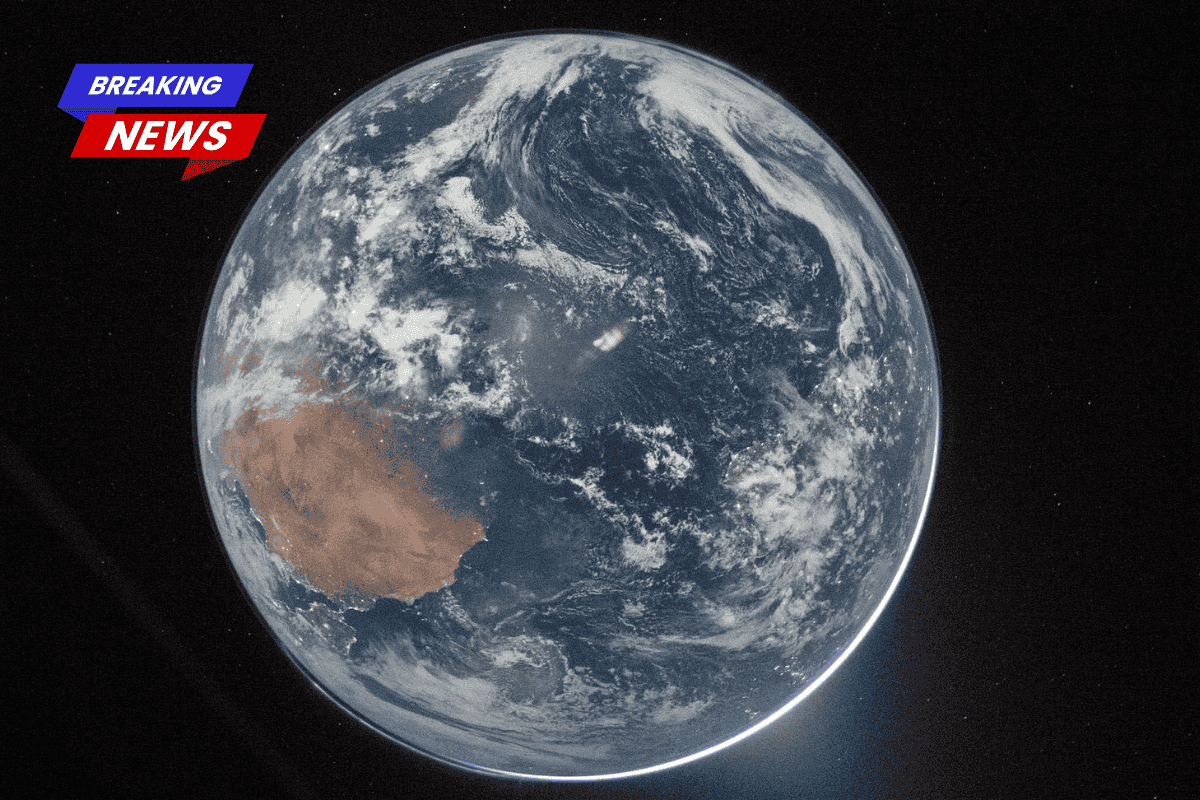
The crew aboard Orion spacecraft has already started sending back striking images of Earth during the Artemis II flight. One photo in particular, captured on April 2 by Commander Reid Wiseman, quickly went viral.
At first glance, it’s a classic space shot — a glowing blue Earth wrapped in swirling clouds. But look a little closer, and there’s something extraordinary happening at both ends of the planet.
Northern and Southern Lights in One Frame
The image reveals faint green arcs at both poles. These are the auroras — the northern lights (Aurora Borealis) and southern lights (Aurora Australis) — visible at the same time in a single photograph.
Seeing both at once is incredibly rare from Earth. From deep space, however, the astronauts had a unique vantage point that made this stunning double display possible.
A Bonus Phenomenon: Zodiacal Light
There’s more hidden in the image. Along the lower right edge of Earth, a soft glow appears — this is zodiacal light.
According to NASA, this effect occurs when sunlight scatters off dust particles in space. In this case, it’s visible because Earth is partially blocking the Sun from Orion’s perspective, creating a subtle but beautiful light band.
Preparing to Photograph the Moon
Alongside Wiseman, astronauts Victor Glover, Christina Koch, and Jeremy Hansen are now sharpening their photography skills.
Inside the tight Orion capsule — roughly the size of two minivans — they’re practicing with professional gear, including Nikon D5 and Z9 cameras. Shooting in microgravity adds an extra layer of difficulty, especially when using long lenses like 80–400mm.
A Rare Look at the Moon’s Far Side
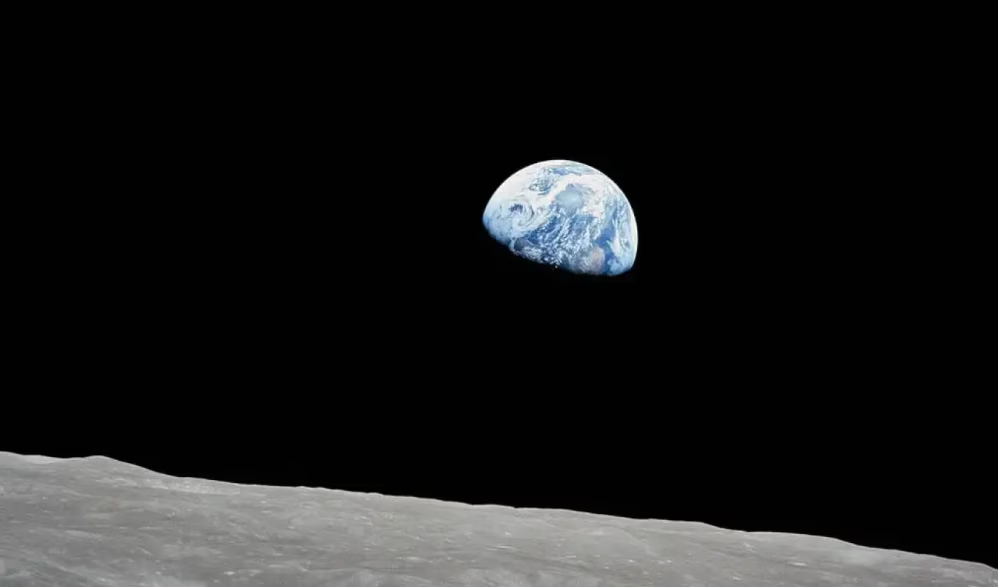
The preparation is leading up to a major moment on April 6, when the crew will spend about six hours observing the Moon’s far side — the half never visible from Earth.
NASA estimates they’ll be able to see around 20 percent of that hidden surface. It’s a rare opportunity, not just for science, but also for capturing images that few humans have ever had the chance to take.
A Historic Journey Continues
This mission marks the first time since 1972 that astronauts have travelled beyond Earth’s orbit. Every image and observation adds to a growing sense that humanity is once again pushing deeper into space — and seeing familiar sights, like Earth, in completely new ways.