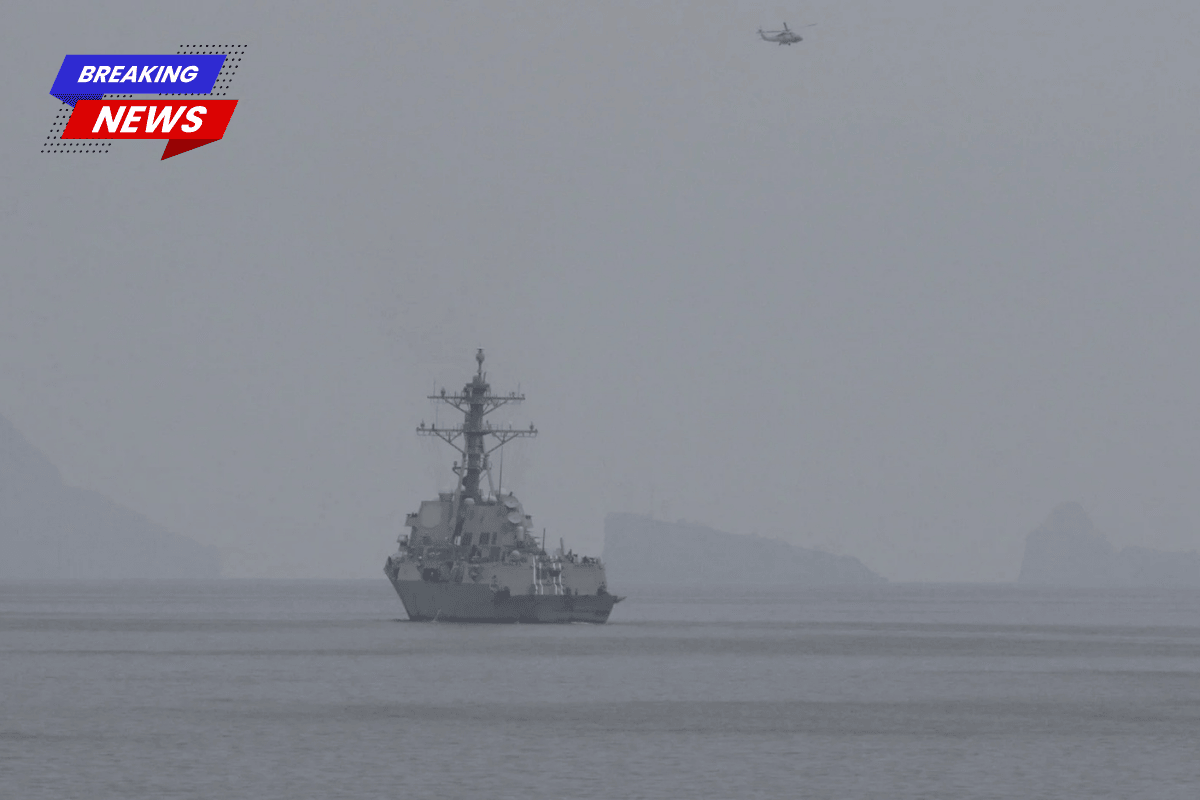
U.S. Navy destroyers sent a clear strategic message by sailing through the Strait of Hormuz with unusual transparency, signaling a direct challenge to Iran’s control over one of the world’s most critical waterways. The move comes amid rising tensions, ongoing ceasefire talks, and concerns over global energy supply.
U.S. Naval Movement Through the Strait
Two U.S. Navy destroyers, the USS Michael Murphy and the USS Frank E. Peterson, transited the Strait of Hormuz on Saturday.
In a notable shift from standard protocol, the ships activated their Automatic Identification System (AIS), making their presence visible. Experts, including Salvatore Mercogliano, said this was a deliberate move to show that U.S. forces could pass through the strait openly.
Strategic Signal to Iran
The strait has long been a point of tension, with Iran exerting influence over the narrow passage, which handles a significant portion of the world’s oil and natural gas shipments.
By openly navigating the waterway, the U.S. signaled its intent to maintain freedom of navigation and reduce Iran’s leverage over global trade routes.
Military Operations and Mine Clearance
According to U.S. Central Command, the destroyers are helping prepare for operations to clear naval mines reportedly placed by Iran’s Islamic Revolutionary Guard Corps.
Additional resources, including underwater drones and other naval assets, are expected to support efforts to secure safe passage for commercial shipping.
Admiral Brad Cooper stated that efforts are underway to establish a new safe route for maritime traffic through the region.
Confrontation at Sea
During the transit, Iranian forces reportedly issued warnings to the U.S. ships, calling it a “last warning.”
The U.S. response emphasized that the passage was conducted under international law and was not intended as a direct provocation.
Iranian media claimed the ships turned back after the encounter and that a drone was launched in their direction, though details remain contested.
Broader Military Buildup
The U.S. is continuing to increase its military presence in the region, with additional forces, including another aircraft carrier, Marines, and advanced weaponry, expected to arrive soon.
There are also indications that support ships and mine-hunting vessels may be operating nearby to assist in securing the waterway.
Impact on Global Trade and Energy
The Strait of Hormuz is a vital route for global energy supplies, and disruptions have already contributed to market instability.
Experts say that demonstrating safe passage through the strait could reassure commercial shipping companies and help restore confidence in oil transport routes.
Outlook and Rising Tensions
Despite ongoing ceasefire talks between the U.S. and Iran, tensions remain high.
Energy analyst Bob McNally suggested that further conflict may be possible, describing recent U.S. actions as efforts to weaken Iran’s ability to disrupt shipping.
If successful, these operations could reduce Iran’s influence over the strait and create conditions for a more stable and lasting ceasefire.