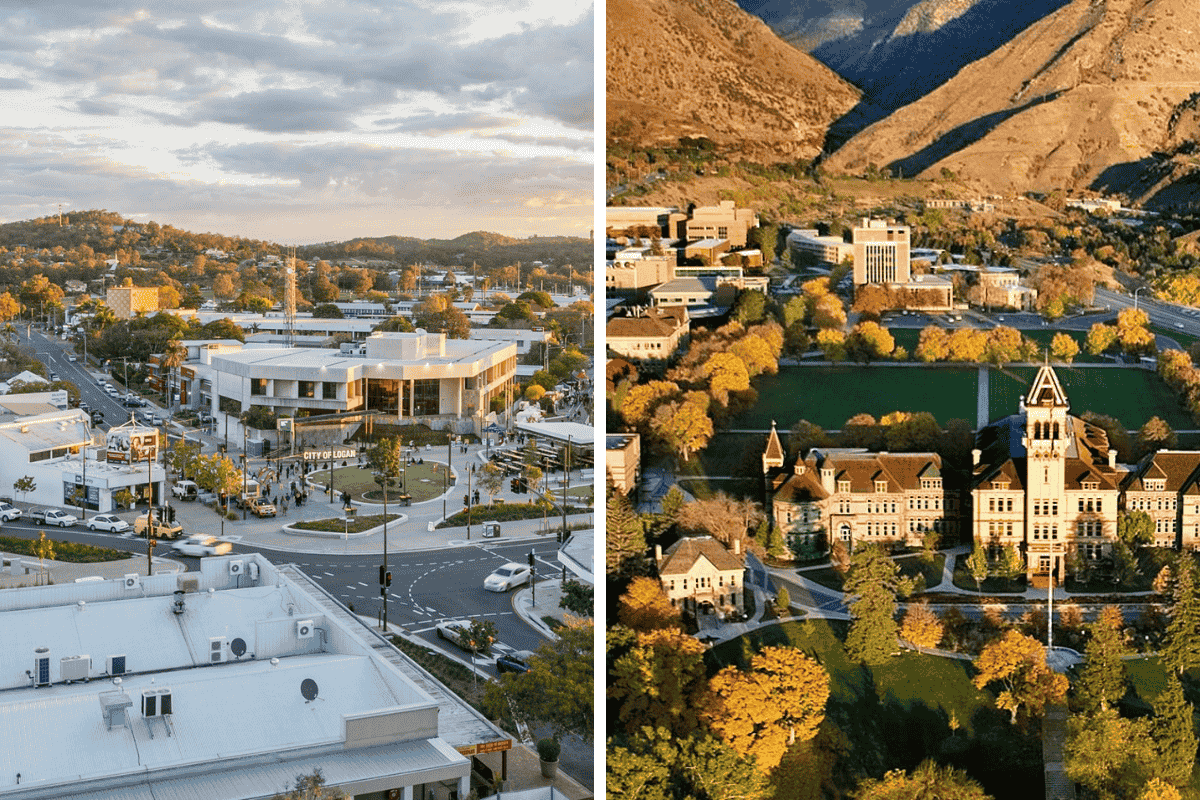
Logan, Utah, stands as the poorest city in the state based on recent analyses, grappling with a 24.1% poverty rate and median household income of just $52,473. Home to Utah State University, its student-heavy population drives economic challenges despite Cache Valley’s agricultural roots.
Economic Snapshot
Logan’s median income lags Utah’s statewide $95,166 average by over 45%, per 2026 ACS updates. Unemployment hovers at 4.2% (above state 2.8%), with 12,821 residents below poverty—highest raw numbers among peers. Moab edges in poverty percentage (19.9%), but Logan’s size amplifies impact.
Per capita income sits at $18,185 historically, though 2023-2026 data shows modest gains from tech spillovers. Housing costs strain budgets: Median home $380,000 vs. incomes.
Root Causes
Student influx (USU enrolls 28,000) inflates renter poverty; 40% households are students with part-time gigs in retail/food service ($15-18/hr). Cache County’s ag decline—dairy farms consolidate—hits families. Limited manufacturing leaves service dominance.
Pandemic aid faded; 2025 inflation bit harder here, with food insecurity at 18%.
Community Impacts
Food pantries like Cache Valley Food Bank serve 5,000 monthly; free clinics at USU handle surges. Schools report 35% free/reduced lunch eligibility. Homelessness ticks up 12% yearly, straining shelters.
Yet resilience shines: Community gardens, USU extension programs boost skills.
Comparisons to Peers
| City | Poverty Rate | Median Income | Population | Unemployment |
|---|---|---|---|---|
| Logan | 24.1% | $52,473 | 53,246 | 4.2% |
| Moab | 19.9% | $52,385 | 5,329 | 5.1% |
| Provo | 23.7% (White) | N/A | 115,000 | 3.5% |
| Vernal | 15.8% | $58,869 | 10,141 | 6.0% |
| Delta | 19.7% | $45,964 | 3,457 | 4.8% |
Logan tops lists for sheer scale; rural Delta leads small towns.
Government Responses
Utah’s Kem C. Gardner Institute flags Logan for targeted grants: $10M in 2026 workforce training via USU. Statewide, Piute County logs lowest incomes ($48,393 median), but urban focus prioritizes Logan. Federal Opportunity Zones spur investments.
Local: Main Street revitalization adds jobs; tech parks eye 1,000 hires by 2028.
Pathways Forward
Diversification beckons: Biotech from USU, tourism via Bear Lake. Median incomes could rise 15% with grads staying local. Challenges persist—affordable housing lags 20% demand.
Residents adapt via gig economy (Uber, DoorDash), side hustles. Faith networks (LDS emphasis on self-reliance) aid resilience.
Broader Utah Context
Utah boasts 11th-lowest per capita nationally but contrasts starkly: Summit County’s $91,286 towers over Logan’s metrics. State poverty averages 7.85% for Whites, but student/rural pockets skew higher.
SOURCES:
- https://www.roadsnacks.net/poorest-places-in-utah/
- https://en.wikipedia.org/wiki/List_of_Utah_locations_by_per_capita_income