
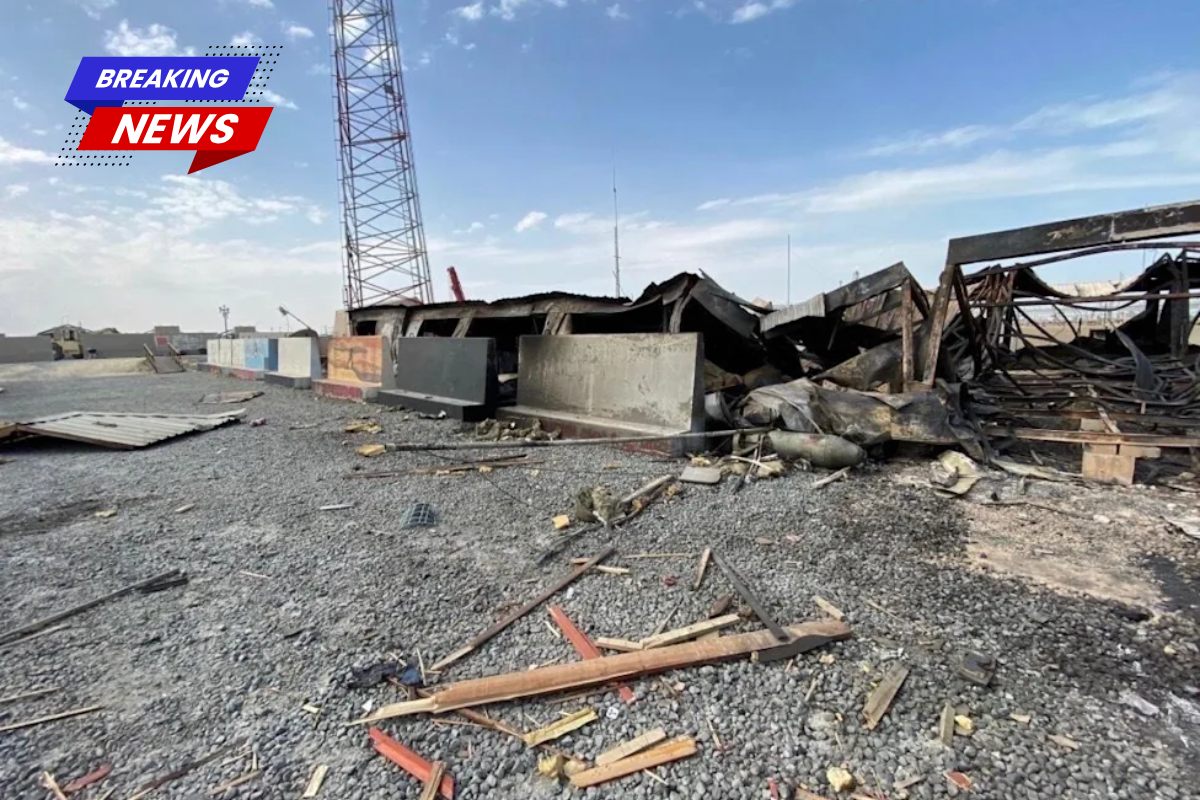
U.S. Army soldiers who survived a deadly Iranian drone attack on a command post in Kuwait are speaking out about what they describe as serious failures by the Pentagon to prepare and protect troops. The strike, part of Operation Epic Fury, killed six U.S. service members and injured 20, marking the deadliest attack on American forces since the Iran war began.
Soldiers Say Medical Support Was Inadequate
Weeks before the March 1 attack, soldiers from the Army’s 103rd Sustainment Command requested additional medical personnel and resources at Port of Shuaiba, a smaller outpost south of Kuwait City. Survivors told CBS News these requests were ignored, leaving the post ill-equipped to handle a mass casualty situation.
Major Stephen Ramsbottom said one of the soldiers killed, Master Sergeant Nicole Amor, might have survived if more medical support had been available. “She could have been saved. She fought the whole way and was trying to stay alive,” Ramsbottom said.
Survivors described a chaotic scene after the drone struck, with soldiers scrambling to find civilian passenger vans and local hospitals to treat the wounded. Ramsbottom expected a convoy of ambulances to arrive but found none.
Master Sergeant Ann Marie Carrier said there was no preparation for a mass casualty event, and the soldiers had not participated in drills or rehearsals for an aerial attack. “We didn’t have any training,” she said.
Details of the Attack
The drone hit the command post in the early morning hours after an initial missile alarm and “all-clear” signal. Ramsbottom recalled being at his desk when the drone pierced the building’s tin roof, sending shrapnel flying and striking him in the back of the head.
Carrier described chaos as she tried to assist her friend and fellow soldier, Amor, who was still breathing but critically wounded. Despite efforts to transport her to Adan Hospital, Amor died en route.
Concerns About Protective Measures
The post at Port of Shuaiba relied on steel-reinforced concrete barriers known as T-walls, designed to protect against mortars and rockets, but ineffective against aerial drone attacks. U.S. intelligence had warned in January that Iran might target the post, yet soldiers say leadership dismissed concerns about drone protection. “We were told: Don’t worry about protection,” Ramsbottom said.
After the attack, Defense Secretary Pete Hegseth described the drone as a “squirter” that bypassed the unit’s defenses, but soldiers dispute this characterization, emphasizing the lack of overhead protection and the vulnerability of the tin-roofed facility.
Pentagon Responds
A Pentagon spokesperson, Capt. Tim Hawkins of U.S. Central Command, said the department took “extraordinary steps” to protect troops during Operation Epic Fury. Hawkins added that accusations of blatant disregard for soldier safety were “unfounded and inaccurate” and that an investigation into the attack is ongoing.
Calls for Accountability
Survivors, including Ramsbottom and Carrier, say they are speaking out to prevent similar failures in the future. Ramsbottom stressed that proper planning could save lives in situations like this, even while acknowledging the pain the details may cause families of the fallen. “It’s a lesson learned. There could be other units in this very similar situation in the future,” he said.
The incident has sparked renewed scrutiny of military preparedness, medical readiness, and protective measures for troops stationed in vulnerable outposts, particularly in light of evolving drone warfare threats.






