
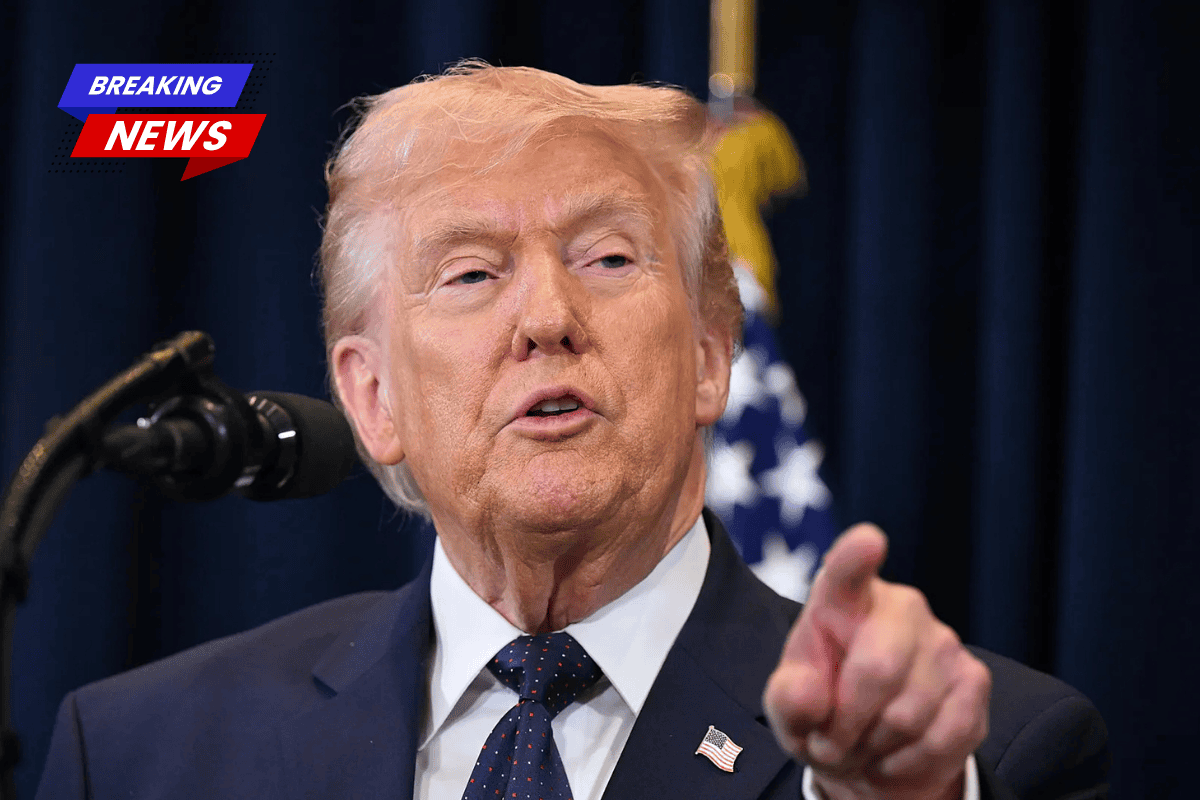
In a recent post on Truth Social, President Donald Trump urged nations dependent on oil from the Strait of Hormuz to take responsibility for securing the key waterway. This comes after his statement claiming that the United States had “completely destroyed” Iran’s military capabilities.
The Strait of Hormuz, a narrow passage in the Persian Gulf, is vital for global oil transport, carrying nearly 20% of the world’s oil supply. Tensions in the region have escalated as Iran has targeted ships, effectively blocking the passage for tanker traffic.
Trump’s Message and Call for International Cooperation
On Truth Social, President Trump expressed that while the U.S. had effectively decimated Iran militarily and economically, it was now time for other nations that depend on the Strait of Hormuz to step in.
He stated, “The United States of America has beaten and completely decimated Iran, both militarily, economically, and in every other way, but the Countries of the World that receive Oil through the Hormuz Strait must take care of that passage, and we will help – A LOT!”
Trump also acknowledged the continued threat from Iran, even after the U.S. had destroyed much of Iran’s military. “Even though the U.S. has already destroyed 100% of Iran’s military capability, it is still possible for them to send a drone or two, drop a mine, or deliver a close-range missile somewhere along this waterway,” Trump said.
He urged nations like China, France, Japan, South Korea, and the United Kingdom to send warships to help secure the region, although none of these countries have indicated they will do so.
U.S. Military Actions: Precision Strikes on Iran’s Oil Hub
Trump’s call for international assistance came after a significant U.S. strike on Kharg Island, a key Iranian oil hub. The Pentagon conducted a “large-scale precision strike” on the island, located about 300 miles northwest of the Strait of Hormuz.
This island is crucial to Iran’s oil exports, handling approximately 90% of the country’s oil shipments. U.S. Central Command confirmed the destruction of key military infrastructure, including naval mine storage facilities, missile storage bunkers, and multiple other military targets, while ensuring that the oil infrastructure remained largely intact.
According to U.S. officials, over 90 Iranian military targets were hit, and while the oil infrastructure was spared, the military impact on Iran’s ability to engage in further attacks was significant.
The Strait of Hormuz as a Battleground
The Strait of Hormuz has emerged as a central battleground in the ongoing conflict between the U.S. and Iran. By closing the Strait to oil tanker traffic, Iran has been able to place immense financial pressure on the U.S. and its Gulf allies, as well as on global oil markets. Despite Iran’s military inferiority, this leverage has provided the country with a form of resistance.
However, attempts to reopen the Strait could lead to further escalation. As tensions rise, the possibility of additional confrontations looms, threatening global energy stability.
Iran’s Response: A Threat of Retaliation
Iran’s armed forces have made it clear that they will retaliate if their oil and gas infrastructure is targeted. According to Fars News Agency, Iran’s military warned that any attack on their oil infrastructure would result in a dramatic response, saying, “If this happens, all oil and gas infrastructure in the region in which the U.S. and its allies have interests will be set on fire and destroyed.”
The Iranian Revolutionary Guards specifically mentioned the United Arab Emirates (UAE), claiming that U.S. missile attacks had been launched from there. Iran also asserted its right to defend its national sovereignty and territory, particularly targeting U.S. missile launch points in the UAE.
Escalating Tensions with the UAE
The UAE has become another focal point in the conflict, with reports of missile and drone strikes from Iran. The UAE’s Ministry of Defense reported that nine ballistic missiles and 33 drones were launched from Iran toward the UAE on a recent Saturday. Debris from an intercepted Iranian drone reportedly struck the Fujairah port, an oil facility in the UAE.
In response to the growing tensions, around 2,500 additional Marines and an amphibious assault ship are reportedly being deployed to the Middle East by the U.S. military.






