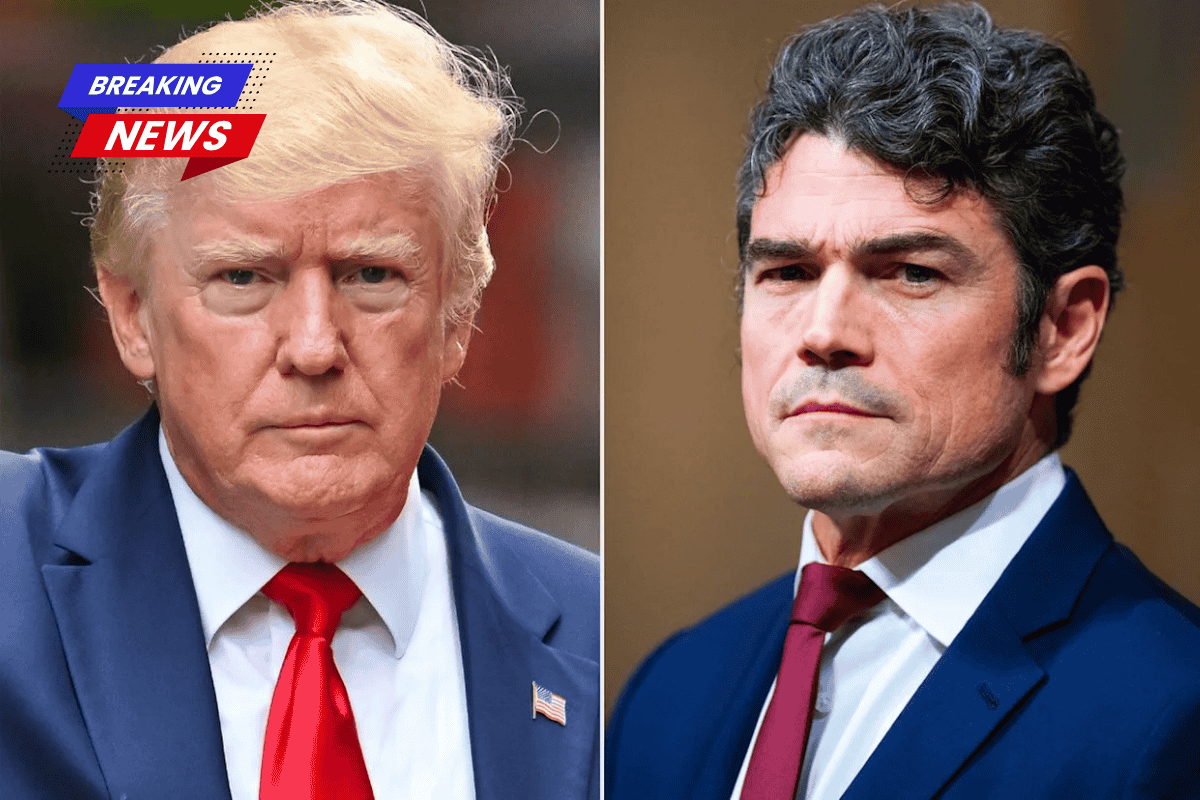
A fresh political controversy has emerged in the United States after Donald Trump publicly criticised his former counterterrorism chief, Joe Kent. The issue quickly turned personal, moving beyond policy disagreements to comments about Kent’s private life, which has drawn attention and criticism.
What sparked the conflict
The tension began after Joe Kent resigned from his role as Director of the National Counterterrorism Center. He stepped down in protest over the ongoing conflict involving Iran. Kent believed that Iran did not pose an immediate threat to the United States and opposed the decision to move forward with military action.
His resignation letter was strongly worded and made it clear that he disagreed with the administration’s approach. He also suggested that external pressure influenced the decision to engage in the conflict, which further deepened the disagreement.
Trump’s public remarks
During a media interaction on March 23, Donald Trump responded to Kent’s resignation in a very direct and personal way. Instead of focusing only on policy differences, he made remarks about Kent’s past and personal life. He said Kent was given a role out of sympathy after losing his first wife in 2019.
Trump also repeatedly mentioned Kent’s remarriage in 2023, highlighting the time gap between the two events. These comments were seen by many as unnecessary and personal, especially considering the sensitive nature of the situation.
Background of Joe Kent
Joe Kent is a former Army and CIA officer who gained recognition for his service. His first wife, Shannon Kent, was killed in a suicide bombing in Syria while serving in the military. Her death had a major impact on Kent’s life and public image.
Later, Kent entered politics and ran for Congress twice but was unsuccessful. Despite these losses, he remained connected to Trump’s political circle and was eventually appointed to a key national security position in 2025.
Policy disagreement over the Iran conflict
The main reason behind Kent’s resignation was his disagreement over the war strategy involving Iran. The conflict, which began in late February, has already led to heavy casualties, including American service members.
Kent argued that the war was not necessary and would not benefit the American people. He also expressed concern about sending more soldiers into a conflict that he believed could have been avoided. His stance shows a growing divide within the administration on national security decisions.
Controversies surrounding Kent
Kent’s career has not been without controversy. During his political campaigns, there were reports linking him to individuals with extremist views. These connections raised questions about his background and judgment.
However, despite these concerns, his appointment to a senior role was seen by some as a reward for his loyalty to Trump’s policies and political agenda.
Wider political implications
This public clash highlights deeper divisions within the administration, especially regarding foreign policy and military decisions. When disagreements between senior officials become public and personal, it can weaken confidence in leadership.
The situation also brings attention to how political debates can sometimes cross into personal territory, which may distract from the actual issues at hand. In this case, the focus has shifted from national security concerns to personal remarks and political rivalry.