Tensions around one of the world’s most important oil routes have taken a surprising turn after remarks by U.S. President Donald Trump. He claimed that Iran allowed multiple oil tankers to pass through a key shipping route as a gesture, raising fresh questions about diplomacy and global energy security.
What Donald Trump Said
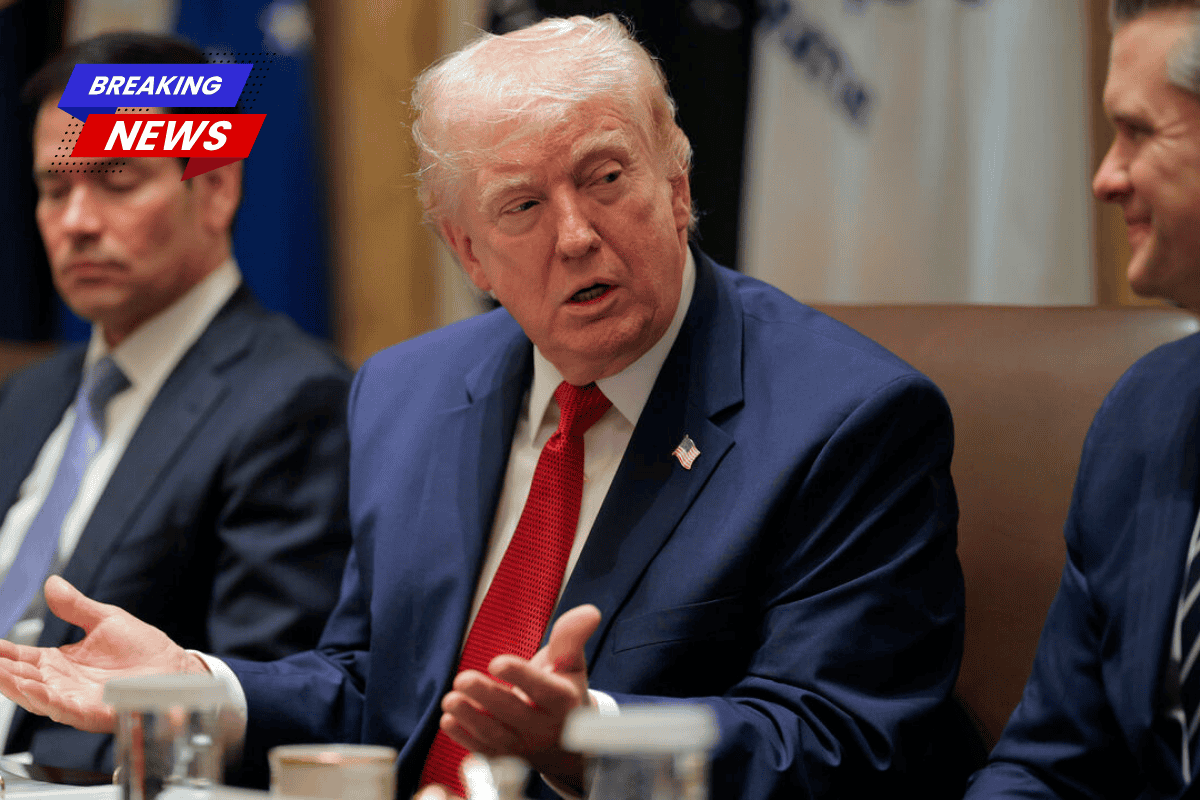
During a Cabinet meeting, Donald Trump said that Iran allowed 10 oil tankers to pass through the Strait of Hormuz.
According to him, Iran initially permitted eight ships and later added two more, describing the move as a “present” to the United States. He also mentioned that Iran apologised for earlier remarks and wanted to show seriousness in ongoing interactions.
These comments came after Trump had earlier hinted at a gesture from Iran but had not shared details.
Why the Strait of Hormuz Is Important
The Strait of Hormuz is one of the most critical waterways in the world for oil transport. A large portion of global crude oil passes through this narrow route every day.
Because of this, any development in the region can directly affect global markets, fuel prices, and international trade. Even minor disruptions can create major economic impacts worldwide.
Iran’s Response and Confusion
While Trump described a positive gesture, Iran has reportedly denied holding direct talks with the United States.
At the same time, Iranian state media suggested that Tehran rejected a U.S. ceasefire proposal and instead offered its own conditions. One of those conditions includes gaining control over the Strait of Hormuz.
This has created confusion, as both sides appear to be sharing different versions of ongoing developments.
Role of Diplomacy and Mediation
Steve Witkoff confirmed that the U.S. has shared a peace framework through intermediaries, including Pakistan.
He said multiple countries are trying to help reduce tensions and move toward a peaceful resolution. However, the details of these discussions are being kept confidential.
This shows that while talks may be happening behind the scenes, nothing has been officially finalised.
Risks Still Remain
Despite the reported movement of oil tankers, the situation in the region remains sensitive.
Trump himself acknowledged that even a small threat in the Strait of Hormuz could be dangerous. A single attack on a tanker could disrupt global supply and cause major economic damage.
This highlights how fragile the situation still is.
Global Impact of the Situation
The ongoing tensions involving the United States, Israel, and Iran have already affected global energy markets.
Countries, especially in the Asia-Pacific region, rely heavily on oil passing through the Strait of Hormuz. Any uncertainty in this route increases concerns about supply shortages and rising fuel prices.