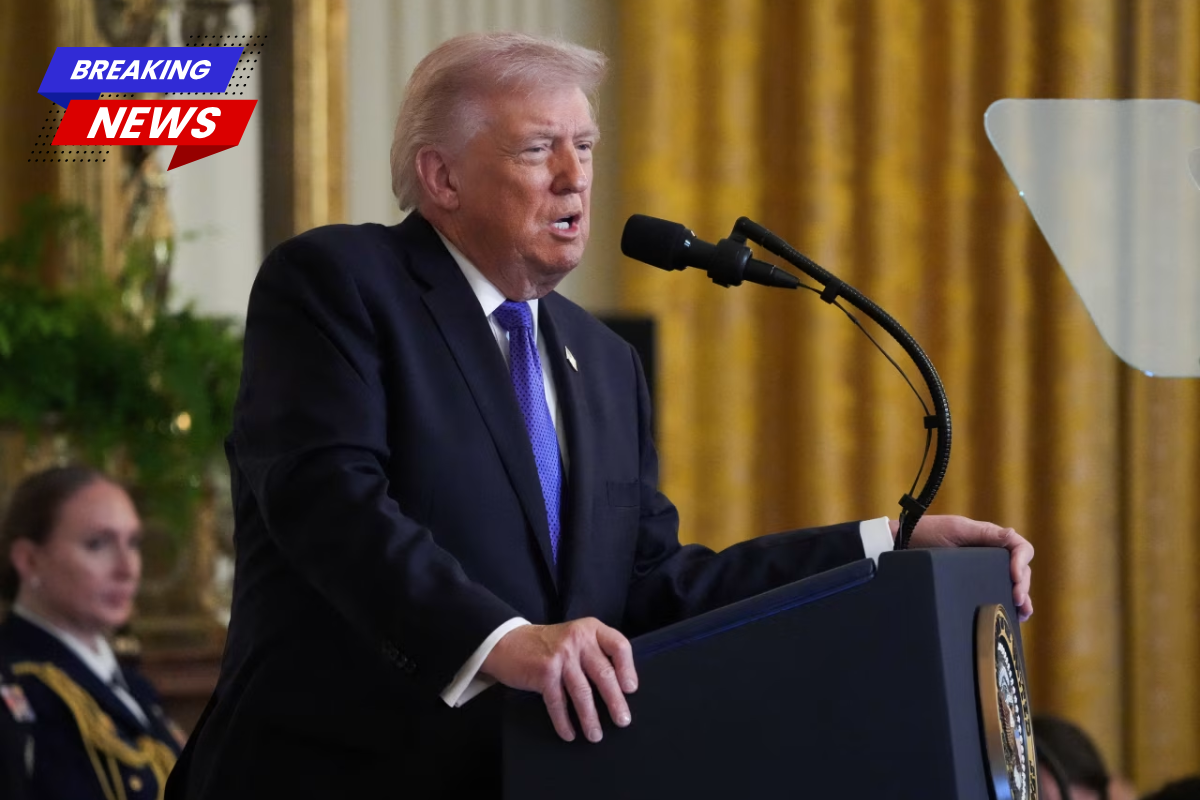
President Donald Trump has described the ongoing U.S.-Israeli military campaign against Iran as the “last best chance” to stop what he called a serious and growing threat. Speaking at the White House during a Medal of Honor ceremony, he defended the decision to launch strikes and said the mission aims to remove dangers linked to Iran’s missile programme and nuclear ambitions.
Trump Calls War a “Last Best Chance”
President Trump said Iran ignored repeated warnings from the United States to stop pursuing nuclear weapons. He also claimed that Iran’s fast-growing ballistic missile programme posed a major threat to America and its allies.
According to the president, Iran already had missiles capable of reaching Europe and U.S. military bases overseas. He warned that the country could soon have developed missiles able to reach the United States.
“This was our last best chance,” Trump said, adding that the operation is focused on eliminating what he described as intolerable threats.
Four Main Objectives of the Mission
During his speech, the president clearly listed four goals of the military campaign:
- Destroy Iran’s missile capabilities and its ability to build new ones
- Cripple Iran’s navy, with several ships reportedly destroyed
- Prevent Iran from ever obtaining a nuclear weapon
- Stop Iran from funding and directing armed groups outside its borders
He claimed that U.S. forces are making rapid progress and are ahead of initial time projections.
War Timeline: Four to Five Weeks, or Longer
President Trump previously said he expected the conflict to last around four to five weeks. However, he also made it clear that the U.S. military is prepared for a longer campaign if needed.
He stated that the United States has the capability to continue operations well beyond the projected timeline. He dismissed suggestions that he wanted a quick resolution simply to move on to other matters.
Defense Secretary Pete Hegseth echoed this message during a Pentagon briefing. He said the timeline could shift depending on how events unfold and avoided giving a fixed end date.
Ground Troops Not Ruled Out
In an earlier interview with The New York Post, President Trump refused to completely rule out deploying ground troops.
He said he does not automatically reject the idea of “boots on the ground” if they become necessary. However, he added that ground forces are probably not needed at this stage.
Hegseth confirmed that there are currently no U.S. troops on the ground in Iran but did not rule out future options.
American Casualties and Ongoing Operations
The conflict has already resulted in American losses. Four U.S. service members were killed during Operation Epic Fury. According to officials, they died when a munition struck a tactical operations centre in Kuwait.
President Trump expressed condolences to the families of the fallen soldiers and said the mission would continue in their memory. He also acknowledged that more casualties could occur before the conflict ends.
“We continue this mission with ferocious resolve,” he said.
Heavy Strikes and Regional Impact
Israeli airstrikes at the beginning of the conflict reportedly killed Iran’s Supreme Leader Ayatollah Ali Khamenei along with other senior officials. More than 1,000 targets were hit in the first 24 hours of the bombing campaign.
Iran has responded with missile and drone attacks targeting Israel, Gulf countries, and U.S. facilities in the region. The situation remains tense, with both sides continuing military operations.
Political and Global Implications
The president monitored the early phase of the conflict from Mar-a-Lago in Florida before returning to the White House. This marks his first public appearance since the war began.
The ongoing military campaign has significant global implications. Rising tensions in the Middle East could impact oil markets, regional stability, and diplomatic relations worldwide.
As the conflict continues, questions remain about how long the operation will last and whether diplomatic efforts might resume in the future.