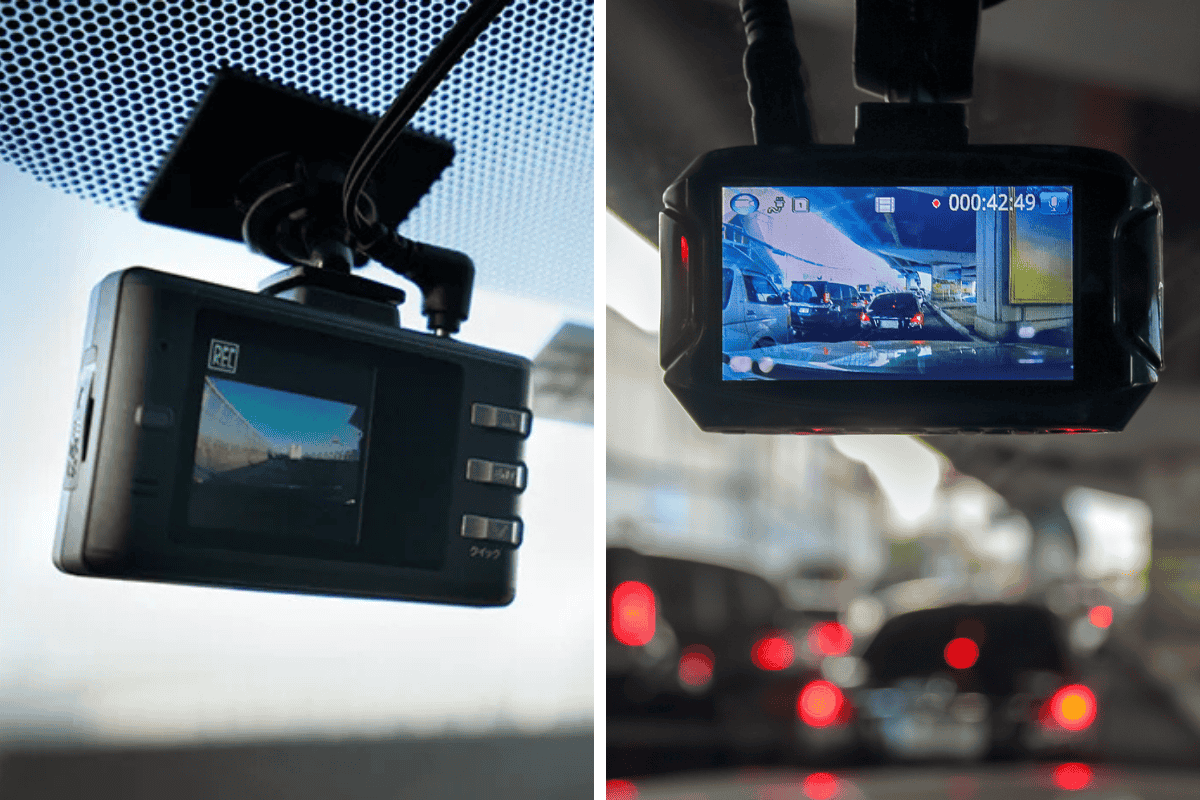
Dash cams are legal in Utah with specific mounting restrictions to ensure driver visibility, governed primarily by Utah Code §41-6a-1635, which prohibits any object or device that materially obstructs the driver’s view through the windshield or windows.
As long as your dash cam complies with placement rules and doesn’t impair safe operation, you can use it for personal, insurance, or legal purposes without issue.
Mounting Requirements
Utah allows dash cams in precise windshield zones to balance safety and utility:
- Top of Windshield: Mounted along the upper edge, not extending more than 4 inches downward from the top—ideal for rearview mirror placement.
- Lower Left Corner: Within a 3×4-inch area at the bottom left (driver’s side), not protruding more than 4 inches outward.
- Dashboard or Rear Window: Fully permitted without size limits, as long as no view obstruction occurs—preferred for larger dual-cam setups.
Prohibited: Center windshield mounts, side window blocks, or anything interfering with airbag deployment/wiper function. Non-compliance risks infractions ($50–$750 fines, Utah Code §41-6a-1635(3)), escalating to reckless driving if it causes accidents.
Audio Recording Rules
Utah is a one-party consent state (Utah Code §77-23a-4), meaning you (the driver) can record audio in your vehicle without notifying passengers, as long as you’re part of the conversation. Video of public roads/police is unrestricted. Disable audio or inform others for privacy—secret passenger recordings risk civil suits if non-participants object, though rare for dash cams.
Privacy and Usage Limits
- Public Roads: Footage admissible in court/insurance claims under Utah Rules of Evidence 901 (authentication required).
- Private Property: Parking lots okay if no “no trespass” signs; garages may void warranties or trigger complaints.
- Police: Legal to record interactions (First Amendment); don’t interfere.
No retention mandates, but lock incident clips—deletion post-accident could imply spoliation.
Commercial and Fleet Rules
Trucks/CDLs follow identical standards; FMCSA allows cams for safety (49 CFR §392.2). No screen-viewing-while-driving bans beyond general distraction laws (Utah Code §41-6a-1625). 2026 holds steady—no new restrictions post-REAL ID integration.
Penalties for Violations
| Infraction | Fine | Points | Notes |
|---|---|---|---|
| View Obstruction | $50–$200 | 0–2 | First offense |
| Reckless (Accident) | $750+ | 4+ | License risk |
| Audio Misuse (Civil) | Varies | N/A | Invasion claims |
Best Practices and Tips
- Choose compact models (e.g., <2″ height) for top mounts; suction/adhesive behind mirror.
- Test visibility: Ensure full road/horizon view pre-drive.
- Loop record with G-sensor locks; cloud backups for evidence.
- REAL ID Compliance: Cams don’t affect Star Card status.
Utah’s rules promote safety—proper setup turns dash cams into powerful tools for disputes, with NHTSA crash reductions up to 30% for monitored fleets. Verify via UDOT or legal consult; no local bans preempted statewide.
SOURCES:
- https://www.freightwaves.com/checkpoint/dash-cam-laws-by-state/
- https://jjkellercompliancenetwork.com/regsense/dashboard-cameras-utah