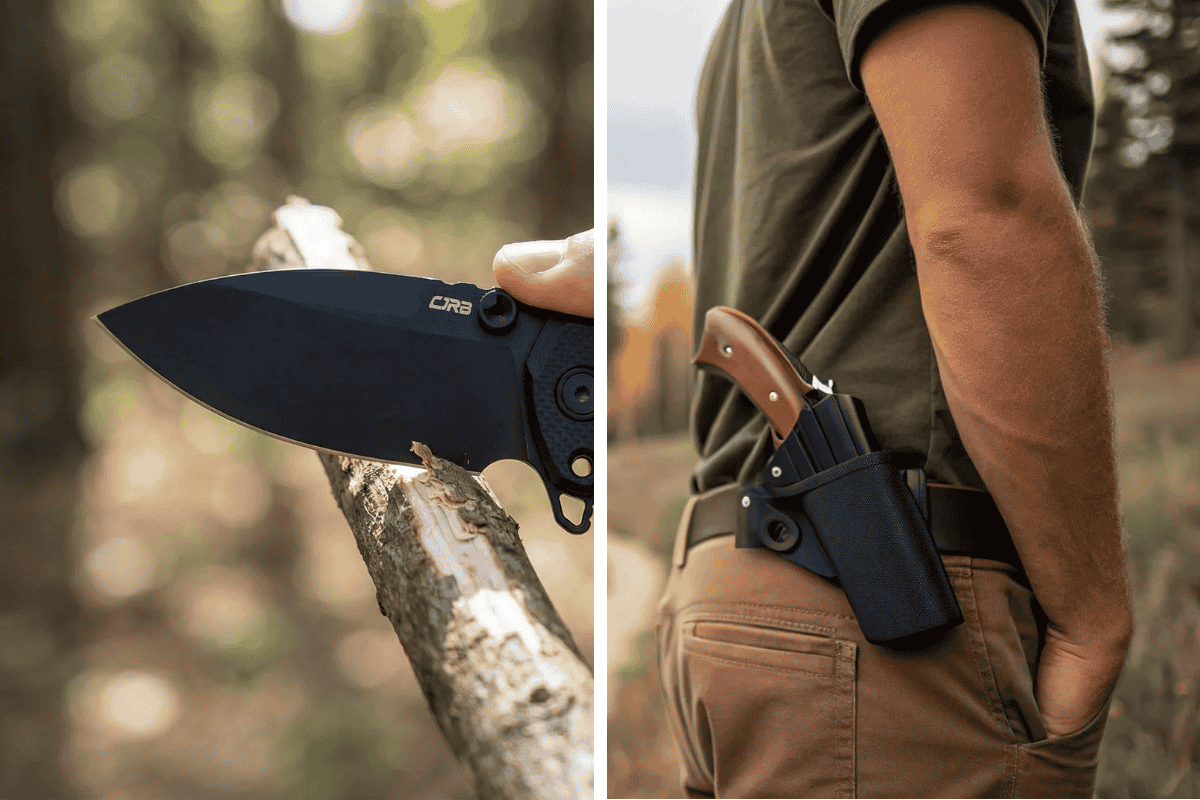
Colorado’s pocket knife laws are fairly permissive at the state level, but the rules change based on blade length, whether the knife is carried openly or concealed, and where you are carrying it. For a general article, the safest framing is that ordinary pocket knives are usually legal, while concealed carry and location-based restrictions can create problems.
Colorado’s Main Rule
Colorado law treats knives differently depending on blade length. A non-ballistic knife with a blade of 3.5 inches or less is generally lawful to carry openly or concealed, while knives with blades longer than 3.5 inches face more restrictions on concealed carry.
That means many everyday pocket knives are legal for routine carry. However, once a knife is classified as concealed and over the length limit, the legal risk increases quickly.
Open Carry vs. Concealed Carry
Open carry is generally more flexible in Colorado than concealed carry. Sources describing Colorado law note that legal knives may usually be carried openly, including many pocket knives, fixed-blade knives, and hunting knives, while concealed carry is where the 3.5-inch threshold matters most.
For pocket knives, this usually means a small folding knife clipped visibly to a pocket is less risky than hiding a larger blade on the body. A practical example: a 3-inch folding pocket knife is typically treated much more favorably than a 4-inch blade carried concealed.
Restricted Knives
Colorado does place special limits on certain knife types. Ballistic knives are repeatedly identified as prohibited, while switchblades and gravity knives are described in recent sources as legal under state law, though local rules may still affect them.
This distinction matters because not every knife is treated the same way. A standard pocket knife is usually evaluated by blade length and carry method, while prohibited or specially regulated knives can create separate criminal exposure.
Places With Extra Limits
Even if a pocket knife is legal under state law, location can change the result. Schools and some campus settings are among the clearest restricted places, and several sources also note that cities such as Denver and Boulder may have their own knife ordinances.
So a knife that is fine in one part of Colorado may still be restricted in another city or in a sensitive location. Anyone writing about Colorado knife law should emphasize that local ordinances can be stricter than the statewide baseline.
Practical Takeaways
The simplest way to explain Colorado pocket knife law is this: small everyday folding knives are generally legal, concealed carry becomes more sensitive above 3.5 inches, and specific places or local ordinances can override your expectations.
For readers, the safest advice is to keep the knife modest in size, avoid carrying it concealed if it may exceed the legal threshold, and check city rules before carrying in urban areas or near schools.
Article Angle
If you are publishing this as a 600-word U.S. content piece, the strongest angle is a practical, reader-friendly guide focused on: what a pocket knife is, the 3.5-inch rule, open versus concealed carry, local city ordinances, and the special risks around schools and prohibited knife types.
SOURCES:
- https://www.shouselaw.com/co/defense/laws/knife-laws/
- https://www.couteaux-morta.com/en/colorado-knife-laws/