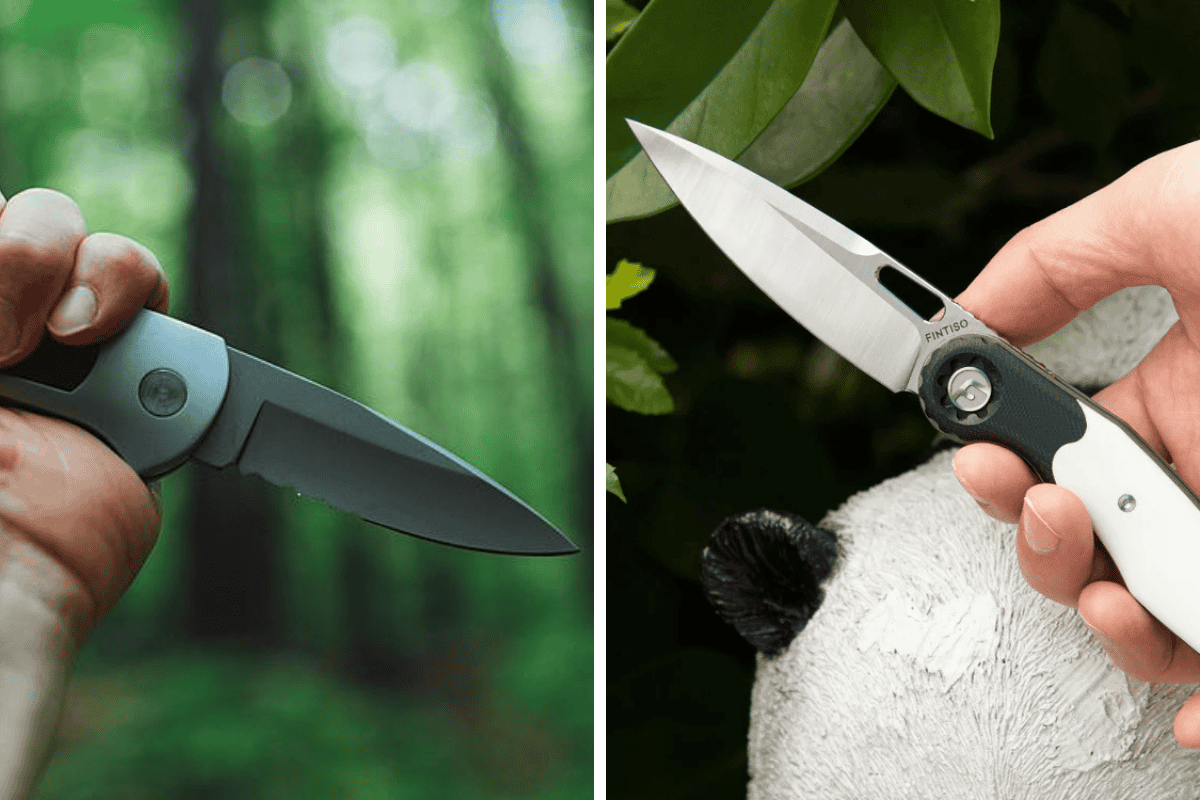
Pocket knives are versatile everyday tools, but their legality in Iowa hinges on blade length, carry method, location, and intent. Iowa’s laws classify certain knives as “dangerous weapons,” creating a nuanced landscape for owners and carriers.
Defining Pocket Knives
Pocket knives typically fold with blades under 4 inches, designed for utility like cutting packages or preparing food. Iowa law does not explicitly define “pocket knife,” but evaluates them under the “dangerous weapon” statute in Iowa Code §702.7.
Blades exceeding 5 inches automatically qualify as dangerous, while shorter ones may if used to indicate intent to harm. Common examples include Swiss Army knives or basic folders, legal for ownership absent other factors.
Ownership Rules
Iowa permits ownership of most pocket knives, including switchblades, balisongs, dirks, and Bowie knives, with no blanket bans except ballistic knives (felony possession). No age restrictions apply for simple possession, though minors face concealed carry limits. Purchase and sale face no state restrictions beyond federal rules, allowing open market transactions.
Carry Options
Open carry of pocket knives is broadly allowed statewide, even blades over 5 inches in cities, without a permit. Concealed carry is legal for blades ≤5 inches if not deemed dangerous by intent; longer blades require caution to avoid misdemeanor charges. A nonprofessional permit to carry weapons (age 21+, background check) covers concealed dangerous weapons.
Restricted Locations
Schools and grounds (within 1,000 feet) are weapons-free zones, banning all knives with doubled penalties. Prohibitions extend to courthouses, prisons, government buildings, casinos, state parks (possession ok if unused), and private property with signs. Public parks ban carry except designated hunting areas.
Local Variations
State preemption (Iowa Code §724.28) prevents cities from stricter firearm rules, but allows some non-firearm weapon regs on public property. Cities like Des Moines may add ordinances; always verify locally, as violations can lead to civil suits for damages.
Intent Matters
Legality turns on use: self-defense is permissible within reason, but criminal intent escalates charges. Intoxicated carry (BAC ≥0.08) of any dangerous weapon is a serious misdemeanor, even with permit. Hunting/fishing knives are exempt during lawful activity.
Penalties Overview
Concealed carry of >8-inch blade: aggravated misdemeanor; 5-8 inches: serious misdemeanor. Violations in weapons-free zones double fines; ballistic knife possession: Class D felony (up to 5 years). Minors concealing dangerous weapons face serious misdemeanor.
Recent Updates
No major 2025-2026 knife law changes; 2025 focused on firearms (e.g., HF 924 lowered handgun age). Preemption enhancements (HF 2556) strengthened uniform rules. Federal laws (e.g., Switchblade Act) do not restrict intrastate Iowa carry.
Practical Advice
Measure blades tip-to-hilt; err under 5 inches for concealed urban carry. Obtain a permit ($25, 5 years) via sheriff for flexibility. Check signs, avoid intoxication, and consult Iowa Code or attorney for edge cases. Resources: legis.iowa.gov, akti.org. Responsible use keeps pocket knives as tools, not liabilities.
SOURCES:
- https://www.akti.org/state-knife-laws/iowa/
- https://www.legis.iowa.gov/docs/publications/CLE/865087.pdf