Massachusetts ranks among the most restrictive states for knife ownership and carry, employing a type-based classification system rather than simple blade-length standards.
Under Massachusetts General Laws Chapter 269, Section 10(b), the state specifically prohibits carrying certain designated knives on your person or in your vehicle regardless of whether they are openly displayed or concealed. Understanding which knife types fall into legal versus prohibited categories is essential for anyone carrying a blade in the Commonwealth.
Prohibited Knife Types
Massachusetts law explicitly bans carrying the following knife types: stilettos, daggers, dirk knives, ballistic knives, knives with double-edged blades, and devices that enable a locking blade to be drawn at a locked position.
Until recently, automatic knives (switchblades) were also completely banned, but a landmark 2024 Supreme Judicial Court decision in Commonwealth v. Canjura changed this landscape.
Adults aged 21 and older may now legally carry automatic knives, including switchblades, out-the-front knives, and spring-assisted knives, provided the blade measures under 3 inches. For minors and for automatic knives with blades exceeding 3 inches, the prohibition remains in effect.
Legal Pocket Knives
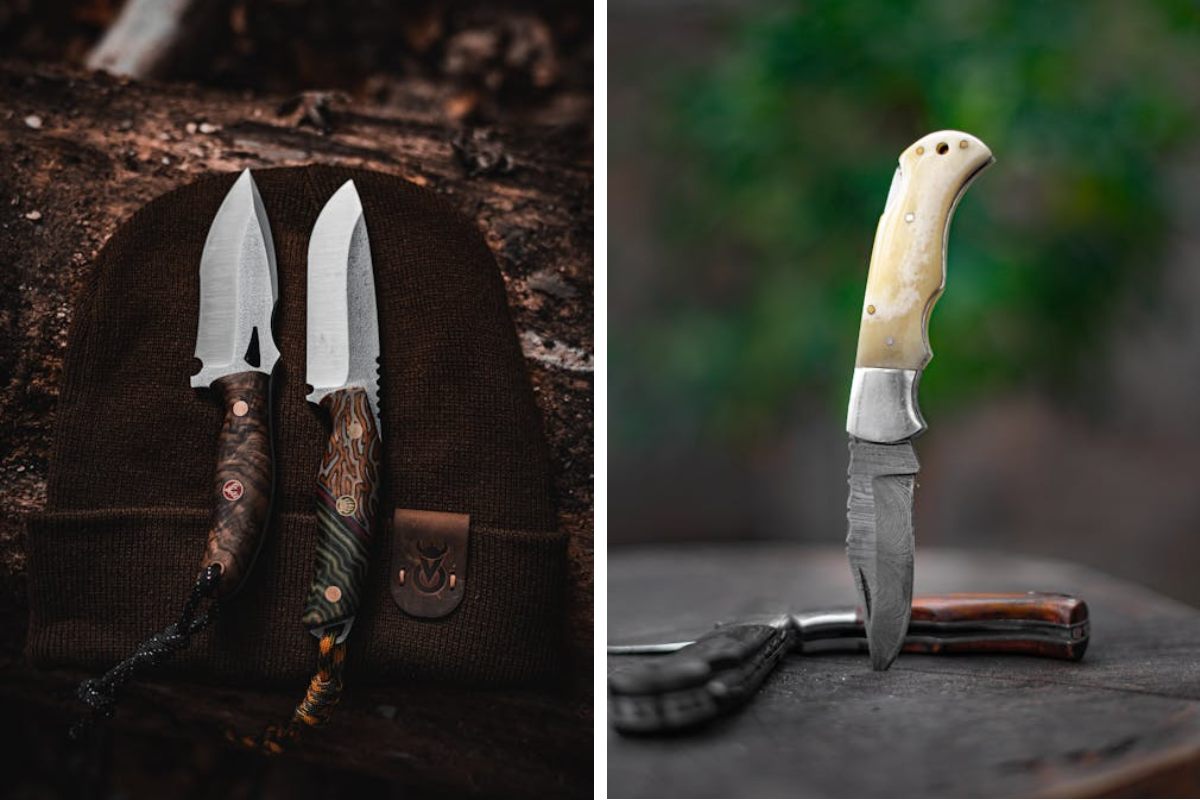
Ordinary folding pocket knives remain legal to carry in Massachusetts. These knives feature blades that fold into the handle and are typically used for everyday tasks like cutting rope, opening packages, or outdoor activities.
Massachusetts imposes no statewide blade-length restriction on standard folding knives, distinguishing them from the former 1.5-inch limit on automatic knives. Fixed-blade knives carried openly, as well as hunting, fishing, and utility knives used for legitimate purposes, are also generally permitted.
Boston’s Stricter Local Ordinances
While state law sets baseline restrictions, Massachusetts lacks knife preemption legislation, allowing municipalities to impose stricter local rules. Boston enforces particularly stringent ordinances that prohibit carrying any knife with a blade exceeding 2.5 inches on your person or in a vehicle, subject to limited exceptions for work, sporting, culinary, and transport purposes.
Boston also separately prohibits carrying machetes except for vegetation-related activities, restricts knife sales to minors, and requires licenses for stores selling certain knives. Cambridge, Worcester, and Malden maintain similar 2.5-inch blade limits. If you regularly travel between Massachusetts cities, the lowest municipal limit—typically 2.5 inches—becomes your practical carrying ceiling.
Restricted Locations Apply Statewide
Regardless of knife type, Massachusetts prohibits all knives in certain sensitive locations. These include schools at all levels from elementary through university, areas within 300 feet of school grounds, government buildings, courthouses, and airports. Violating these location restrictions can result in separate criminal charges beyond those for carrying prohibited knife types.
Severe Penalties for Violations
Massachusetts treats knife law violations seriously, with first-time offenses for carrying prohibited knives potentially resulting in 2.5 to 5 years in state prison.
The lengthy maximum sentence reflects the Commonwealth’s classification of many knives as dangerous weapons rather than everyday tools. Prosecutors may also pursue enhanced penalties for individuals with prior convictions for violent crimes or serious drug offenses under Section 269.10G.
Navigating Massachusetts Knife Laws Safely
Massachusetts knife law is complex, locally inconsistent, and significantly more restrictive than most states. Stick to ordinary folding pocket knives with blades under 2.5 inches if you travel throughout Massachusetts, avoid carrying any knife on school property or in government buildings, and research specific municipal ordinances before carrying knives in Boston or other major cities.
When in doubt, consult legal counsel, as ignorance of these laws provides no defense against prosecution.
SOURCES:
- https://knifeinformer.com/state-knife-laws/massachusetts/
- https://www.akti.org/state-knife-laws/massachusetts/