California allows many common knives, but the rules depend on the knife type, how it is carried, and where you carry it. Folding knives are generally legal, while fixed-blade knives, switchblades, and certain disguised knives face stricter limits under state law.
What Knives Are Legal
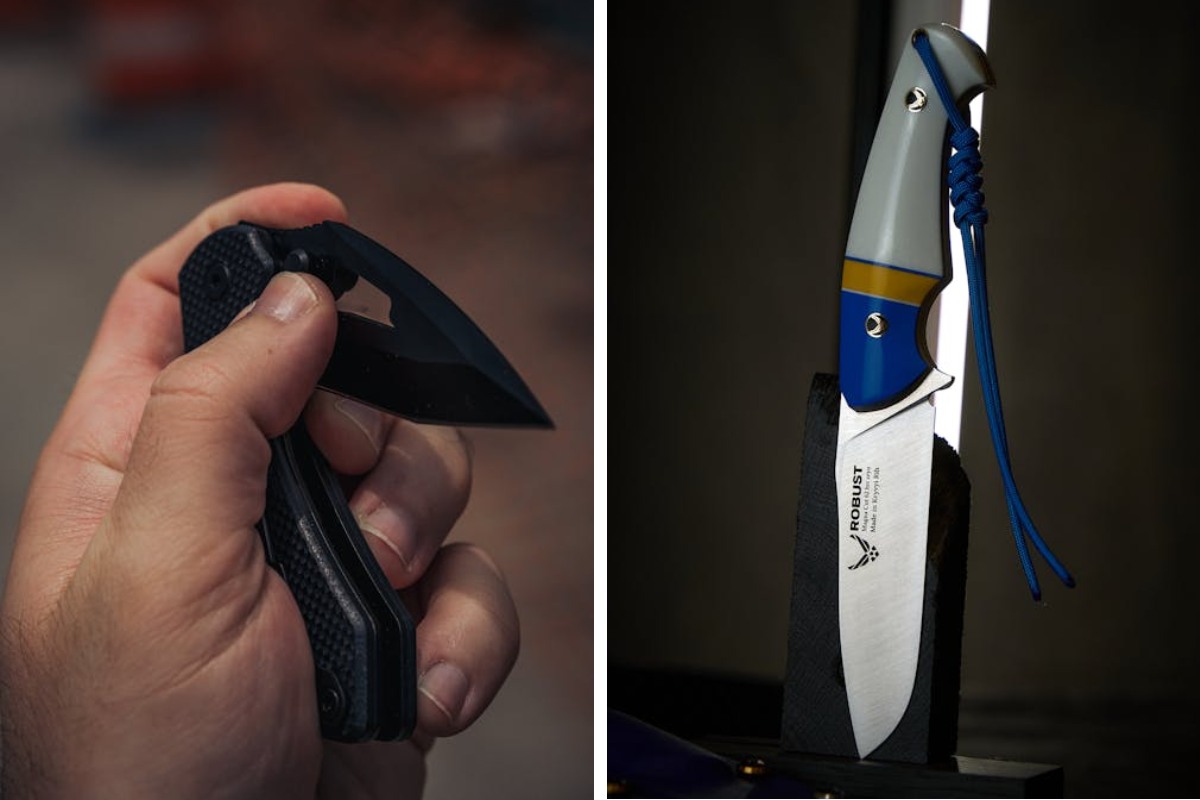
Folding knives are the easiest to carry legally in California because they can usually be owned and carried closed, whether in a pocket or elsewhere. Fixed-blade knives, sometimes called dirks or daggers, are also legal to own, but they must be carried openly in a sheath worn at the waist.
Small switchblades under 2 inches are generally legal, but switchblades with blades 2 inches or longer are prohibited to carry, possess in a vehicle, or sell. California also bans several knife types disguised as ordinary objects, including cane swords, belt-buckle knives, lipstick case knives, and similar concealed weapons.
Carry Rules That Matter
The biggest mistake people make is assuming that a legal knife is always legal to carry any way they want. In California, a fixed-blade knife hidden under clothing can be treated as a concealed weapon, which can lead to criminal charges.
Open carry is allowed for fixed blades only if the sheath is visible and worn at the waist. A folding knife can usually be carried concealed when it stays folded, but once a folding knife locks open in a way that makes it function like a fixed blade, legal risk increases.
Restricted Locations
Even if your knife is legal in general, location-based restrictions still apply. Schools are especially strict, and California law limits many knives on K-12 campuses, colleges, and universities.
Government buildings also have their own rules, and some local governments add extra restrictions beyond state law. That means a knife that is fine in one city may be restricted in another, so local ordinances matter as much as state law.
Self-Defense Limits
California does allow lawful self-defense, but carrying a knife for protection does not give you a free pass to use it aggressively. The force used must be reasonable and proportionate to the threat you face.
If a knife is used when there is no immediate danger, the case can escalate quickly into charges such as assault with a deadly weapon. Those charges can carry jail or prison time, along with serious fines.
SOURCES:
- https://www.shouselaw.com/ca/defense/knife-laws/
- https://www.couteaux-morta.com/en/california-knife-laws/