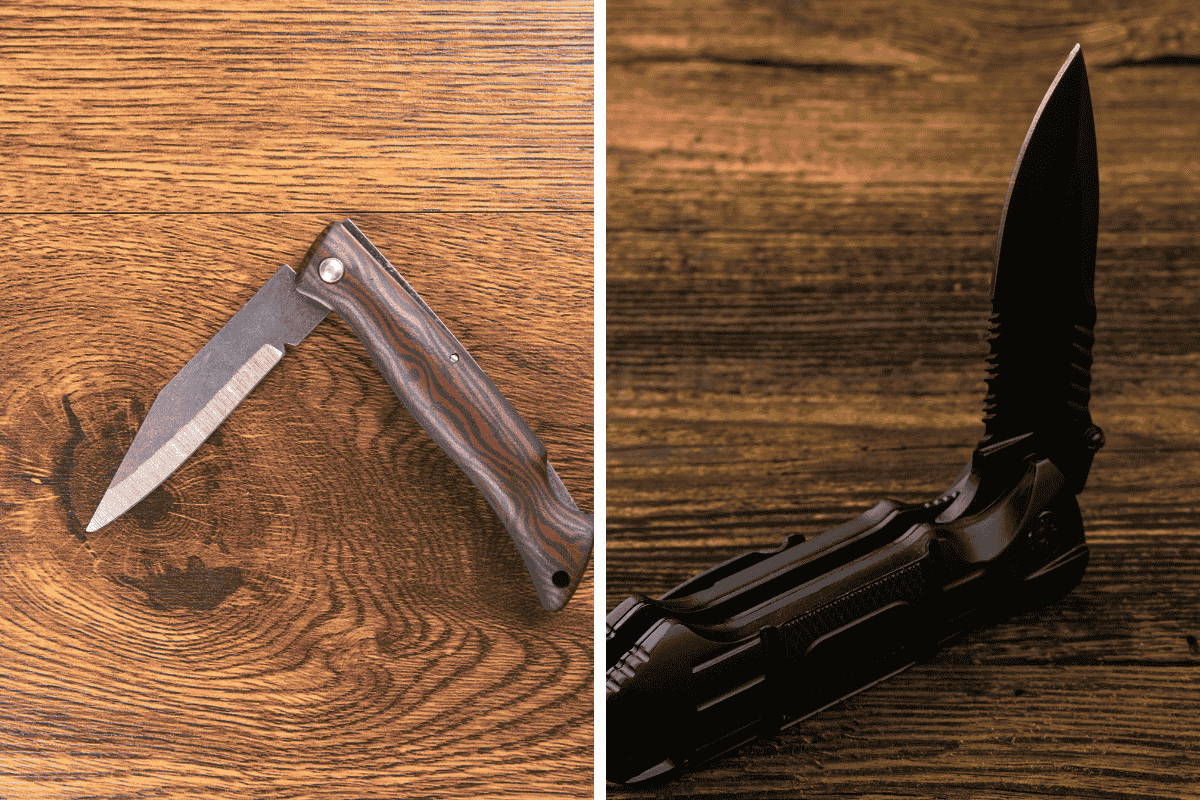
Kansas knife laws are among the most permissive in the U.S., allowing broad ownership and carry rights since major reforms in 2013. Understanding these rules helps residents and visitors avoid rare violations while exercising their rights responsibly.
Key Legal Framework
Kansas defines a “knife” broadly as any cutting instrument with a sharpened or pointed blade. Statewide preemption under K.S.A. 12-16,134 prevents cities or counties from imposing stricter rules on possession, carry, sale, or manufacture—local ordinances before July 1, 2014, are void. Reforms via House Bill 2033 repealed old limits on switchblades, gravity knives, and concealed carry, confirmed by Attorney General Opinion 2014-01.
Allowed Knives
Nearly all knives are legal to own, buy, sell, or carry openly or concealed, with no blade length limits. This includes pocket knives, switchblades (automatic knives), daggers, dirks, stilettos, balisongs (butterfly knives), gravity knives, machetes, and swords. Manufacturing and selling automatic knives faced no restrictions post-2013.
Prohibited Items
Only ballistic knives (spring-loaded blades) and throwing stars/shurikens are illegal to own, sell, or carry statewide under K.S.A. 21-6301 and 21-6302. These violations carry penalties up to 2 years imprisonment or $600 fine. Intent to use any knife unlawfully against another remains criminal.
Carry Rules
Open and concealed carry of legal knives is unrestricted for most adults anywhere not explicitly banned. No permit is needed, and felons face limits only on specific “deadly” types like daggers, dirks, switchblades, stilettos, or straight-edged razors under K.S.A. 21-6304—though a 2020 Kansas Supreme Court ruling (State v. Harris) struck down vague “like character” clauses. Everyday pocket knives are generally fine even for felons.
Restricted Locations
Knives are banned in K-12 schools, jails, prisons, and juvenile facilities—state preemption excludes these from local overrides. Government buildings and private properties with posted no-weapons signs may prohibit them. Courts, airports, and bars often have case-by-case rules, but no blanket state bans beyond listed spots.
Age and Purchase Rules
No minimum age is specified for knife ownership or carry, though general weapons laws imply adult responsibility (18+ for some contexts). Sales face no state restrictions beyond illegal types; online or store purchases are straightforward. Parents should supervise minors to avoid school violations.
Penalties for Violations
Carrying prohibited items like throwing stars risks class A misdemeanor charges: up to 1 year jail and $2,500 fine. Felon possession of restricted knives escalates to felony levels. Intentional unlawful use (e.g., brandishing threateningly) triggers criminal use of weapons charges under K.S.A. 21-6301. Always prioritize de-escalation.
Practical Advice
Clip pocket knives visibly for open carry if concerned, but concealed is fine legally—EDC enthusiasts favor Kansas for this freedom. Check property signs and consult local police for edge cases like festivals. Self-defense claims succeed if proportional force is used, per general stand-your-ground laws aligning with knife rights. Stay updated via Kansas Legislature site, as no major 2026 changes noted.
SOURCES:
- https://www.akti.org/state-knife-laws/kansas/
- https://nobliecustomknives.com/us-knife-laws/kansas-knife-laws/