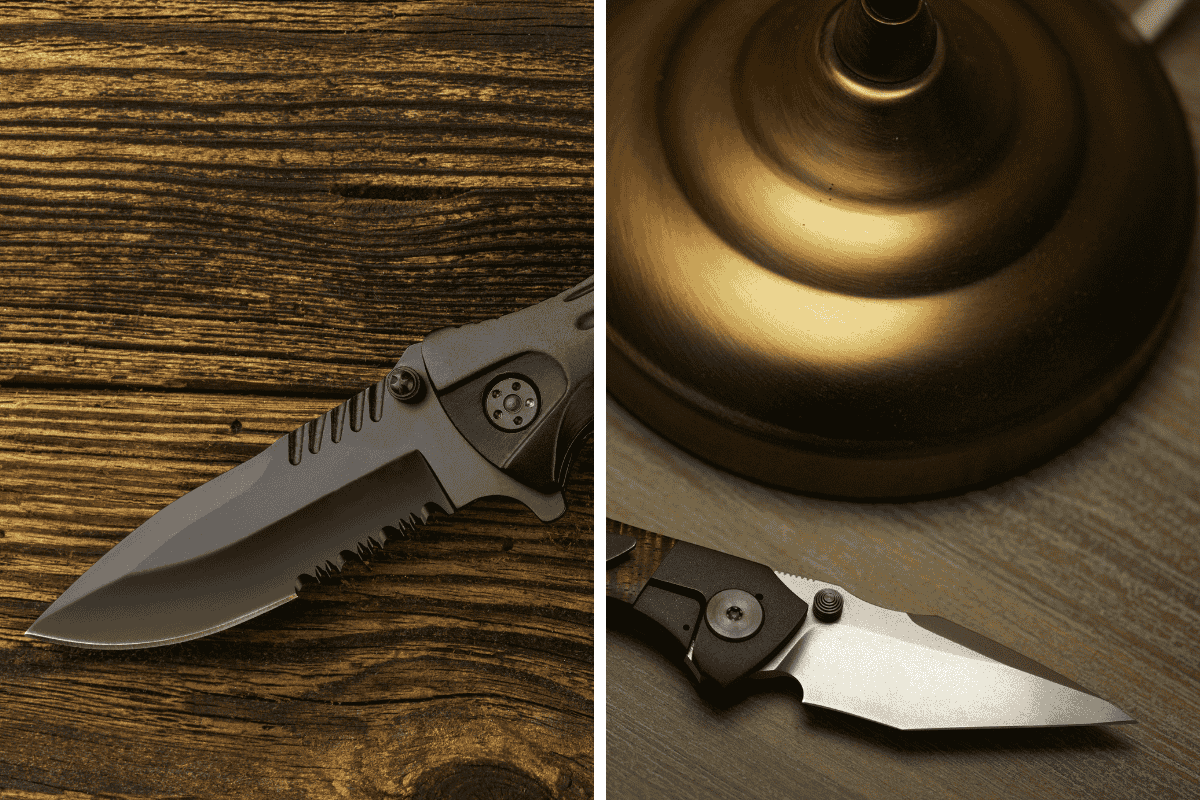
Nevada maintains some of the most permissive knife laws in the U.S., allowing ownership and open carry of virtually all knife types statewide. Key restrictions focus on concealed carry of specific items like machetes, prohibited locations such as schools, and local ordinances, particularly in Clark County.
This guide breaks down the essentials for residents and visitors as of March 2026, drawing from state statutes like NRS 202.350 and recent reforms.
Ownership Basics
Nevada imposes no statewide bans on knife ownership for adults, covering pocketknives, fixed blades, hunting knives, Bowie knives, dirks, daggers, balisongs, and even switchblades. Senate Bill 176, effective July 1, 2015, removed switchblades (blades over 2 inches that open automatically) and belt-buckle knives from prohibited lists, marking a major liberalization.
There are no blade length limits for simple possession, but federal laws like the Switchblade Act (15 U.S.C. §§ 1241-1245) may apply to interstate sales or mailing.
Open Carry Rules
Open carry—where the knife is visible through ordinary observation—is legal statewide for any knife without permits. This includes large blades like machetes or swords, as long as not brandished threateningly.
No blade length cap exists at the state level, but always verify local rules, as Nevada lacks knife law preemption. For example, drawing a knife rudely or angrily before two or more people violates NRS 202.320, a misdemeanor punishable by up to 6 months jail and $1,000 fine.
Concealed Carry Details
Statewide, concealed carry (hidden from ordinary view, e.g., in a pocket or under clothing) is generally allowed except for machetes, which require a sheriff-issued permit under NRS 202.350. The pre-2015 2-inch blade rule for switchblades and dirks/daggers no longer applies broadly, though “other dangerous or deadly weapons” could interpret some knives restrictively based on context. Blade length measures from tip to sharpened edge end, excluding unsharpened tang.
Local Variations
Without statewide preemption, counties and cities set rules; unincorporated Clark County (outside Las Vegas city limits) bans concealed knives with 3+ inch blades without sheriff permission. Las Vegas (incorporated) has no noted specific knife ordinances, but casinos ban all weapons as private property. Reno and Carson City show no major restrictions beyond state law. Check Clark County Code §12.04.180 for Las Vegas-area travel.
Prohibited Locations
Certain knives—dirks, daggers (undefined but thrusting-focused), and switchblades over 2 inches—are banned on school property, childcare facilities, school vehicles/parking, and Nevada System of Higher Education sites under NRS 202.265.
Violations are gross misdemeanors: up to 364 days jail and $2,000 fine. Exceptions include law enforcement, military on duty, or written permission from principals/deans. Government buildings, airports, and federal sites add federal restrictions.
Permits and Applications
For concealed machetes or Clark County 3+ inch blades, apply at your local sheriff’s office with a written description of the knife and purpose; background checks apply. CCW permits (primarily for firearms) may cover some knives but confirm with the issuing authority, like Las Vegas Metro PD (702-828-3111). Permits allow carry statewide but don’t override local bans.
Penalties Overview
Violations range from misdemeanors to felonies:
First offenses often reduce via plea or dismissal if defenses like “not concealed” or self-defense apply.
Self-Defense and Brandishing
Nevada allows proportional force in self-defense, including knives, if facing imminent harm (NRS 200.200). Brandishing requires rude/threatening display before 2+ people, not self-defense; assault with a deadly weapon (NRS 200.471) escalates to felony if creating fear of harm. Courts assess reasonableness case-by-case.
Travel and Vehicle Tips
In vehicles, knives can be stored openly or in trunks/gloveboxes without personal concealment issues. Airports ban carry-ons (TSA rules); checked bags OK if sheathed. Cross-county travel needs local checks; national parks follow federal law.
Police Encounters
Stay calm, hands visible, inform of knife location without reaching, and ask if detained. You can decline searches sans warrant and invoke right to silence/attorney. Common defenses: prove not concealed via video/witnesses or blade under limits.
SOURCES:
- https://www.akti.org/state-knife-laws/nevada/
- https://www.ladahlaw.com/blog/nevada-knife-laws-a-legal-guide-for-residents-and-visitors/