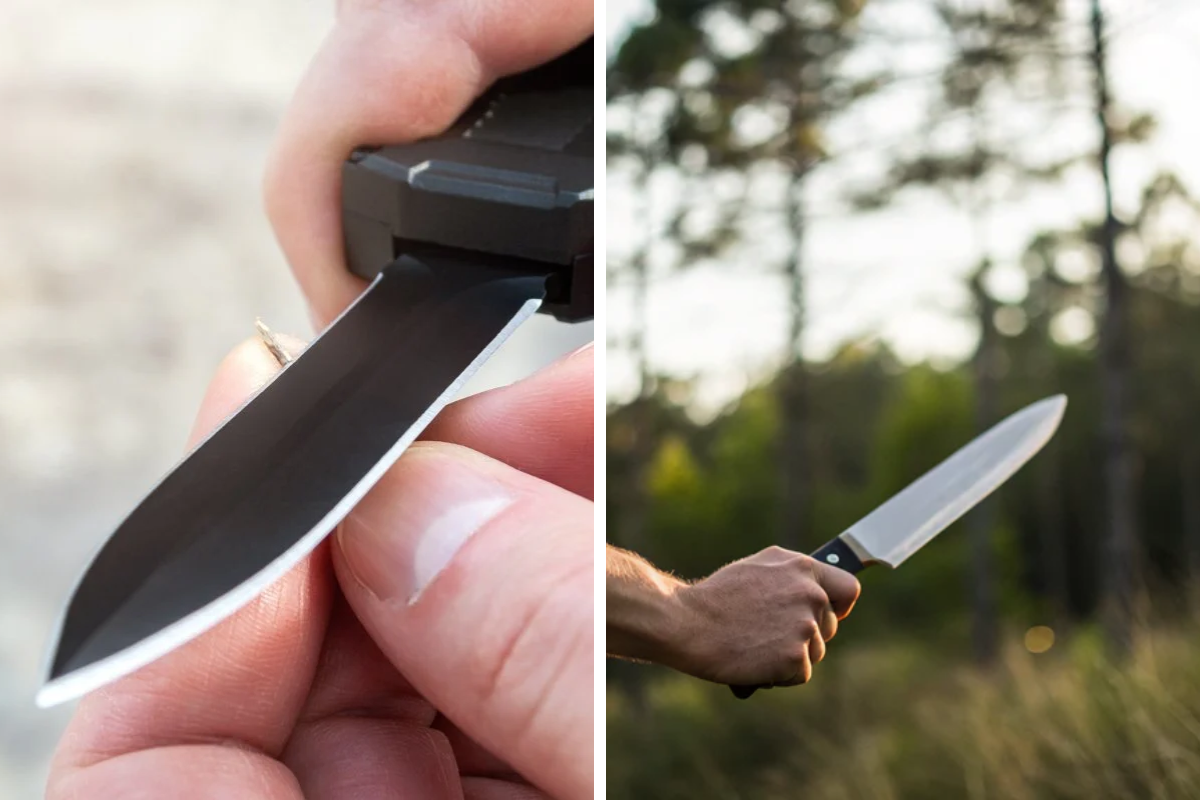
South Dakota maintains some of the most permissive knife laws in the U.S., reflecting the state’s strong tradition of personal freedom and self-defense.
Unlike many states with strict blade length limits or bans on certain types, South Dakota generally allows ownership, carry, and use of knives for lawful purposes. However, restrictions apply in specific contexts like schools or concealed carry of dangerous weapons. This guide breaks down the essentials to help you stay legal.
Legal Definition of a Knife
In South Dakota, a “knife” isn’t rigidly defined by statute, but courts and law enforcement interpret it broadly to include folding knives, fixed blades, pocketknives, and even some multi-tools. The key distinction arises under SDCL § 22-1-2, which defines a “dangerous weapon” as any firearm, knife with a blade over 3 inches, or device designed to expel projectiles.
Blades 3 inches or shorter typically fall outside this category, making them unrestricted for carry. Switchblades (automatic knives) are legal statewide, with no federal-style ban since South Dakota never adopted restrictive federal precedents post-1958.
Open Carry Rules
Open carry of knives is broadly permitted across South Dakota, including fixed blades like Bowie or hunting knives, as long as they’re visible and not used threateningly. You can carry them in vehicles, on your person, or in public without a permit—there’s no state law prohibiting it.
For example, displaying a 6-inch fixed blade on your belt while hiking in the Black Hills is fine, provided it’s not brandished aggressively. Local ordinances in cities like Sioux Falls or Rapid City rarely impose extra limits, but always check municipal codes.
Concealed Carry Permissions
Concealed carry gets trickier. Undetected knives with blades over 3 inches qualify as “concealed dangerous weapons” under SDCL § 22-14-9, which prohibits carrying them without a concealed pistol permit (SD SPR—South Dakota Permit to Carry a Pistol).
Even with an SPR, knives aren’t explicitly covered, so concealed long blades remain risky—consult local authorities. Short blades (under 3 inches) evade this entirely and can be pocket-carried freely. Balisong (butterfly) knives and gravity knives are legal if under 3 inches when concealed.
Prohibited Locations and Situations
Certain places ban all knives, regardless of size:
- Schools and school grounds (SDCL § 13-37-16 prohibits any weapon).
- Courtrooms, jails, and government buildings.
- During commission of a felony.
Intentionally pointing a knife at someone can lead to aggravated assault charges (SDCL § 22-18-1.1). Disguised knives (e.g., belt buckle knives) may be scrutinized as “illegal weapons” if deemed sneaky.
Ownership and Sales
No restrictions on buying, selling, or owning knives—minors can possess them too, barring school rules. Online sales ship freely, and gun shows often feature knife vendors. Interstate transport follows FOPA (Firearms Owners’ Protection Act) guidelines: unloaded and inaccessible in vehicles.
Self-Defense and Stand Your Ground
South Dakota’s “stand your ground” law (SDCL § 22-18-4) extends to knives. You can use deadly force, including a knife, if reasonably believing it’s necessary against imminent harm—no duty to retreat in public. Justification hinges on proportionality; a pocketknife against an unarmed shove might not fly.
Penalties for Violations
Misdemeanor concealed carry violations carry up to 1 year in jail and $2,000 fines; felonies (e.g., school carry) escalate to 5+ years. Always prioritize de-escalation.
Stay informed via the South Dakota Attorney General’s website or SDCL statutes, as laws evolve. Responsible carry respects rights and safety.
SOURCES :
- https://www.akti.org/state-knife-laws/south-dakota/
- https://collincountymagazine.com/2025/06/20/understanding-your-knife-rights-in-south-dakota-a-legal-guide/