
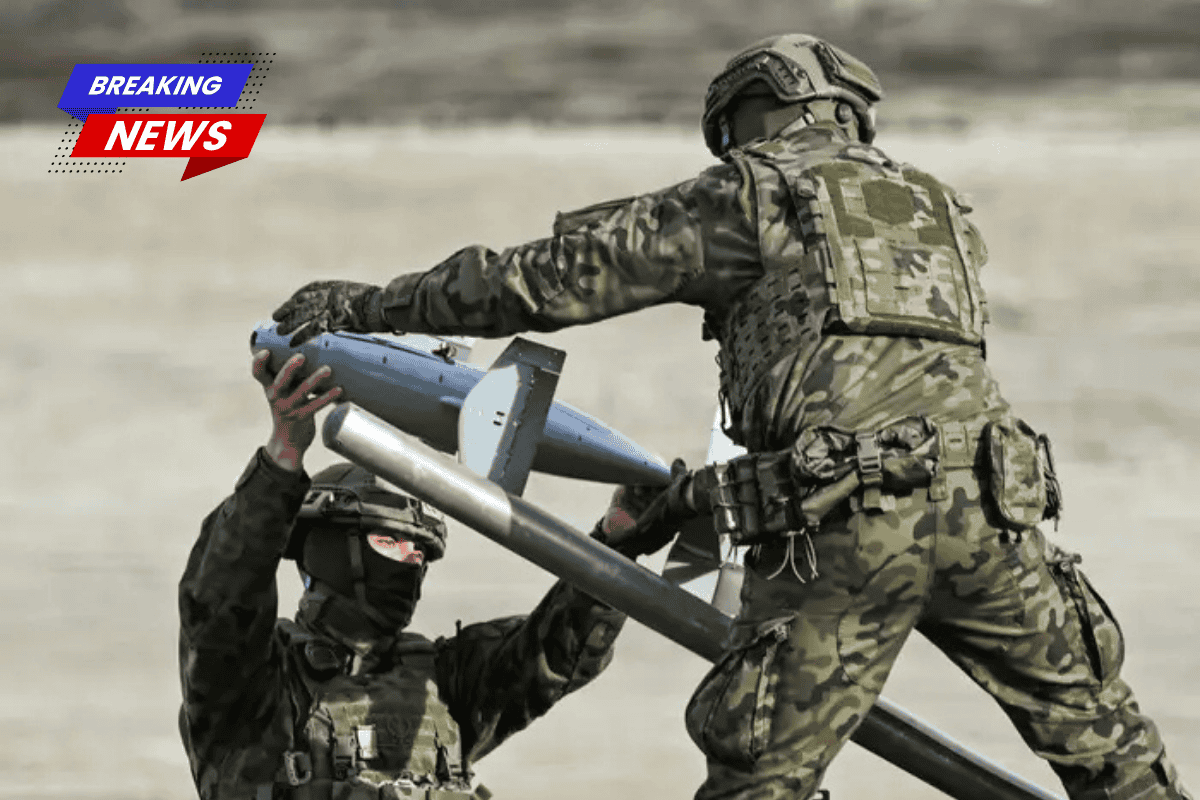
The United States is preparing to deploy a new counter-drone defense system to the Middle East that has already proven highly effective on the battlefield in Ukraine.
The system, known as Merops, has reportedly intercepted more than 1,000 Iranian-designed Shahed drones during the war in Eastern Europe. U.S. officials say the technology will provide American and allied forces with a cheaper and faster way to defend against large waves of attack drones increasingly used in modern conflicts.
U.S. Deploying Merops Counter-Drone System to Middle East
According to two U.S. defense officials, the U.S. Army is sending the Merops counter-drone system to the Middle East. The system is expected to arrive within about a week and could be ready for combat operations within days after deployment.
Officials did not disclose how many systems will be sent but said the shipment will include a large number of interceptor drones.
The deployment comes as tensions remain high in the region following the launch of Operation Epic Fury on February 28, during which the United States and Israel conducted strikes linked to Iran.
Proven Effectiveness Against Shahed Drones
The Merops system has already been used extensively in Ukraine to defend against Shahed-type drones, which are widely used by Russia and Iran.
Defense officials say the system has logged more than 1,000 successful interceptions during the conflict.
Shahed drones are relatively inexpensive attack drones that can overwhelm traditional air defense systems if launched in large numbers.
Estimated costs:
| Weapon System | Estimated Cost |
|---|---|
| Shahed drone | $20,000 – $50,000 |
| Merops interceptor | About $15,000 |
| Patriot interceptor missile | Several million dollars |
Because traditional air-defense missiles like Patriot or THAAD are extremely expensive, using them against cheap drones can become financially unsustainable during large attacks.
Merops provides a low-cost alternative for countering these threats.
How the Merops System Works
The Merops system launches a small interceptor drone called the Surveyor, designed to chase down and destroy hostile drones.
Key features of the system include:
- A propeller-driven interceptor drone
- A ground control station
- Launch stations operated by a small team
The entire system can be run by a four-person crew, including:
- Commander
- Pilot
- Two technicians
The Surveyor drone is only a few feet long and can be carried by a single soldier.
Speed and Technology
The Surveyor interceptor can fly at speeds exceeding 175 miles per hour, making it fast enough to catch commonly used Shahed-136 drones, which typically travel around 115 mph.
Some jet-powered Shahed variants can reach speeds of about 230 mph, presenting a more difficult target.
The drone also uses artificial intelligence navigation, allowing it to operate even in environments where communication signals are jammed.
If the interceptor fails to hit its target, it can deploy a parachute, allowing it to be recovered and reused.
Deployment and Training in the Middle East
U.S. Army troops currently stationed in Europe will help train forces in the Middle East to operate the Merops system.
According to officials, the system will also be sent to regional partner countries, including some locations where U.S. troops are not permanently deployed.
American forces in Europe have already trained several NATO allies on the system following Russian drone incursions into Polish airspace.
Growing Importance of Interceptor Drones
The use of inexpensive interceptor drones has become increasingly important in modern warfare.
Ukraine has aggressively developed similar systems to counter large waves of Russian drones.
According to Ukrainian President Volodymyr Zelenskyy, Ukraine produces about 1,000 interceptor drones per day, each costing roughly $2,500.
Recently, Zelenskyy said the United States requested assistance and expertise from Ukraine on countering Shahed drones, including sending specialists to help improve defenses.
Iran Drone Threat in the Middle East
Iran has reportedly launched thousands of attack drones across the Middle East following recent military operations involving the United States and Israel.
These drones have targeted U.S. military positions and allied forces throughout the region.
Their relatively low cost and ability to be deployed in large numbers make them difficult to stop using traditional missile-based defense systems.
The introduction of Merops could help close that gap by providing a cost-effective interception solution.
Trump Claims Iran Pulling Back Attacks
Amid the rising tensions, President Donald Trump said in a social media post Saturday that Iran had agreed to stop attacking U.S. allies in the region.
“Iran, which is being beat to HELL, has apologized and surrendered to its Middle East neighbors,” Trump wrote, adding that Iran promised to stop launching attacks.
He also warned that the United States could take further military action if necessary.






